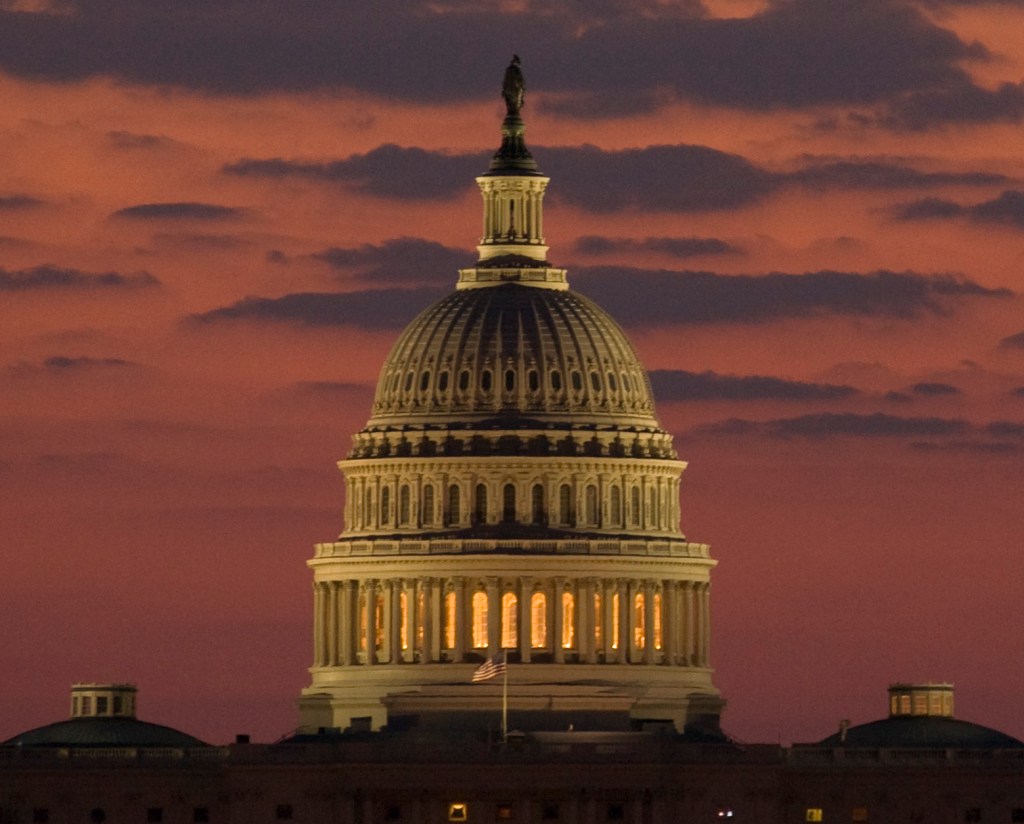
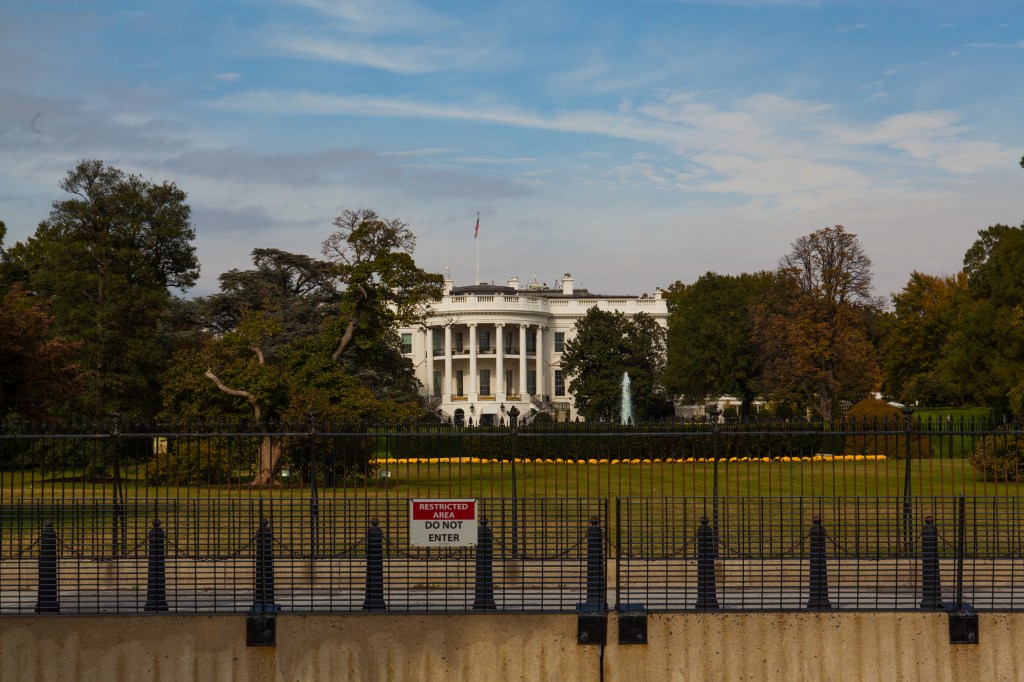
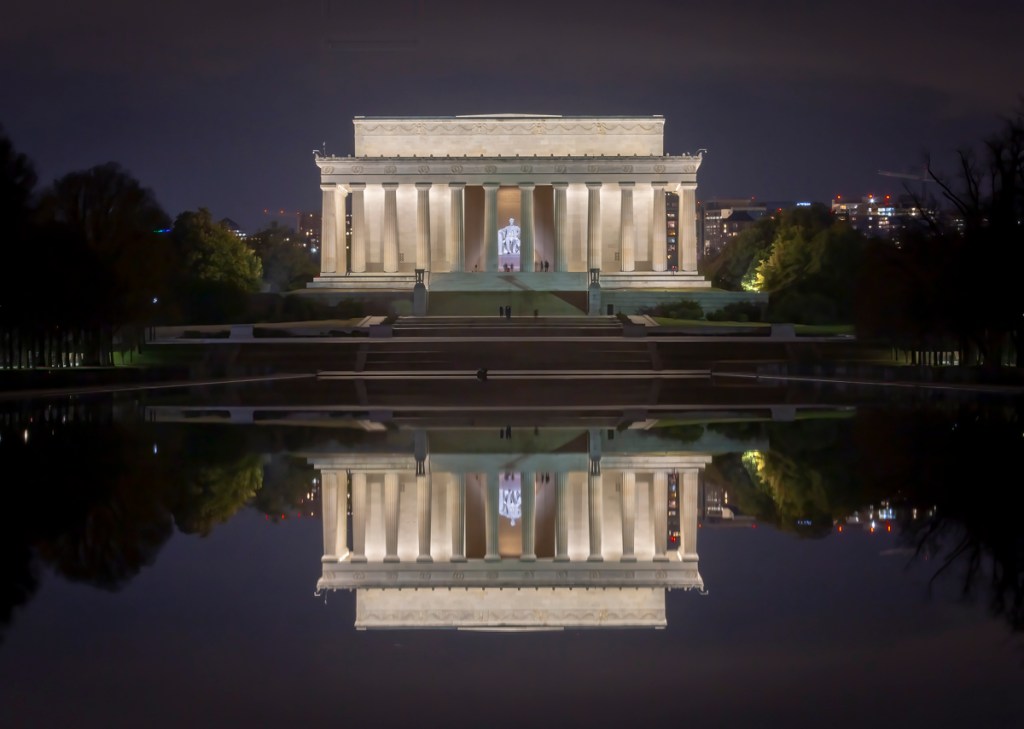
Elected assemblies were no stranger to colonial Americans before the Revolution. Virginia’s General Assembly first meet in 1619. The American colonies’ long experiences with representative assemblies informed the debate on the creation of our national government as expressed in our Constitution.
The Constitution created three separate and equal branches: Executive, Judicial, and Legislative. The legislative branch was divided into two. A House of Representatives, directly elected by the people every two years, and a Senate. The Senators were not elected by the folks of their states but picked by state legislators. This changed in 1913 — in an age of reform after Gilded Age excesses when ‘robber barons’ (proto-tech bros) bought and sold senators – when the 17th Amendment was adopted. This amendment made senators directly elected and accountable to the people of their various states.
As the drafters of the Constitution debated structure of the national legislature, it is clear many mistrusted rule by the masses. The solution was another level of checks and balances: A divided Congress. The House was meant to represent the hot and passionate voice of the people, hence the two-year election cycle. The Senate was meant to temper and cool the passions of the people, hence the six-year terms. A ying-yang type of thing.
In its time, it was a liberal creation (small l). A directly elected national assembly rare. Although one must add a huge asterisk to that claim as suffrage was primarily reserved for men who owned property, and in many instances in the early republic to white men only. Eventually the franchise did expand, with women being the last added. As a side note, I should comment that white immigrant men could and did vote in national elections as voting rights were not tied to citizenship until well into to the 19th century. Many states permitted immigrants the right to vote into the early 20th century. The nationalism of the post-world war I era ended that practice.
The enumerated duties of Congress were listed in the Constitution, but, it’s primary duty was a check on the power of President (king) — in the liberal tradition of Great Britian since the Glorious Revolution of 1689. As such, the list of congressional powers was long and gave congress the power to declare war, the power of the purse, the regulation of the militia and Army, the power to regulate domestic and foreign trade, to list a few. For the Senate, the power to ratify treaties and confirm presidential nominees to high office was added.
This system basically worked for close to 236 years, until it didn’t. It’s not the structure. Our political party system is fatally broken. You need two parties, not one party and one cult lead by a messianic Daddy Trump.
Congress is dead. Long live Trump.
A postmortem would reveal the cause of death as neglect followed by blunt force trauma. The manner of death? Democracide.
Et Tu, Johnson and Thune? Speaker Mike Johnson and senate majority leader John Thune have murdered Congress, finishing the job started by Mitch McConnell. Johnson won’t even call the House back into session and Thune has attached himself to Trump’s scrotum like a sucker fish attaches itself to a shark. This week Sec Def Hegseth severely constrained congressional oversight by severing most routine formal and informal discourse between congress and the Defense Department and one trillion dollars in spending.
Trump literally shits on the people in his AI generated fantasies and Congress defends him. He frequently moves money without congressional official approval and routinely uses rescission to ignore legislative funding bills. In short, Congress ceded most of its enumerated powers to Trump. Even the act of declaring war has been ceded, permitting Trump to order extra judicial killings on the high seas. In the old days we called that piracy. Congress is dead in name.
The Supreme Court is the undertaker.
I have no concluding paragraph. What is there left to say any more? The phrases “that’s illegal” or “that’s unconstitutional” are deader than a door nail in a post law and order America. Might as well stop using them as they are as useless as Congress and a spittoon full of spit.
Many of us recall the doomsday clock during the Cold War. It was always minutes before midnight: Nuclear Armageddon. Today there is another clock ticking away as our democracy ebbs. If midnight was the hour when democracy ends, the clock today would read 15 minutes past midnight. Yes, we have crossed that line into the shadow of autocracy. We can, however, reset that clock, but we must do it quickly and the first step is to vote.
Election day is upon us here in Virginia and we have an opportunity to reset that clock. It will be a consequential election with generational impacts for Virginians. Think of the world your child, or grandchild, or great grandchild will be born into if Trump has his way.
First and foremost, your vote will help keep Virginia from following several Republican states down the rabbit hole of one-party authoritarian rule. Texas is the architype of such a state: Texasistan.
A neo-theocratic state where women are surveilled and reduced to second class citizen. A state where race equates to citizenship; a state where people of Latino ancestry are subject to constant local, state and federal police stops and detentions for simply having a certain physical appearance, speak Spanish, and work in low wage jobs. Guilty!
Texas is a state that happily offers to deploy its national guard soldiers to occupy cities in Democratic lead states as Trump’s armed enforcers. A state where Christianity is foisted on folks’ children in public schools who worship differently or choose not to believe. Ones relationship to your god is between you and your creator and the state has no place in that relationship. We don’t want to be that kind of state, Winsome Earle-Sears does.
Second, Sears wants to turn the clock back to the 19th century regarding women’s rights. She spent her whole campaign using trans kids as political fodder, ostensible as a women’s rights issue. Meanwhile, she voted ‘no’ on a tie-breaking vote as Lt. Governor on a bill that would have given Virginia women reproductive choice rights, in particular access to contraception.
She claims to protect your daughter from supposed predators while whole heartily supporting a president found by a civil jury to have sexually assaulted a woman in a department store dressing room. And then Sears has the temerity to tell a woman that she has no right to reproductive choices or contraception, the right to choose when and how to have a family.
Third, a medical and insurance crisis is in the offing after the passage of the Republican’s “Big Beautiful Bill,” which Sears endorsed. Many Virginians will lose Medicaid coverage starting in 2027 as part of the bill’s multibillion dollar cuts to Medicaid. Three rural health clinics have already closed or plan to close because of the bills impacts.
Approximately 400k Virginians get medical insurance through the Affordable Care Act (ACA). Given the lapse in ACA insurance subsidies under the bill’s provisions, many of these Virginians will have to give up medical insurance given that premiums will double and even quadruple as subsidies for low-income folks lapse under the bill by the end of this year. Health care insurance will once again become unaffordable to average Virginians.
Spanberger has a plan. According to the Virginia Mercury, Spanberger said, “It’s essential that we be able to strengthen access to health care, improve affordability, and recognize that for so many Virginians, they’re one medical event away from really substantial ruin,” Spanberger adding. “But for so many, (health care cost) is just one more worry that keeps them up at night.” Sears on the other hand has no plan, except to support the big, beautiful bill.
Fourth, Spanberger will return our schools back to the people, and rid us of the Youngkin and Sears Orwellian thought police. Remember Governor Youngkin’s attempt to turn our schools in to Stasi-like institutions where teachers and students were under constant surveillance for utterances that contradict sacrosanct Republican notions of history. Youngkin even started an informant hotline one could call or email to report thought transgressors. Is that how we raise our children? Turning them into government snitches.
Youngkin’s education policy was a flop at best. Under his administration, standardized test scores that remained essentially the same after four years of his administration, and well below pre-pandemic scores. In short, a failure to achieve one of his top priority goals. Winsome Earle-Sears won’t do much better, I suspect, since she is an advocate for reducing public school funding in favor of private charter schools.
Fifth, Spanberger will be a voice for Virginia’s farmers who are hard hit by Trump’s self-inflicted tariff wars (see last week’s post). Virginia farmers are losing overseas markets, losing income, and being weighed down by unsustainable debt. Bail outs aren’t an answer, the preferred Republican solution. It’s the coward’s way out of not confronting Trump head on. If you are a afraid to criticize Trump, you already live in your own mental dictatorship.
Spanberger will speak truth to power, I believe. Nor cower before Trump like so many Republicans in Congress and state governments.
Sixth, Spanberger will fight for Virginian’s serving in not only our military, but our civil and foreign services as well. Our foreign and civil service Virginians are patriots and deserve much better than mass illegal firings, the constant dehumanization and criminalization, the threats and intimidation.
They, along with the men and women who serve in our armed forces, are the frontline against Trump’s extra-judicial and unconstitutional attempts to turn America into a police state, an autocracy. Congress is AWOL, the lower courts are fighting a brave rearguard action, only to be undermined repeatedly by the Supreme Court in yet another opinionless shadow docket ruling.
States are the bulwark against a tyrannical central government. It’s how our founders envisioned our federal alliance in 1787. States need to stand up to Trump and his federal maladministration. Virginia needs to be one of those states.
Things will get worse for America and Virginia under Trump in the next few weeks, months, and years. We need a strong democratic coalition in Virginia to weather the coming constitutional tempest and damage that may prove fatal to the rule of law. We must fight, and fight to win. A Spanberger win in November will set the tone for 2026 and beyond.
Let’s keep Virginia democratic and its people free: Vote.
This past Saturday at the Fall Fiber Festival and Montpelier Sheep Dog Trials near Orange, Virginia, something remarkable happened. During the afternoon sheep shearing demonstration, the 70 something farmer from Louisa, teared up when describing how he came to raising sheep and learning how to shear them. He paused, wiping tears from his eyes, sheepishly apologized. He had heart surgery last year, he said. The crowd in the tent was silent, . . . .then a booming gruff, male voice, said, ‘No apology necessary.’ He paused, ‘in fact more people in this country need heart surgery.’ Applause erupted in the crowded tent.
I don’t know the politics of the farmer shearing the sheep, I don’t know the politics of the man comforting the farmer, I don’t know the politics of the crowd, and I certainly don’t know the politics of the sheep. It was a moment of vulnerability, and the response was compassion, a common humanity.
The man with the gruff voice called out the heartlessness of our partisan divide, the hate mongers, the primal chest pounding in some quarters. The farmer then got a 50-pound sheep out of the pen, rassled him into position, and started to shear her with traditional shears. Impressive for anyone, much less a 70-something farmer who recently had heart surgery.
Farming is not for the faint of heart. My wife’s side of the family were Kansas wheat farmers starting in the 1920s. Her mom was one of 12 kids, the first one arriving at 16, the last at 46. Her mom remembers the dust, the jack rabbits, and the wheat. She left when she could. They worked hard, took second jobs to make ends meet. Alas, the farm was sold in the 2003.
Let me snatch your mind back from the precipice of agrarian nostalgia and sentimentality and bring you back to reality.
Americans have long been fascinated by the imagery of a yeoman farmer clearing the fields and tilling the soil. Hard work, independence, self-sufficiency were the supposed hallmarks of America’s rural farmers. American Historian Richard Hofstadter called it the “agrarian myth,” arguing that the “more commercial” America became, “the more reason it found to cling in imagination to the noncommercial agrarian values.” Adding, that “the American mind was raised upon a sentimental attachment to rural living…. The agrarian myth represents a kind of homage that Americans have paid to the fancied innocence of their origins.” Farmers, Hofstadter wrote, are businessmen, first and foremost.
During several past national election seasons, “Farmers For Trump” road signs dotted Louisa County. I always thought the imagery of the word “farmer” was meant to evoke the ‘agrarian myth’ of good honest living, hard work, self-sufficiency, independence and somehow attaching it to a man who has never had a callous from working with his hands, never used a shovel, much less an axe. Who has probably spent more cash on manicures than many farmers have paid for their tractors.
Trump’s policies hurt farmers, to include those in Louisa County. His tariff war, especially his war on Beijing, is bankrupting farmers across the country.
Here are the ground truths.
Virginia’s top agricultural export countries in 2022 were China, Canada, Venezuela (go figure), and Taiwan in that order. Virginia farmers did close to $1.5 billion business with China. Canada came in at a distant second with $370 million. Exports are crashing to these countries because of Trumps policies.
China buys 60 percent of the global supply of soybeans. This year, however, they have bought ZERO soybeans from American farmers. So, 60 percent of the potential Virginia’s and Louisa County’s soybean sales, gone, evaporated, zilch, in the flick of a social media post.
Because of Trump’s tariff war with China, Argentina, Paraguay, and Brazil are now China’s biggest suppliers of soybeans. According to the latest figures I have, Virginia harvested 21.6 million bushels of soybeans in 2023 and that jumped in 2024 to 26.4 million bushels, most destined for export markets, primarily China. This years harvest is at risk of being unsold.
Louisa in 2022 had 8058 acres of soybeans under cultivation. At 44 bushels per acre, that amounts to 354,552 bushels. Assuming that the same number of approximate acres are being grown today, at today’s market value that come out to about $3.6 million. A potential loss of $3.6 million to Louisa farmers if it is left unsold. Net cash income for Virginia and Louisa farmers is dropping because of Trump’s policies.
Crashing commodity prices and massive loss of export buyers is why Trump is promising a farmer bailout. More free cash handouts to loyal farmers. This worked during his first term when Trump bailed out farmers to the tune of billions of dollars because of failed tariff wars. They voted for him again in droves. Why? I don’t know. Makes no sense.
The White House recently proposed a $38 to $50 billion bailout for America’s farmers. That’s about $16k per farmer. I know it won’t be disbursed equally across the board, but it is a bailout for the row crop farmers who are losing export business because of Trump’s shortsighted and counterproductive policies.
In a supreme act of irony, Trump wants to use tariff dollars – basically a consumption tax Americans like you and I pay — to fund the famer bailout. Picking my pocket to give free cash to his farmer voting base. Problem is, Trump can’t just reach into the Treasury and take the money, like a personal piggy bank. He needs Congress to authorize the funds.
Farmers voted for Trump for a variety of reasons, one being they thought he is a good businessman. Well, you got screwed…. again. Time to get beyond the culture wars, hate mongering, and bullshit rhetoric of who is and who is not a real American.
According to government stats analyzed for a 2024 Politico article titled Did Trump or Biden deliver more for farmers? The answer may surprise you, “Biden has been better for farmers than Trump. Net farming income has actually gone up since the Democrat entered the White House. On average, net farm income has totaled $165 billion between 2021 and 2023, compared to $94 billion between 2017 and 2019. Farm income reached a record high of nearly $189 billion in 2022.”
The 2022 Census of Agriculture Louisa County Profile, a U.S. Department of Agriculture publication, supports Politico’s analysis. According to the profile, net cash farm income in Louisa County increased 2269 percent (yes, 2269) between 2017 and 2022. The market value of products sold increased 143 percent over the same period. Mostly, Louisa’s 452 farmers did well under Biden, but many threw away these Biden gains made after Trump’s first term mistakes, exacerbated by Trump’s thoroughly horrible mismanagement of the pandemic response, by helping to elect Trump to a second term. 100 days into his second term Trump later needs to bailout farmers once again. Enough, no?
I think I made a good economic case that voting for Trump is bad for business. Like sheep, he is herding farmers in order to fleece them. He isn’t much better in most measures regarding democracy and rule of law as well. Please vote for Abigail Spanberger for Governor this November, and in the mid-terms in 2026, help throw out 5th District representative John McGuire so Congress can do its constitutional duty to reign in Trump’s dash toward autocracy and bankrupting America’s farmers. A vote for Democrats is a vote to return to prosperity.
Well damn. I had spent the week researching Virginia’s agricultural sector in general, and Louisa’s in particular, for a piece on why farmers should vote democratic. Alas, Trump opened his mouth and inserted his foot.
Trump’s tasteless race-tinged rages on social media have sadly become the norm. However, when the president of the United States gives a self-absorbed, extremely partisan address full of violent imagery to an assembly of the nation’s generals and admirals at Quantico, Virginia, one must hit pause and raise the alarm.
The bad news is that Trump gave a speech to the generals and admirals. The good news is that Trump gave a speech to the generals and admirals. I think he misread the generals and admirals and the mood of his audience. For many of these generals and admirals, they have a long flight home, time to think about the president’s words. They aren’t fools, they aren’t stupid, and they can spot and smell a blowhard piece of shit from a 1000 yards. He is someone you would not want to share a fighting position with. Brave with the tongue, but a coward otherwise.
The speech was part audition for the Nobel Peace Prize, part ramblings of man losing his mind like Colonel Kurtz in ‘Apocalypse Now,’ conceited lies, exaggerated claims, historical references to the cavalry ethnically cleansing Native Americans from the Great Plains, musings about bringing back the age of dreadnoughts, ad hominem attacks on former presidents, misogynistic allusions to military service, even throwing in a racist stereotyping of Obama. And that wasn’t the worst of it. Trump threatened war against America’s city centers with democratic mayors, whom he lumps into the category of domestic enemies.
It is a must read, not just the outtakes from network news or social media posts. Below is a transcript of the speech created by Roll Call. Please give it a close read.
Trump Speech September 30, 2025
Quantico, Virginia
To Assembled General Officers
Thank you very much, Pete. And great job you’re doing too, fantastic job. I’ve never walked into a room so silent before. This is very — oh, don’t laugh, don’t laugh. You’re not allowed to do that. You know what, just have a good time. And if you want to applaud, you applaud. And if you want to do anything you want — you can do anything you want.
And if you don’t like what I’m saying, you can leave the room. Of course, there goes your rank, there goes your future, but you just feel nice and loose, OK, because we’re all on the same team. And I was told that, sir, you won’t hear — you won’t hear a murmur in the room. I said, we got to loosen these guys up a little bit.
So you just have a good time, but I want to thank Secretary Hegseth and General Caine, General Razin Caine, for a reason they call him that. When I heard his name, I said, you’re the guy I’m looking for. The Joint Chiefs of Staff and so many others in this room, who together represent the greatest and most elite fighting force in the history of the world, the United States military.
We’re very proud of our military. I rebuilt the military during my first term. It’s one of the greatest achievements. We had the greatest economy in history, and I built the military. Those are the two things I say more than anything else. And I also kept us safe at the borders. We had very good borders. We didn’t have people coming in from jails and prisons and everything like took place over the last four years.
They’ll never forget what happened to this country over the last four years with the incompetence. There could be no higher honor than to serve as your commander in chief. It is a great honor. I look at you, you just incredible people, central casting, I might add. To each and every one of you, I thank you for your unwavering devotion to the armed forces and to the country that we’ve all sworn a sacred oath to defend.
We all have that oath, every one of us. I’m thrilled to be here this morning to address the senior leadership of what is once again known around the world as the Department of War. I know Pete spoke about it. He gave a great speech, I thought, great speech. I don’t want him to get so good — I hate that, you know?
No, I hate it. I almost fired him. I said, you can’t — I don’t want to go on after that. No, he gave — he gave a great speech, but he talked about Department of War. We were sitting there, I said, didn’t it used to be called the Department of War? And he goes, yes, sir, they changed it like in the early 50s. So we won the First World War.
We won the Second World War. We won everything in between and everything before that. We only won. And then we went, in a way, woke. That was probably the first sign of woke-ness and we changed it to defense instead of war. And I said, what do you think — how do you think if we change it back? Would that be a nice idea?
And Pete loved it immediately. Some people thought about it. You know, they gave it a little thought. But in the end, we did it. And I have to be honest, it’s so popular. It’s — I thought it would be met with fury on the left, but they’re sort of giving up, I must be honest with you. They’ve had it. They’ve had it with Trump.
They’ve been after me for so many years now. Here we are. Here we are. Come to the White House anytime you’d like. No, they’ve given up, bad — a lot of bad people. But all over that’s been so popular. It’s been a very popular. I really thought that we were going to have to sort of fight it through. There’s been no fight.
There’s been no fight. Like when I called the Gulf of America, the Gulf of America, because to me, it was always the Gulf of America. I could never understand. We have 92 percent of the frontage. And for years, actually 350 years, they were there before us, it was called the Gulf of Mexico. I just had this idea.
I’m looking at a map. I’m saying, we have most of the frontage, why is it Gulf of Mexico? Why isn’t it the Gulf of America? And I made the change and it went smoothly. I mean, we had a couple of fake news outlets that refused to make the change and then one of them, AP took us to court and we won. And the judge, who was a somewhat liberal judge said, the name is the Gulf of America, because AP refused to call it the Gulf of America.
They wrote — they’re not a good outfit by the way. They call it the Gulf of Mexico. I said, no, the Gulf of America is the name. And the judge actually said that, in fact, you can’t even go into the room because what you’re doing is not appropriate. The name is the Gulf of America. Google Maps changed the name.
Everybody did, but AP wouldn’t. And then we won in court. How about that? Isn’t that so cool. As Secretary Hegseth beautifully described, the name change reflects far more than the shift in branding. It’s really a historic reassertion of our purpose and our identity and our pride. That’s when we go with the word war.
And you know, we want war because we want to have no wars, but you have to be there. And you know, sometimes you have to do it. I have settled so many wars since we’re here. We’re here almost nine months and I’ve settled seven and yesterday we might have settled the biggest of them all. Although, I don’t know, Pakistan, India was very big, both nuclear powers, I settled that.
“That hasn’t happened for 3,000 years. I said, how long have you been fighting? 3,000 years, sir. That’s a long time. But we got it, I think, settled. We’ll see. Hamas has to agree. And if they don’t, it’s going to be very tough on them, but it is what it is. But all of the Arab nations, Muslim nations have agreed.”
But yesterday could be the settlement in the Middle East. That hasn’t happened for 3,000 years. I said, how long have you been fighting? 3,000 years, sir. That’s a long time. But we got it, I think, settled. We’ll see. Hamas has to agree. And if they don’t, it’s going to be very tough on them, but it is what it is. But all of the Arab nations, Muslim nations have agreed.
Israel has agreed. It’s an amazing thing. It just came together. War is very strange. You know, you never know what’s going to happen with war. The easiest one of them all is Putin. I said, number one, it’s a war that would have never happened if I were president, if the election were rigged. And if I were president, that war would have never happened, not even a little chance.
And it didn’t happen for four years. But I knew Putin very well and I thought that would be easy because I know him so well. Well, that one’s turned out to be the hardest of them all. We had some that were not sellable and they all got settled. So if this works out, that we did yesterday with the Middle East, then that’s more than a war.
That’s lots of wars that’s all combined. That’s a lot of wars. Many of you were over there in many different capacities, in many different countries. That was a — that’s a big — that’s a big part of the earth. But if that works out, it would be eight plus I’m going to give myself two or three for that one.
And then we just have the one to settle; we have to settle it up with President Putin and Zelenskyy, going to get them together and get it done. But the only way we can do that is through strength. I mean, if we were weak, they wouldn’t even take my phone call. But we have extreme strength. We had the horror show in Afghanistan, which is really the reason I think that Putin went in. He saw that horror show by Biden and his team of incompetent people.
And that showed — I think it gave him a path in. I wasn’t there any longer. I watched that and it was so, so horrible. I think it was the most embarrassing day in the history of our country. And now we’re back and that’s it. We’re not going to have any of that crap happen, I can tell you. That was terrible, so terrible.
“Together we’re reawakening the warrior spirit and this is a spirit that won and built this nation. From the cavalry that tamed the Great Plains to the ferocious, unyielding power of Patton, Bradley and the great General Douglas MacArthur — these were all great men.”
Together we’re reawakening the warrior spirit and this is a spirit that won and built this nation. From the cavalry that tamed the Great Plains to the ferocious, unyielding power of Patton, Bradley and the great General Douglas MacArthur — these were all great men. In this effort we’re a team. And so, my message to you is very simple.
I am with you, I support you and as president I have your backs 100 percent. You’ll never see me waver a little bit, that’s the way it is. And that includes our great police officers and firemen and all of these people that are doing so well. Together over the next few years, we’re going to make our military stronger, tougher, faster fiercer and more powerful than it has ever been before.
I rebuilt our nuclear, as you probably know, but we’ll upgrade that also and just hope we never have to use it. We have to hope we never have to use it because the power of that is so incredible. I see things — I don’t think they’d show it to you. I really wouldn’t want them to show it to you. But when you see the result of what’s left, you never want to use that.
Never, never ever. We were a little bit threatened by Russia recently. And I sent a submarine — nuclear submarine, the most lethal weapon ever made. Number one, you can’t detect it, there’s no way. We’re 25 years ahead of Russia and China in submarines. Russia is actually second in submarines, China’s third.
But you know, they’re coming up, they’re coming up. They’re way lower in nuclear too, but in five years they’ll be equal. They’re coming up. And you don’t have to be that good with nuclear. You could have 1/20th what you have now and still do the damage that would be, you know — that’d be so horrendous. But I announced that based on his mention of nuclear, and it was really a stupid person that works for him, mentioned the word nuclear.
I moved a submarine or two, I won’t say about the two, over to the coast of Russia, just to be careful because we can’t let people throw around that word. I call it the “n” word, there are two n words and you can’t use either of them. You can’t use either of them. And frankly, if it does get to use, we have more than anybody else.
We have better, we have newer, but it’s something we don’t ever want to even have to think about. But when somebody mentions it, that submarine started immediately thereafter and it’s just lurking. But I’m sure we’re not going to have to use it. But it’s an amazing — it’s undetectable totally. Ours is — theirs isn’t. Theirs are totally detectable.
We can detect them easily. We go right to the spot. But we have a genius apparatus that doesn’t allow detection. It doesn’t allow detection at all by anybody above water or below water. It’s incredible, we’re way ahead of everybody in that and other things. As a result of the exciting renewal of the spirit of our armed forces, and that’s what it is, it’s really reaching that spirit, unprecedented heights.
Over the past eight months, new enlistments — I’m so proud of this — have surged to record highs, the highest we’ve ever had. And we used to have recruiting shortages. If you remember about a year and a half ago, I was at the beginning stage of a campaign and things came out that you couldn’t get people to join the armed forces.
“When you get 95 percent of the vote, you always have to mention them, but they’re great. And they’re brave in our inner cities, which we’re going to be talking about because it’s a big part of war now, it’s a big part of war.”
And by the way, the police also, fire department. I always put the fire department in because they’re great. They’re great, and I got 95 percent of their vote too, that helps. When you get 95 percent of the vote, you always have to mention them, but they’re great. And they’re brave in our inner cities, which we’re going to be talking about because it’s a big part of war now, it’s a big part of war.
But the firemen go up on ladders and you have people shooting at them while they’re up on ladders. I don’t even know if anybody heard that. And actually don’t talk about it much, but I think you have to. Our firemen are incredible. They’re up on one of these ladders that goes way up to the sky rescuing people, and you have animals shooting at them — shooting bullets at firemen that are way up in death territory.
You fall off that ladder, it’s over, it’s over. They don’t even have to inspect you when you hit the ground. And you have people shooting bullets at them in some of these inner cities. We’re not going to let that happen. So, I always mention the firemen because that’s actually a big problem we have. They are unbelievable.
Like you, they’re unbelievable people. For the first time on record in 2025, the Navy, Air Force and Space Force all met or surpassed their recruiting goals three months early. That never happened before, and the Army did even better. Congratulations, Army. They met everything, and these were the highest standards because we’re making it larger.
So, these were much higher standards than you had four years ago, three years ago during the Sleepy Joe Biden era. And the Army did it four months early. And you remember, a year and a half ago, they said the big stories that we’re way behind with the Army, Air Force, the Navy, the Marines, we’re way behind, Coast Guard and even Space Force.
I love Space Force because that was my creation. You know, when you create something, I love it and the people we put in there were good. I got that right. We put in great people initially and we really dominated — we really dominate in that sphere now we. We were way behind China and Russia and now we dominate.
Space force turned out to be a very important thing. I said from the beginning, you know when Biden came into office, he wanted to terminate it, he said and this thing called Space Force, so we can get rid of that. And he got hammered by the people in this room for even suggesting it because it’s very important.
One of the most important. And as time goes by, it’ll get more and more important, but we’re now at 106 percent of our recruiting targets for the year, and that’s the best in far more than a generation. And for the Marines, morale is so strong that the Marine Corps will meet its 2026 retention targets before the end of October, which never happens.
And that’s the earliest it’s ever happened in the history of our country, and it makes you feel good, you know. I felt guilty. I’d go make a speech in front of — never people like you, you are the — you are the leaders, but people, soldiers. And I felt embarrassed because there would be stories about, you know, you couldn’t — we couldn’t fill up our Army, Navy, Air Force, we couldn’t fill them up. And it was headlines, is headlines, it was during Biden’s four years — the autopen, I call him the Autopen.
How would you like to have your thing signed by an Autopen? You know, when I have a general and I have to sign for a general because we have beautiful paper, the gorgeous paper, I said throw a little more gold on it, they deserve it. Give me, I want the A paper, not the D paper. We used to sign a piece of garbage, I said this man’s going to be a general, right?
Yeah. I don’t want to use this. I want to use the big, beautiful firm paper. I want to use the real gold writing when you talk about the position. And they’re beautiful and — but how would you like to have that where you — some kid sitting in the back office is having it signed with an autopen? I thought about it and I thought about you people first, admirals, generals.
I said somebody works his whole life, he gets into maybe the academies or wherever. But however you got there and you go through years of work and now you become an admiral or a general or whatever. And when you do the president of the United States signs your commission, as you know, and that commission is beautifully displayed.
And I sign it — actually, I love my signature, I really do. Everyone loves my signature. But I signed it very proudly. And I always think to myself, how can you have an autopen sign this? It’s just so disrespectful. To me it’s just totally disrespectful. And it turned out that almost everything he did was signed by autopen, except for when he gave his son, Hunter, a pardon, he signed that one.
And that’s actually the worst signature I’ve ever seen. That was a bad — the autopen looks much better. But as leaders, our commitment to every patriot who put on the uniform is to ensure that American military remains the most lethal and dominant on the planet, not merely for a few years, but for decades and generations to come, for centuries.
We must be so strong that no nation will dare challenge us, so powerful that no enemy will dare threaten us and so capable that no adversary can even think about beating us. And we’ve had it recently. I had — India and Pakistan were going at it and I called them both. And in this case, I used trade, I’m not going to trade with you.
You saw, two nuclear nations, big nuclear. And no, no, no, you cannot do that. I said, yes, I can. You go into this freaking war that I’m hearing about — you know, actually they just shot down seven planes, seven planes. It was starting. It was a lot of bad blood. And I said, you do this, there’s not going to be any trade.
And I stopped the war. It was going — it was raging for four days, but that was just the beginning, and we stopped it. It was a great thing. And the prime minister of Pakistan was here, along with the field marshal, who’s a very important guy in Pakistan. And he was here three days ago. And I didn’t even realize it as beautiful as he said it, but he said that to a group of people that were with us, two generals, but a group, he said, this man saved millions of lives because he saved the war from going on and that war was going to get very bad, very, very bad.
“President Trump saved millions and millions of lives. That was a bad war. And I was very honored. I loved the way he said it. Susie Wiles was there. She said, that was the most beautiful thing. But we saved a lot of them, saved a lot of them.”
President Trump saved millions and millions of lives. That was a bad war. And I was very honored. I loved the way he said it. Susie Wiles was there. She said, that was the most beautiful thing. But we saved a lot of them, saved a lot of them. Even in Africa, we saved the Congo with Rwanda. They’d been fighting for 31 years, 10 million people dead.
I got that one done and I’m very proud of it. So if this works out, we’ll have eight, eight in eight months. That’s pretty good. Nobody’s ever done that. Will you get the Nobel Prize? Absolutely not. They’ll give it — they’ll give it to some guy that didn’t do a damn thing. They’ll give it to a guy that wrote a book about the mind of and what it took to solve the wars.
And he’ll get — the Nobel Prize will go to a writer. No, but we’ll see what happens. But it’ll be a big insult to our country, I will tell you that. I don’t want it. I want the country to get it. It should get it because there’s never been anything like it. Think of it. So if this happens, I think it will.
I don’t say that lightly because I know more about deals than anybody. That’s what my whole life was based on. And they can change and this can certainly change. But we have just about everybody. We have one signature that we need and that signature will pay in hell if they don’t sign. I hope they sign for their own good and we create something really great.
But to have done eight of them is just such an honor. And then we have Putin and Zelenskyy, the easiest one of them all. I said, that one I’ll get done. I thought that was going to be first. The others were much harder, some of them. Azerbaijan was — this was going on for 36 years. They said, it’s not solvable, sir.
You can’t — don’t do it. I said, I will do it. I will do it. And I got on the phone with the two countries. They were great. They were great. I knew immediately. I knew as soon as I started talking to them, we were going to solve that war. We did. Now they’re so happy. Mow they’re friends. One said he’s been president for 32 years, 22 years.
He said, you know, for 22 years I did nothing but kill his people. They were in the room together at the Oval Office. And they started off spread like this. I have the beautiful resolute desk, and one was here and one was here. You couldn’t get further away. That’s the furthest I’ve ever seen two people in front of me. And as the hour went by, they got closer, closer, closer.
And at the end of the hour, we had it done and they hugged and hugged and hugged. And I said, that’s so nice and you’re going to remain friends. And I spoke to them, one of them the other day. He said, no, he’s now my friend. But for 22 years, he’s been the head of Azerbaijan for 22 years and the other guy, great guy too, seven.
And you know, that war, that was a war that was not solvable. He said, for seven years, the other one said, for 22 years, all I did was kill his people. That’s all I’ve done. I said, well, we’re going to put a stop to that. So we solved that. So it’s a great thing. It’s a great feeling. You know, you’re saving Kosovo and Serbia.
You’re saving so many lives doing this, if you can do it. But our people deserve nothing less than the very best and we’ll never going to let them down. And if we can solve wars instead of you having to fight wars, wouldn’t that be wonderful, right? Wouldn’t that be wonderful? That’s why one of the first executive orders I signed upon taking office was to restore the principle of merit.
“That’s the most important word, other than the word tariff. I love tariffs, most beautiful word, but I’m not allowed to say that anymore. I said, tariff is my favorite word. I love the word tariff. You know, we’re becoming rich as hell. We have a big case in front of the Supreme Court, but I can’t imagine –”
That’s the most important word, other than the word tariff. I love tariffs, most beautiful word, but I’m not allowed to say that anymore. I said, tariff is my favorite word. I love the word tariff. You know, we’re becoming rich as hell. We have a big case in front of the Supreme Court, but I can’t imagine — because this is what other nations have done to us and we have, you know, great legal grounds, but you still have a case of being very bad if something happened.
But I said, my favorite word in the English dictionary is the word tariff and people thought that was strange. And the fake news came over and they really hit me hard on it. They said, what about love? What about religion? What about God? What about wife, family? I
It’s now my fifth favorite word and I’m OK with that. I’m OK with that, but they hit me hard. But it is. I mean, when you look at — we’ve taken in trillions of dollars. We’re rich — rich again and they’ll never be — when we finish this out, they’ll never be any wealth like what we have. Other countries were taking advantage of us for years and years.
You know that better than anybody. And now we’re treating them fairly, but the money coming in is — we’ve never seen anything like it. The other day, they had $31 billion that they found, $31 billion. Sir, we found $31 billion and we’re not sure from where it came. A gentleman came in, a financial guy. I said, well, what does that mean?
He said, we don’t know where it came. I said, check the tariff shelf. No, sir, the tariffs haven’t started in that sector yet. I said, yes, they have, they started seven weeks ago, check it. Comes back 20 minutes later, sir, you’re right, it came from tariffs. $31 billion, that’s enough to buy a lot of battleships, Admiral, to use an old term.
“I think we should maybe start thinking about battleships, by the way. You know, we have — Secretary of the Navy came to me — because I look at the Iowa out in California and I look at different ships in the old pictures. I used to watch Victory at Sea. I love Victory at Sea. Look at these admirals.”
I think we should maybe start thinking about battleships, by the way. You know, we have — Secretary of the Navy came to me — because I look at the Iowa out in California and I look at different ships in the old pictures. I used to watch Victory at Sea. I love Victory at Sea. Look at these admirals. It’s got to be your all time — in black and white.
And I look at those ships, they came with the destroyers alongside of them and man, nothing was going to stop. There were 20 deep and they were in a straight line and there was nothing going to stop them. And we actually talk about, you know, those ships. Some people would say, no, that’s old technology. I don’t know.
I don’t think it’s old technology when you look at those guns, but it’s something we’re actually considering, the concept of battleship, nice six-inch size, solid steel, not aluminum, aluminum that melts if it looks at a missile coming at it. It starts melting as the missile is about two miles away. Now those ships, they don’t make them that way anymore.
But you look at it, and — your secretary likes it and I’m sort of open to it. And bullets are a lot less expensive than missiles, a lot of — a lot of reasons. I should take a vote, but I’m afraid to take that vote because I may get voted out on that one. But I tell you, it’s something we’re seriously considering.
They were powers. They were big powers. They were just about as mean and scary as you could be, and so we’re looking at that. One of the biggest cases that we won was the decision of the United States Supreme Court to allow us to proceed on the word merit, merit. So those two words are right up there. So this is, I would say, the opposite if you ask for a definition, the opposite of political correctness.
We went through political correct, where you had to have people that were totally unfit to be doing what they were doing for many reasons. I won’t get into them. But for many reasons, they were unfit. Now, it’s all based on merit. That was such an unbelievable decision. I didn’t expect we were going to win that one.
“We went in, we said we need it. We went in for colleges, you know, where kids with a C average are getting into the best colleges and the kids with A averages won’t get in. And kids with the highest boards and the highest marks and the best marks couldn’t get into the best schools. And people that had not good boards and not very good marks,…”
We went in, we said we need it. We went in for colleges, you know, where kids with a C average are getting into the best colleges and the kids with A averages won’t get in. And kids with the highest boards and the highest marks and the best marks couldn’t get into the best schools. And people that had not good boards and not very good marks, I mean, OK, but nothing special.
They were getting into our best colleges. I said this is just crazy. We can’t run — you can’t run a country like this. And it was lingering for years and it got to the Supreme Court and we won that decision, merit. Everything’s based on merit. You’re all based on merit. We’re not going to have somebody taking your place for political reasons because they are politically correct and you’re not.
We take the people that are going to do the best job. That’s all; it’s very simple. And that’s the way our country was built. We were built on merit. We got away from it for a long time and everyone understands it. And it was done, it was approved. I give great credit to the Supreme Court because I thought they had tremendous courage.
I didn’t think they’d do that. That was tremendous. I give them maybe for that decision almost more than anything because it’s a hard decision to make. It’s really hard. The apparatus of our country was not set up for merit; it was set up for political correctness. And you can never be great if you’re going to do that and we’re going to be greater than we ever were before.
We’re bringing back a focus on fitness, ability, character and strength. And that’s because the purposes of American military is not to protect anyone’s feelings, it’s to protect our republic and it’s the republic that we dearly love. It’s to protect our country. We will not be politically correct when it comes to defending American freedom and we will be a fighting and winning machine.
We want to fight, we want to win, and we want to fight as little as possible. You have to count on people like me to keep you out of wars because we don’t want to go into wars. Many of the wars that I just told you about, we could have entered those wars and settled them in a different way, lose a lot of our troops.
And we’re going to settle them I guess differently, maybe not actually. Actually, you might not have been able to settle them, but we just would have been in the middle of a lot of firepower. But when we do need it, you’re going to be so ready, and you know it. But very importantly, with that goal in mind, I’ve committed to spending over $1 trillion on our military in 2026 and that’s the most in the history of our country. $1 trillion, that’s a lot of money.
I hope you like that, ma’ams and sirs, I hope you like it. That’s a hell of a lot of money. We have the best of everything. Every branch is seeing major investments. And as I announced in the Oval Office in March, we are rapidly moving forward with the first ever sixth generation fighter jet. I didn’t name it; I did not name it. Boeing came in and they said, sir, this is our submittal.
“And they said we’d like to name it the F-47. I said let me think about it. Then after thinking for about two seconds, I said OK. You know that means 47, I’m 47. So, I’m 45, 46 and 47, you know, if you think about it, I just don’t want the credit for 46.”
It’s the greatest fighting jet ever done and, you know, they’re testing all these planes. All the companies are testing and this one tested like through the roof. And they said we’d like to name it the F-47. I said let me think about it. Then after thinking for about two seconds, I said OK. You know that means 47, I’m 47. So, I’m 45, 46 and 47, you know, if you think about it, I just don’t want the credit for 46. I don’t want to have their open borders and people coming in from all over the world including jails and mental institutions.
I don’t want that on my record, but I like — I like having it. We’re investing tens of billions of dollars in modernizing our nuclear deterrence capabilities like never before. And we’ve begun construction on what we call the Golden Dome missile defense shield. It will be the most sophisticated in the world.
You watched it do well until they had some problems at the end with a little bit of a lack of ammunition, defensive ammunition, but they’ve got that taken care of. But I tell you it’s — what we’re doing is so good and we deserve it. You know, we help other countries with it, we don’t have it ourselves. And Canada called me a couple of weeks ago, they want to be part of it, to which I said, well, why don’t you just join our country, you’d become 51, become the 51st state and you’d get it for free.
So, I don’t know if that made a big impact, but it does make a lot of sense. It actually makes — because they’re having a hard time up there in Canada now because, as you know, with tariffs, everyone’s coming into our country. We have more investment than we’ve ever had before, $17 trillion coming in. As an example, in four years Biden didn’t have $1 trillion.
We have $17 trillion more than that in eight months coming in. And they’re coming in from Canada, Mexico, from Europe, from all over — AI, auto plants — everybody’s coming back to the United States. Under my budget, we will be expanding the US Navy by at least 19 ships next year including submarines, destroyers, assault ships and more.
And it’s going to be much more than that as we go along because we basically don’t build ships anymore. We do build submarines, but we don’t build ships. Do you know in the Second World War, they were freighters and different types, but we were doing a ship a day and now we don’t do ships. And I’m not a fan of some of the ships you do. I’m a very esthetic person.
I don’t like some of the ships you’re doing esthetically. They say, oh, it’s stealth. I say that’s not stealth. An ugly ship is not necessary in order to say you’re stealth. By the way, the B-2 Bombers were incredible. That is stealth. They went into that — I was with General Caine and every — and Pete were in the — we call it the war room, but we’re watching them go in and they were totally untouched.
They were not seen. They were literally not seen. They dropped their bombs. They hit — every single one of them hit its target. It was total obliteration. CNN, when we came back — fake news CNN. Oh, their camera just went off. You know, their camera, every time I mention them, they turn the camera off because it’s never good.
They say this is a problem, but I don’t blame them. You’re better off keeping it off. But they have some scammer, reporter who started saying, without any knowledge, that he may not have hit the targets as well as they thought. It may not have been obliteration. He did hit the targets — you’ve got to give us a little credit, right?
It was obliteration it turned out. The Atomic Energy Commission said it was obliterated. They had — not only did they hit the target, they had these chutes — and think of this here, way up in the sky, there was no moon. It was dead dark; you couldn’t see a thing — you couldn’t see them. But they had, I guess, a beam going right into these chutes.
Every single one of those bombs went right down those chutes into a granite mountain. I think it’s the last time they’re going to build air chutes — they had these air chutes that were nice, beautiful, they were meant for us. But it was total obliteration and now they give us credit for that. But these people were phenomenal.
I tell you, for the Air Force people here, you can be very proud. That B-2, we just ordered a lot of new ones, new ones and updated ones. But I’d take the other ones. Let me tell you, they couldn’t have worked any better. So, they flew for uh 37 hours total back and forth, no stops, no nothing. We had 52 tankers loading them up and that’s a job I wouldn’t necessarily want too much flying, a tanker loaded up with hundreds of thousands of gallons of fuel.
I don’t know if I’d do that job, General. I asked the question, what happens if it gets hit? Sir, you don’t want to know about that, right? I don’t want to know about that. But those guys, they’re just heroes. They’re incredible. I had them all to the Oval Office. We had the B-2 pilots and a lot of the people — even the people that took care of them, the maintenance people, just as important, we had them all to the White House, gave them a big party on the lawn, brought some of them into the Oval Office.
“we’ll deliver a hard earned pay raise of 3.8 percent to every soldier, sailor, airman, Coast Guardsman, Space Guardsmen and Marines, something you weren’t getting from the past administration. They did not treat you with respect. They’re Democrats, they never do.”
But on top of all this, we’ll deliver a hard earned pay raise of 3.8 percent to every soldier, sailor, airman, Coast Guardsman, Space Guardsmen and Marines, something you weren’t getting from the past administration. They did not treat you with respect. They’re Democrats, they never do. Not only are we rebuilding our great strength, but for the first time in years, my administration is actually using that strength to defend the core and vital interests of America.
And very simply, we are putting America first. And I have since I’ve been elected, I’ve always put America first. It’s sort of simple, you know, when you think. It’s — my campaign was run on common sense and we did great. We had the highest numbers every received in terms of, uh districts. You know, they have it broken up: 2,500 versus 525. We won every swing state.
“You have to take a look at the map. It’s almost entirely red, except there’s a little blue line on each coast, and I think that’s going to disappear, too. We did really great, and part of it is because of our success with the military, the rebuilding of the military, the vote that I got from the military.”
“You have to take a look at the map. It’s almost entirely red, except there’s a little blue line on each coast, and I think that’s going to disappear, too. We did really great, and part of it is because of our success with the military, the rebuilding of the military, the vote that I got from the military.”
We won the popular vote. We won everything. We won everything. You have to take a look at the map. It’s almost entirely red, except there’s a little blue line on each coast, and I think that’s going to disappear, too. We did really great, and part of it is because of our success with the military, the rebuilding of the military, the vote that I got from the military.
And they were — they’re vicious people, you know, that we have to fight, just like you have to fight vicious people. Mine are different, a different kind of vicious. But they spread all these horrible — you know, they made up statements, and said what I said about everything, but even about the military.
But fortunately, the military didn’t believe it. It’s hard. You know, they make up a statement and they say you say it. We had 25 people that said he never said that. 25. We had 25 affidavits. And they said, well, we’re going with it anyway. You know, these sleazebags. And that’s why the press is really losing all power, because people aren’t believing it. We need an honest press.
We need borders. We need borders, we need an honest press, we need fair elections. I mean those three things. And we don’t have an honest press. We have a really corrupt press, but we fight through the corrupt press, and the people understand. You have to do this stuff a lot. You have to go on television a lot because you can’t get a fair shake if you’re going to rely on somebody else.
It’s — they’re just — they don’t understand. They’ve destroyed the — the image of media now is at the lowest point it’s ever been. It’s lower than Congress. Can you believe that? It’s something. But together, with many of you in the room, we’ve brought back the fundamental principle that defending the homeland is the military’s first and most important priority.
“Only in recent decades did politicians somehow come to believe that our job is to police the far reaches of Kenya and Somalia, while America is under invasion from within. We’re under invasion from within, no different than a foreign enemy, but more difficult in many ways because they don’t wear uniforms.”
That’s what it is. Only in recent decades did politicians somehow come to believe that our job is to police the far reaches of Kenya and Somalia, while America is under invasion from within. We’re under invasion from within, no different than a foreign enemy, but more difficult in many ways because they don’t wear uniforms.
At least when they’re wearing a uniform, you can take them out. These people don’t have uniforms. But we are under invasion from within. We’re stopping it very quickly. After spending trillions of dollars defending the borders of foreign countries, with your help, we’re defending the borders of our country from now on. We’re not going to let this happen.
Biden let people come in from prisons, mental institutions, drug dealers, murderers. You know, we had 11,488 murderers allowed into our country by this guy who had no clue. He had no clue. He shouldn’t have been there in the first place, but he had no clue. The people that ran the office, the White House, were, people that surrounded him, radical left lunatics that are brilliant people, but dumb as hell when it came to policy and common sense.
And they allowed people from all over the world, from the Congo. They opened up prisons in the Congo. They came into our country totally unmatched, unvetted, unchecked. And from all over South America, not just South America. You know, you think South America, no, but from all over. A lot came in from Venezuela.
Venezuela emptied its prison population into our country. That’s why they have Tren de Aragua, one of the worst gangs ever, but we took care of them. We took good, strong care of them and I just want to thank the National Guard in Washington D.C. It was — it’s embarrassing to say this. Now I can say it because we solved it, but Washington D.C. was the most unsafe, most dangerous city in the United States of America.
“Go to some — you go to Afghanistan, they didn’t have anything like that. You go to countries that you would think there’s problems, they didn’t have that.”
And to a large extent, beyond and beyond that. Go to some — you go to Afghanistan, they didn’t have anything like that. You go to countries that you would think there’s problems, they didn’t have that. And now, Washington D.C. after 12 days of serious, serious intensity, we took out 1,700 career criminals.
If you have five career criminals, they can make your numbers look very bad because they’ll commit many crimes a day. But we took out 1,700, and they took them out. There was no doubt who the boss was. They did an unbelievable job. Then they started even cleaning. I said, I don’t want them doing that. Sir, they wanted.
They were cleaning it up. I drove through it two days ago, it was beautiful. People were walking down the street, holding hands. Man and wife coming from Iowa, they’re not worried about being shot. Washington D.C. is now a safe city. In fact, I went out to dinner with my crew. I haven’t done that. In theory.
I wouldn’t do it. And I felt totally safe. And nobody’s been attacked. Nobody’s been hurt. Washington D.C. went from our most unsafe city to just about our safest city in a period of a month. We had it under control in 12 days, but give us another 15 or 16 days, it was — it’s perfect. And people other than politicians that look bad, they think.
“You know, the Democrats run most of the cities that are in bad shape. We have many cities in great shape too, by the way. I want you to know that. But it seems that the ones that are run by the radical left Democrats, what they’ve done to San Francisco, Chicago, New York, Los Angeles, they’re very unsafe places and we’re going to straighten them out one by one.”
You know, the Democrats run most of the cities that are in bad shape. We have many cities in great shape too, by the way. I want you to know that. But it seems that the ones that are run by the radical left Democrats, what they’ve done to San Francisco, Chicago, New York, Los Angeles, they’re very unsafe places and we’re going to straighten them out one by one.
“And this is going to be a major part for some of the people in this room. That’s a war too. It’s a war from within. Controlling the physical territory of our border is essential to national security. We can’t let these people live.”
And this is going to be a major part for some of the people in this room. That’s a war too. It’s a war from within. Controlling the physical territory of our border is essential to national security. We can’t let these people live. You know, we had no people enter in the last four months, zero. Even I can’t believe that.
You know, we had millions coming in, pouring in. 25 million all told and of those 25 million, many of them should never be in our country. They would take their worst people and their people from prisons and jail and they put them in a caravan and they’d walk up. CNN was interviewing one person. Oh, why are you coming?
I want freedom. Good. Were you in jail? Yes. For what? Murder. I said, you’re in for — you had to see this anchor, a young woman. She’s like I couldn’t believe. She’ll probably lose her job, but — because the left doesn’t want to hear that. But we’re running it based on common sense and based on love of our country.
”And I told Pete, we should use some of these dangerous cities as training grounds for our military National Guard, but military, because we’re going into Chicago very soon. That’s a big city, with an incompetent governor, stupid governor, stupid.”
But I want to salute every service member who has helped us carry out this critical mission. It’s really a very important mission. And I told Pete, we should use some of these dangerous cities as training grounds for our military National Guard, but military, because we’re going into Chicago very soon. That’s a big city, with an incompetent governor, stupid governor, stupid.
They threw him out of his family business. He was so stupid. I know the family. He becomes governor. He’s got money, not money that he made. But he ran for governor, he won and now he criticizes us all the time. And last week they had 11 people murdered, 44 people shot. The week before that, they had five people murdered, 28 people shot.
Every weekend they lose five, six. If they lose five, they’re considering it a great week. They shouldn’t lose any. You shouldn’t lose any. This is civilization. And he’s always up there saying, we’re in very good shape, we don’t need the military. No, they need the military desperately. How about Portland?
Portland, Oregon, where it looks like a war zone. And I get a call from the liberal governor, sir, please don’t come in, we don’t need you. I said, well, unless they’re playing false tapes, this looked like World War II. Your place is burning down. I mean, you must be kidding. Sir, we have it under control.
I said, you don’t have it under control, governor, but I’ll check it and I’ll call you back. I called him back, I said, you — this place is a nightmare. It’s probably — it’s certainly not the biggest, but it’s one of the worst. It’s brutal. They go after our ICE people, who are great patriots and — tough job too, but they love it. They love it because they’re cleaning up our country.
And so you look at some of the things where they took over parts of Seattle. They actually took over a big percentage of Seattle. Think of that. You remember that. That was a while ago. And I sent in the troops and they were gone as soon as I sent them in. Oh, when we send in the troops, if you have a real leader that says you’re going to do what you have to do. I put that out the other day, you got to do what you got to do, because we don’t want our people hurt as they stand by. I was watching — during Biden, they had troops standing up like this, brave, standing up at attention, the way I should stand all the time, and — like this.
And people are standing there. Their mouth is this far away from their mouth and they’re spitting at them and they’re screaming at them. And that soldier standing there, he wants to knock the hell out of the person, but he’s not allowed to do anything. So they just stand there and they get abused. And a woman was this far away from his face and she starts spitting in his face and he’s not allowed to do anything.
“If it’s OK with you generals and admirals, I’ve taken that off. I say, they spit, we hit. Is that OK? I think so. They spit — it’s a new thing. They spit, we hit”.
If it’s OK with you generals and admirals, I’ve taken that off. I say, they spit, we hit. Is that OK? I think so. They spit — it’s a new thing. They spit, we hit. How about the cars, where the cars are coming at — they get brand new cars, border patrol, ICE, beautiful, nice, new cars. And they’re driving along and they have to go through a gauntlet of rocks being thrown at the car.
So here’s this beautiful, brand-new car. By the time it goes 100 yards, it’s destroyed. These guys have pretty good arms, some of them, and they’re throwing bricks at full force into the window and into the car. It looks like it’s a war zone. And I said, never let that happen again. From now on if that ever happens, and I say it here, you get out of that car and you can do whatever the hell you want to do, because those people are — you know, you can die from that.
Those bricks go through the windows, you can die. They’d like it to. They’d like it to go through the window. But this was a couple of months ago, they just kept driving and bricks are hitting the car. And I said, why aren’t they stopping? Because they were under orders from the past administration, never stop.
But that’s different with this. We stop. And since I gave that order, we haven’t had that problem. It’s very interesting. It’s amazing. It’s just like in Venezuela you’ve seen the boats going. We can’t find any more boats. They’re carrying drugs, massive — every boat kills about 25,000 people. That’s what they have.
They had fentanyl mostly and a lot of other drugs. And we take them out and we’ve taken out four, so. And it’s on air. Everybody gets to see it, not that we like to do that. But every boat kills 25,000 on average, 20 — some people say more. You know, you see these boats, they’re stacked up with bags of white powder, that’s mostly fentanyl and other drugs too.
And now we have a problem. General Caine says, sir, there are no boats out there, not even fishing boats. They don’t want to go fishing. I don’t blame them. There’ll be no fishing today, you know. But it’s amazing what strength will do because all we want to do is stop drugs from flowing into our country, it’s destroying — we lost — 300,000 people died last year.
Everybody knows friends, many friends probably, that you lost a child or adults too, but you lost a son or daughter because of what’s coming into our border. And we’re making it very hard — oh, and we haven’t even started yet. Last month, I signed an executive order to provide training for a quick reaction force that can help quell civil disturbances.
This is going to be a big thing for the people in this room because it’s the enemy from within and we have to handle it before it gets out of control. It won’t get out of control, once you’re involved, at all. They all joke, they say, oh, this is not good. You saw it in Washington. We had gangs of Tren de Aragua, say 10, 12, 15 kids.
“And these military guys walk up to them, and they treat them with disrespect, and they just got pounded. They just got pounded, the gang just pounded, then thrown into paddy wagons and taken back to their country.”
And these military guys walk up to them, and they treat them with disrespect, and they just got pounded. They just got pounded, the gang just pounded, then thrown into paddy wagons and taken back to their country. Some are so dangerous we don’t even do that because — we don’t want to — some of them, stone-cold murderers.
“But these service members are following in a great and storied military tradition from protecting frontier communities to chasing outlaws and bandits in the Wild West. And our history is filled with military heroes who took on all enemies, foreign and domestic.”
We don’t have the confidence, even though they’re not coming back very easily, we don’t have the confidence. We put them in jails. But these service members are following in a great and storied military tradition from protecting frontier communities to chasing outlaws and bandits in the Wild West. And our history is filled with military heroes who took on all enemies, foreign and domestic.
You know that phrase very well, that’s what the oath says, foreign and domestic. Well, we also have domestic. George Washington, Abraham Lincoln, Grover Cleveland, George Bush and others all used the armed forces to keep domestic order and peace. Many of our leaders used the military to keep peace. Now they like to say, oh, you’re not allowed to use the military.
And you know what the people say, the people in those cities where they’re being raped and shot and beat up, you know, they say we love the military. You ever see where they’re interviewing the people on the street? I’ve never seen somebody say they don’t unless they’re radical and paid off because a lot of these insurrectionists are paid by — whether it’s Soros or other people, but they’re paid by the radical left.
So, today, I want to thank every service member from general to private who has bravely helped us secure the nation’s capital and make America safe for the American people. It’s amazing. The whole world is watching. Everybody in the White House, they come up to me, young women, sir, thank you. I know immediately what they’re thinking, they don’t have to say it. They walk to work now to the White House.
We haven’t had a crime in Washington in so long because we got the careers — we call them the careers. We got these lunatics out and they’ll never be any good. You know, I hate to tell this to the liberal media. You could spend time with them. You could do whatever you want. You could send them to the finest schools, which they couldn’t get into anyway, mentally they couldn’t get in. But no matter what you do, they’ll never be good.
They’re bad. They’re career criminals. They’re — I don’t know, maybe they were born that way. Some people don’t like me to say that, but maybe they were. Certainly, some were. Together with the leaders here today, we’re also restoring a needed focus on defeating threats in the Western Hemisphere. Throughout this region, cartel terrorists have been allowed to wage a relentless campaign of death and destruction on our country, all because we had weak leadership on top.
And we did a great job with it first term, but this is something else what we’re doing now. We’re taking it to the next level — probably next level times three. But we had COVID come up and we had to take care of that. We did a great job with COVID. We had the therapeutics — it was just Regeneron. So many things we did for COVID, but we had to focus on that.
And every other country in the world was being decimated by COVID. So, we had to change gear a little bit to take care of that. But under our leadership, the military is now the knife’s edge in combating this sinister enemy. We have to put the traffickers and cartels on notice, and we’ve done that, and we’ve put them — a lot of them, we’ve called them a terrorist organization, which is actually a big thing to do. Nobody’s done it, but I’ve done it with a lot of them.
It gives you a tremendous advantage. If you try to poison our people, we will blow you out of existence because that’s the only language they really understand. That’s why you don’t see any more boats on the ocean. You don’t see any boats around Venezuela there’s nothing. As president, I will never hesitate to defend our people from threats of violence from the horrible plague that’s taking place from within.
The Iran nuclear power, the Iran — all of the great power that we thought existed. We blew it out to Kingdom. We took advantage of it and we just really took advantage of it and it was a beautiful thing to see and that’s what military power can achieve. That’s why I chose Razin Caine. He’s fantastic by the way.
“I hope you all agree. If anybody disagrees, could I please have your hand? Who disagrees that Razin Caine is no good? Just raise your hand. I don’t see any hands raised, all right.”
I hope you all agree. If anybody disagrees, could I please have your hand? Who disagrees that Razin Caine is no good? Just raise your hand. I don’t see any hands raised, all right. That means you’re OK. That means that he’s OK now, but I saw his results. He took out ISIS. I was told he was going to take four years; it took four weeks.
I went to see him, and he took him out in four weeks, knocked them out, knocked them to hell. And I was told by military people; it was going to take four to five years to do it. And I don’t even know if we’ll have it then, sir. These were the Washington generals; I call them the television generals. But Razin Caine did it in four weeks, took out 100 percent of the ISIS caliphate.
“America is respected again as a country. We were not respected with Biden. They looked at him falling down stairs every day. Every day, the guy’s falling down stairs.”
As a result of these actions and many others since my inauguration, we are witnessing the triumphant return of peace through strength. We have great peace through strength. America is respected again as a country. We were not respected with Biden. They looked at him falling down stairs every day. Every day, the guy’s falling down stairs.
I said it’s not our president. We can’t have it. I’m very careful. You know, when I walk downstairs for — like I’m on stairs like these stairs, I’m very — I walk very slowly. Nobody has to set a record, just try not to fall because it doesn’t work out well. A few of our presidents have fallen and it became a part of their legacy.
We don’t want that, need to walk nice and easy. You don’t have to set any record, be cool. Be cool when you walk down but don’t — don’t bop down the stairs. So, one think with Obama, I had zero respect for him as the president, but he would bop down those stairs — I’ve never seen, da da da da da da, bop, bop, bop, he’d go down the stairs, wouldn’t hold on. I said, great, I don’t want to do it. I guess I could do it, but eventually bad things are going to happen and it only takes once.
But he did a lousy job as president. A year ago, we were a dead country. We were dead; this country was going to hell. We were dead in every way, from immigration to miliary. We didn’t have the weapons, we had given everything to Ukraine, we had nothing. And by the way, I have to tell you, now, as you know, I went over and I met with NATO.
And NATO raised from 2 to 5, which everyone said 5 percent of GDP. Millions and now trillions of dollars are pouring in. They didn’t pay the 2 percent because we were there to pay it. And now they’ve paid the 5 percent. That’s trillions of dollars and we’re not spending any money on that one, not $0.10. We sell our equipment to NATO; NATO pays us for the equipment, and they give it to Ukraine — or whoever they give it to, but they can keep it. But we’re not involved; we have no money going out.
Biden gave $350 billion — not sustainable — $350 billion, and we have a war that should have never started. But we’re not doing that anymore, so I just want you to know, we’re selling equipment, our people are buying equipment — they are buying the equipment at full price, a fair price. So, I don’t want to say we’re making money because our — I don’t want to say — I don’t want to be making money on a war.
It’s too many people dying. They’re losing 7,000 soldiers a week. A lot of them are Russian soldiers, but between the two countries. Mostly soldiers, by the way. Sometimes, you know, in Kyiv they’ll lob a missile in or some drones in, kill some people. But mostly, it’s soldiers. Russia and Ukraine are losing 7,000 souls.
And you know, they’re not — they’re not American. They’re not us. They’re not you, where I have a special obligation. But they’re soldiers, they’re young people. They leave their parents, they wave goodbye. And then two days later, they’re blown up so unnecessarily. And so that’s the primary reason I want to get it done.
We got to get it done. It’s crazy what’s going on. That’s the worst war there’s been since World War II. The number of soldiers that are being killed. There is just crazy. From 5,000 to 7,000 soldiers die a week, think of that. So I think we’ll get that done, but that’s turned out to be the toughest one. I’m so disappointed in President Putin.
I thought he would get this thing over with. He should have had that war done in a week. And I said to him, you know, you don’t look good. You’re four years fighting a war that should have taken a week. Are you a paper tiger? And it’s a shame, but I think eventually we’ll get that one done just like we — in theory, I want to knock on wood because you never know.
It’s like we’re going to have the Middle East done, which is actually a much harder thing to do. I mean, thousands of years, but we have to get that war done. So now we’re — just think of it, we were a dead country. I was with the king of Saudi Arabia, a great guy. I was with the Emir of Qatar. I was with the great leadership of UAE.
I was over there. We brought back $2 trillion and more. They ordered 200 planes, Boeing’s. They ordered so much and they were great, but they all said essentially the same thing. They said, one year ago, you were a dead country and now you’re the hottest country anywhere in the world. We are. We’re the hottest country in the world right now, the absolute hottest country in the world.
We have — there’s nobody even close. Putin said that to me. We met in Alaska. We had a good meeting. Then he went back and started sending drones into Kyiv. I said, I thought we had a good meeting, but it’s one of those things. But we were a dead country a year ago and now we’re the hottest country anywhere in the world.
Think of that. You could be proud of that. And you must have felt like hell, when you have a wife or a husband at home and you used to read the numbers that we can’t get people to join the Army, Navy, Air Force, Marines, Coast Guard. You must have felt like, you know, I have a job that nobody wants. That doesn’t feel good.
Well, now you have a job that is brimming over with people wanting it. They want it. And you’re able to get a much higher quality because now you have your choice. You know, you want so many and we’re going to have many, many people that aren’t going to be able to join because of the fact that we don’t — you know, we don’t need them at this moment.
But think of it, what a difference that is from — I could just imagine two years ago, you’re reading front page articles in the New York Times, of course, and Wall Street Journal. They always give us unfair stories, but they played it so big. They were playing it so big, nobody wants to join the Army, the Marines, the Air Force.
They want — they don’t want to join. They don’t want to join the Coast Guard at all. Nobody wants to join. Nobody wants to join our police forces, our police forces also. It almost went hand-in-hand. And I used to say, boy, you know, I’m speaking in front of the military today and it’s embarrassing because I’m speaking in front of people who have a job that other people don’t want.
But now you have a job that everybody wants. So I think that has to make you feel good. It’s one of the reasons I love being here today because I wanted to say that. I have to say that. Everybody wants to be in the Army, the Navy, the Air Force, the Marines. If you think — the Coast Guard and Space Force, our beautiful Space Force, it’s a whole different world.
And now they’re signing up, by the way, seriously big numbers for the police. Dangerous job, isn’t it, huh, fire department. But that’s the paving the way for progress once thought almost impossible. I mean, a year ago, you wouldn’t have thought that was possible. A year ago they were talking about making the military smaller because they can’t get the people to join.
We’re thinking about making it larger because we have so many people. And it’s nice to be able to cut people because of merit that aren’t really qualified for any reason, a physical reason, a mental reason. You don’t have to take them anymore because you have — you have the pick of the litter and they all want to be with you.
They all want your job. They want to be with you. They want to work with you. They’ll even take your job, you know? You got to be a little bit sharp. You got to watch it. But everybody wants to be doing what you’re doing now. What a difference when I speak to you and I can say that as opposed to a couple of years ago when I was talking to rooms, where they were desperate to get people and they couldn’t get them.
What a difference a presidential election can make. That’s all it is. It’s just a presidential election. Yesterday at the White House, we put forward a plan for peace in Gaza. We announced it and we’re going to create something that was my idea. But unfortunately, I got drafted. It’s going to be called the Board of Peace and it’s going to reign over that territory.
And we’re going to get that done and they asked if I’d be the chairman of the Board of Peace, I wasn’t counting on that. I had the idea for the Board of Peace, but I said yes. And I guess because of that, every leader, every — everybody wants to be on the Board of Peace. And we’re going to watch over that very volatile part of the world and keep it nonvolatile, so you don’t have to get involved.
We want to save you for other things or save you for nothing from that standpoint. We don’t want you fighting wars, but if you have to, you’re going to be — you’re the most lethal fighting force in the world. And I would say that even two or three years ago, but now I say it with great enthusiasm. It’s so true.
And we’re striving tirelessly to end the terrible war in Ukraine. And as you know, we’re also working hard to get the allies to share more of the burden of our defense. Much of that has really already taken place, but all NATO members have committed to the increase that I talked about. Think of that. That was unthinkable.
It used to be one percent, then we got it up to two in my last term and they did not like it. And now I got it to five and I get along great with all of them. In fact, they call me the President of NATO. I said, I don’t think so. But they’re great. They’re great people and they’re spending a lot of — they’re spending a lot of money and a lot of money that they should have been spending in the past.
But I think Putin — was a wake-up call for them, really. We’re now selling large quantities of American made weapons to NATO and we’re getting really fair pricing. We’re making a lot of money. It’s my hope that from Europe to Asia, to the Middle East, our allies will make similar commitments to increase their military capabilities and this will greatly strengthen our alliances.
And also, it will make war far less likely. You know, if you have a strong — if you’re a strong presence like we are, we are such a strong presence now. And I go around bragging about that. I said, we have the strongest military anywhere in the world. I say it. You never heard Biden say that. You never heard him say anything, but you never heard him say — did you ever hear him say we have the strongest military?
He doesn’t say that. I say it. We have the strongest military anywhere in the world and we have great leadership. And I’ll tell you, Pete and General Caine and all of the people that I’ve met that have been lifted up in rank. And we got many of them out of here. To be honest with you, I didn’t like doing it, but we got many of you out of here because we weren’t satisfied.
We have — we know everything about everybody. It’ll also help the United States rapidly rebuild our defense industrial base. Each of you can play an important part in getting allies to do their part. So to that end, Secretary Hegseth will soon be announcing major reforms to streamline military acquisitions and expedite foreign military sales.
We have tremendous numbers of countries that want to buy our equipment. And you know, in many cases, it takes too long. They’re backlogged. We’re backlogged on all the equipment, which is something that’s new to us a little bit. And I told those companies, you better get your ass going, because we’re buying — we’re selling you a lot of equipment.
We’re getting countries to buy your equipment. You got to produce the equipment. Some of the countries — I’m not going to mention, but some of the countries are buying a lot. And that’s a good thing. They’re on our side, 95 percent. I’ll never say 100 percent because they can always turn, right? You know about that.
But they’re on our side. The problem is, we have to get the companies that make this equipment — and we make the best equipment in the world, but they got to make it faster. We have orders for the F-35. We have orders for everything, the new F-47. We have orders for everything. They got to make it faster, a lot faster.
Ammunition, they have to make faster. In the coming months, we’ll be making even more historic announcements to fully embrace the identity of the Department of War, I love the name, I think it’s so great. I think it stops wars. The Department of War is going to stop wars. If we are as ruthless and relentless as our enemies, the United States Armed Forces will be totally unmatched in the future.
We have a group of enemies that are very ruthless and very smart, but they can’t match us. They can’t match us. They don’t even come close to matching us. Again, you know, it’s very important for me to say we have the greatest military in the world, but we make the best equipment in the world. I watched our anti-missile missiles; I watched our patriots just knock things out like a needle hitting another needle on this stage.
There’s a needle up there and you send another needle up and it hits it every time. During the war, we went 14 for 14. We had 14 — this is with Iran. We had 14 missiles coming at us. All 14 were knocked out of the sky, every one of them. We make the best equipment. From Sparta to Rome to the British Empire to the United States of America, history has shown that military supremacy has never been simply a matter of money or manpower.
At the end of the day, it is the culture, the spirit of our military that truly sets us apart from any other nation. Our ultimate strength will always come from the fierce people and those brilliant — people with such pride and the unbending will and the traditions of excellence that have made us the most unstoppable force ever to walk the face of the earth.
And that’s what we are. Remember, we never want to use it, but we have the most powerful nuclear capability, and I call it nuclear deterrent of any other country, nobody close. The men and women in this room inherit the legacy built and won by Washington and Jackson, Grant and Pershing, Eisenhower and Patton, Nimitz and LeMay.
“We carry forward the majestic military heritage passed down from father to son, soldier to soldier and one generation of warriors to the next.”
We carry forward the majestic military heritage passed down from father to son, soldier to soldier and one generation of warriors to the next. You are warriors, you know that, right? You’re great warriors or you wouldn’t be in this room. You’re the best of the best. From Concord Bridge to Fort McHenry, from Gettysburg to Manila Bay, from Normandy to Sicily, and from the jungles of Vietnam to the dusty streets of Baghdad, America’s military has charged into hellfire, climbed up jagged mountains, crossed roaring oceans, and thundered across open deserts to defend our flag, our freedom and our homeland.
“When it comes to defending our way of life, nothing will slow us, no enemy will stop us. They cannot stop us. And no adversary will stand in our way.”
Nobody does it like you. Now we are discovering American muscle, reasserting American might and beginning the next story/chapter in American military legends and lore, that’s l-o-r-e. It is lore. When it comes to defending our way of life, nothing will slow us, no enemy will stop us. They cannot stop us. And no adversary will stand in our way.
They won’t stand in our way. We don’t want them to stand in our way. We don’t want to even put them in that position, but they’re not going to stand in our way ever again. You’ll never see four years like we had with Biden and that group of incompetent people that ran this country that should have never been there, because we had the United States military the best, the boldest, the bravest that the world has ever seen, that the world has ever known.
With leaders like we have right here in this beautiful room today, we will vanquish every danger and crush every threat to our freedom in every generation to come, because we will fight, fight, fight and we will win, win, win.
The far right seems to be living in Don Quixote’s world of imaginary giants, tilting at every windmill they see in the distance. At a White House circus masquerading as press conference yesterday, Trump linked Tylenol to autism. There is no definitive scientific evidence of a link between the active ingredient in Tylenol — acetaminophen – and autism, however, according to many autism researchers and groups. I am not arguing that autism is unimportant. To the contrary, chasing these conspiracy windmills is counterproductive, it sets back critical autism research.
The study cited by the White House was published in August this year and was conducted by Harvard’s Icahn School of Medicine at Mount Sinai. The study claimed an “association” with autism. The study did not say that acetaminophen should not be given to pregnant women but limited. They used the term “judicious.”
Acetaminophen should still be used to treat high fever, according to the study’s authors, because high fever can increase the risk of neural tube defects and preterm births. Doctor Trump, nonetheless, told pregnant women to stop taking Tylenol, thereby potentially harming women’s health and their pregnancies. I guess a woman’s body and health are expendable commodities on the right.
Meanwhile……
Our children continue to die from gun related injuries more than any other cause of death.
If we are serious about protecting our children from harm, America’s tolerance and acceptance of gun related deaths must change. America is not a battlefield, a treeless rain sodden ‘no man’s land’ where children must die in a perverse act of patriotic sacrificial bloodletting in the name of the second amendment. Children die in a mass shooting at a Catholic Mass on the first day of school and, ……wait, wait, wait ……. prayers and thoughts. Nothing more. Tragically, a rightwing commentator is fatally shot on a university campus in Utah, and all hell breaks loose, to include calls to throw out the Constitution, jail leftists, criminalize dissent, and censor critics.
Almost a decade ago, the authors of a study published in the National Institute of Health’s National Library of Health in 2016, titled “The Major Causes of Death in Children and Adolescents in the United States, summarized their findings on gun injuries as a leading cause of death among America’s kids:
“In 2016, children and adolescents (1 to 19 years of age) represented a quarter of the total estimated U.S. population1; reflecting relatively good health, they accounted for less than 2% of all U.S. deaths. By 2016, death among children and adolescents had become a rare event. Declines in deaths from infectious disease or cancer, which had resulted from early diagnosis, vaccinations, antibiotics, and medical and surgical treatment, had given way to increases in deaths from injury related causes, including motor vehicle crashes [20 percent], firearm injuries [15 percent], and the emerging problem of opioid overdoses.”
According to an accompanying chart, in 2016 there were 3143 firearms related fatalities of children. This included 1865 homicides, 1102 Suicides, 126 accidental, and the remaining 50 undetermined. Horrific statistics that hide immense pain.
By 2020, however, firearm injuries overtook motor vehicle accidents as the leading cause of death of America’s children and adolescents, according to a 2024 report by John Hopkins Bloomberg School of Public Health. The implications are staggering: It means that your child or grandchild or great grandchild has a greater risk of dying from a gun related injury than by any other cause. Is that an America we want?
Thanks to Kennedy, however, that shocking and unacceptable leading cause of death of American children will be augmented in forthcoming years by higher mortality rates of children through declining rates of childhood vaccination. You will note that the study indicated that deaths by injury eclipsed childhood deaths from contagious disease because, among other things, of near universal access to childhood vaccinations. Think about it. Before the measles vaccine, on average, approximately 400 to 600 kids died per year of measles. Do we really want to go back to that era?
So here we are, instead of addressing gun violence and related kid’s deaths, Kennedy and Trump continue to tilt at windmills, pointing fingers at Tylenol and vaccines and women. Funny how the right always finds a way to blame women’s actions. If we truly want to make America safe for our kids, let’s quit sacrificing them on the altar of the second amendment and do something meaningful, instead of offering soothing poultices of prayer after another child’s needless and preventable murder.
Early voting is now open in Virginia. Get out and vote. Get your family and friends to vote. Let’s stop the madness in Virginia. We don’t want to go down that authoritarian path Texas, Florida, Oklahoma and many other states have gone down.
“The mystic chords of memory, stretching from every battlefield and patriot grave to every living heart and hearthstone all over this land, will yet swell the chorus of the Union, when again touched, as surely, they will be, by the better angels of our nature”
Abraham Lincoln, First Inaugural Address
George Floyd, Brian Thompson, Melissa Hortman, and Charlie Kirk were murdered. Yet, how America responded writ large to these individual murders is a telling insight into today’s divisions in America, of who has political capital, the power to weld it, and importantly, who lacks it.
Murder is not unusual in America. In 1991, for every 100K Americans there were almost 11 murders. By 2014 that number dropped to about 5 per 100K. In 2024 that number was relatively the same after a pandemic spike in 2020 of 7 per 100k. Most were gun related murders, averaging about 17K to 18K per year. The leading cause of death of kids under 18 in America is gun violence. As a nation we offer them prayers, for a select few, we fight over their deaths.
It is not surprising then, that three of the four persons mentioned above were shot to death. Floyd’s death was unusual, a prolonged public spectacle when a police officer used a knee to compress Floyd’s neck for a prolonged period on a busy street, in broad daylight ,while two other police officers stood by, and witnesses filmed the unfolding murder while pleading to not hurt him.
Today, I am not concerned with their manner of death but with American’s reaction to them.
In 2020, George Floyd’s murder sparked nationwide protests over policing practices and culture in America and the disproportionate killing of black men by police officers; along with other issues of mass incarceration and disparate treatment by the justice system. The Black Lives Matter movement emerged from these protests. Backlash was immediate. Conservative media outlets pointed to Floyd’s criminal record or his alleged drug use to exculpate the police officer’s actions.
Despite the backlash, some reforms did occur at local and state levels, but not at the federal level. Today, physical representations of that protest movement that pushed for nationwide police reform are literally being bulldozed. In March of this year, the Black Lives Matter Plaza in Washington DC was torn up and paved over after pressure from President Trump.
In 2024, Brian Thompson, the CEO of the major health insurance company United Healthcare, was gunned down in midtown Manhattan in the early morning hours by a lone gunman. Unlike most murders, it garnered national attention. After a five-day manhunt the alleged shooter was arrested. Again, unlike most murders, the shooter became something of a social media folk hero, a modern-day Clyde of Bonnie and Clyde Fame. He even was given the nickname ‘the adjuster.’ This reflected deep anger by everyday Americans on both side of the aisle against health insurance corporate bureaucracy and greed. Not much empathy for Thompson or his family.
In June 2025, Melissa Hortman, Minnesota’s state legislatures House Speaker, and her husband were gunned downed at their home by a lone gunman. The gunman also shot two others at another home. The nation was stunned and shocked by these politically motivated killings and shootings. However, the right-wing and President Trump unfortunately decided to use the killings to score political points. Attacking Minnesota’s Governor Walz, a political opponent who ran against him on Kamal Harris’s ticket, Trump called him “wacked out Walz” and refused to call him to offer condolences, saying it would be a “waste of time.” Some on the right said the killer was a ‘Marxist.’ Elon Musk blamed the “far left” for the shooting.
For her and her husband, no reforms, no National Day of Mourning, no flag at half-staff, no White House rage at a political killing. The other day, when asked about the double standard of ordering the lowering of the flag for Kirk but not Hortman, Trump, whose better angels are dead or deported, responded that he “wasn’t familiar” with the Minnesota shooting.
On September 10, Charlie Kirk, a right-wing activist and influencer, was shot to death at an event at Utah Vallery University by a lone gunman. Shock once again swept the country. National leaders on the left expressed near universal regret and sadness. The right expressed near universal outrage and anger. Over the past week, that rage and anger grew, it seemed. On the right, vengeance was promised and the White House vowed to investigate far left networks or groups for the Kirk killing, without evidence of a conspiracy.
Deputy Chief of Staff Stephen Miller, who has already called the Democratic Party a terrorist organization, vowed to “identify, disrupt, eliminate and destroy this network.” The Justice Department said it was going to investigate “hate speech,” although the Attorney General did back track after criticism. Nonetheless, calls to criminally investigate the Soros organization and the Ford Foundation as terrorist funders were made. Even labelling some domestic left leaning groups ‘terrorist organizations” was floated, to include by Trump, who said he wouldn’t mind appending the terrorist label to Antifa. Antifa has no known organization to which to attach it to. It’s more idea than organization.
The Pentagon vowed firings and crack downs on posts deemed critical of Kirk or celebratory or his death. The Department of State also vowed a crackdown on visa holders who criticize Kirk or celebrate his death. I don’t recall similar vows when Representative Hortman and her husband were killed.
Elon Musk in a video played at a far-right protest in England said, “We either fight back or die.” And in a post, demanded the arrest of one rapper for criticizing Kirk and accused universities of “programming people to murder.” Some right-wing social media called for mass arrests and even civil war.
It’s one thing for social media influencers, cranks and crackpots, and fringe elements to threaten and intimidate and engage in conspiracy theory spin. It is completely another thing for senior government officials to threaten vengeance and engage in conspiracy theories while calling for the extirpation of left leaning speech and organizations. Is the criminalization of dissent coming in a forthcoming executive order?
In an example of our government’s authoritarian shift, yesterday ABC cancelled Jimmy Kimmel’s late-night comedy show after threats by the Chair of the Federal Communication Commission to pull licensees after Kimmel made remarks about the Kirk’s killer’s political affiliation. Meanwhile, Fox News host Brian Kilmeade said on-air last week that mentally ill homeless people should be executed. His co-hosts offered no rebuttal. No threats from the FCC to cancel licenses for advocating mass executions. Another example of our authoritarian government’s willingness to control speech of those that do not conform to the governments messaging.
So, here we are. Four murders, four different reactions, four different Americas it seems. I do not want to flatten or simplify the reactions to the murders because there were many individual and collective responses by a broad range of folks, some good, some bad, some ugly. But as a nation, we have struggled to find common ground or cause over politically motivated killings because we now instinctively split into our respective camps, which increasingly aren’t ideological – like a working-class consciousness — but ones based on race and religion. 80 percent of Trump voters were white.
It is clear we are now led by a sectarian national government, a government increasingly narrow-minded and protective of ‘tribal’ affiliations. Kirk was the personification of this sectarianism and white Christian nationalist identity politics for young Americans, young American men in particular. This white Christian nationalism movement dominates our national government.
Kirk didn’t deserve a violent death for his racist commentary, trans bigotry, or anti-Islam sentiment. However odious someone’s speech may be, they are engaging in speech protected by the First Amendment. We must disagree through discourse and words, not violence and bullets. Unfortunately, our government seems to have abandoned this principle and is playing favorites as to who has the right to speak freely without fear of government discipline and punishment.
How then, as a nation, can we find common cause and ground to express our views openly and without fear of retaliation when even our government has abandoned the principle of free speech, plays favorites? Can we ever find that common ground as a nation, bring out our better angels?
It’s not coincidental that I end I began this essay with a quote from President Abraham Lincoln’ first inaugural address. He too died from a cowardly assassin’s bullet. He spoke these words when secessionist war clouds threatened America over an intractable issue: slavery. I think as a nation we are at a similar inflection point over a myriad of seemingly intractable issues.
The reactions to the killings of Melissa Hortman and Charlie Kirk are worlds apart. When Hortman was gunned down at her Minnesota home, the response on the political right was to taunt. The president participated in this taunting by publicly humiliated Governor Wall, refusing even to call him. When Kirk was gunned down at a public event at a university in Utah the other day, the response on the political right was rage. Why the difference if the principle is the same? I have not tracked the response of the left by members of congress or ex-presidents, but I kind of doubt the posts were mocking or provocative or taunting.
Let me begin my short discourse on political violence in America with the proposition that assassination is not the solution to any problem, in particular, resolving cultural, moral, political, and social differences in a deeply divided country like ours. Not ever acceptable.
Historically in America, political violence has ebbed and flowed like the tide, as tensions within American society rise and fall. Traditionally in our country, assassinations of political leaders have had a multitude of triggers and drives. Mostly lone wolves swallowed up by a mental health crisis. It appears, however, that a new drive and trigger have been introduced to the political violence equation: Social Media.
Being president of this country comes with a high mortality rate. A remarkable 9 percent of our presidents have been killed in office.
The first attempted assassination of a U.S. president was in 1835. Richard Lawrence, an unemployed house painter who had emigrated from England, attempted to shoot President Andrew Jackson while Jackson was walking the through the capitol rotunda after a funeral. Lawrence tried to shoot him with two pistols. Both misfired. Jackson, so the story goes, thumped Lawerence with his cane.
Lawerence was charged with attempted murder and plead not guilty by reason of insanity. The District of Columbia’s prosecutor, Francis Scott Key of Star-Spangled Banner fame, accepted the novel plea. Lawrence spent the remainder of his life in a mental institute, now known as Saint Elizabeths.
We all can recall from our history books the assassination of President Lincoln in 1865 at Ford’s Theater, but many don’t know about presidents Garfield’s or McKinley’s assassinations.
President Garfield was shot at the now demolished Baltimore and Potomac Railroad station in Washington DC in July 1881, by a stalker whose life had imploded, Charles Guiteau. Garfield died two months later of his wounds.
The 20th century brought more assassination attempts of presidents, two successful. In 1901, at the Pan-American Exposition in Buffalo, NY, President McKinley was shot at a reception in the Temple of Music while shaking hands by anarchist Leon Czolgosz. He eventually died of his wound’s days later. Teddy Roosevelt assumed the office of President.
In 1912, former president Teddy Roosevelt, who was campaigning for president as head of the Bull Moose Party, was shot in the chest while exiting a restaurant on his way to give a campaign speech. The bullet’s impact was reduced and deflected by a copy of his folded speech he was to give. Bloodied, he gave the speech that same evening. While visiting Miami, Florida, in 1933, an attempt was made on President-elect Franklin Roosevelt’s life by Giuseppe Zangara. The assassin fired five bullets, missing Roosevelt, hitting and killing Chicago’s mayor Anton Cermak and wounding four others instead.
The 16th Street Baptist Church bombing in Birmingham, Alabama, that killed 4 young girls on September 15, 1963, marked the start of a decade of assassination, political violence, and turbulence. Weeks following the bombing, in Dallas, Texas, President Kennedy’s was assassinated by Harvey Lee Oswald. The list of those gunned down in that decade is long: John F. Kennedy, Robert Kennedy, Martin Luther King Jr, Malcom X, Medgar Evans. These names come to mind almost immediately, but the list also can and should include the disappearance and murder of many civil rights workers and activists.
President Gerald Ford, in his brief tenure as president, was the target of two unsuccessful assassination attempts. Ronald Reagan survived the attempt on his life in 1981 because in the confusion and chaos of the shooting the Secret Service brought Reagan to George Washington University Hospital vice the designated hospital in Maryland. He most likely would have bleed to death if they had taken a longer route to the pre-planned hospital.
What can we learn from this long sad list of killings and attempted killings?
The vast majority were lone wolves. Guns have been the preferred means for killing and attacking our presidents. A mix of pistols and rifles. An odd blend of motives and triggers, however. The motives ranged from psychosis; personal or political vendetta; to the unknown. Triggers include mental health crises (Lawrence, Guiteau, Zangara, Hinkley, Oswald?); the Civil War (Booth); anarchist movement (Czolgosz); right-wing backlash to the civil rights movement and left-wing backlash to the Vietnam War (various).
Events show that mental health crises triggered most of the assassinations of high level political figures in the United States. Social tensions, a leading cause of the political violence and turbulence in the 1960s.
The lone wolf model continues. The recent attempts on Donald Trump (twice); the attack on Speaker of House Nancy Pelosis’ husband; the assassination of Minnesota’s Speaker of the House Melissa Hortman and her husband Mark and the attempt on another lawmaker; Unitedhealthcare CEO Brian Thompson; and now Charlie Kirk, seem driven by a mix of mental health crises, personal vendettas, and social media attention seeking. All suffused at some level by a social media ecosystem of conspiracy theories that fuels hate, fear, and rage. Never a good combination.
The possible motive and trigger for the Kirk killing are only being uncovered following the alleged killer’s arrest. Speculation would be unwise and unhelpful still at this point.
It appears, nonetheless, that social media plays an important role in the actions of some of these previous shootings or attacks. The proliferation of conspiracy theories, I argue, in tandem with reckless social media posts by our leaders and right-wing news media (and yes some of those on the left), are the primary driver of political violence in America today. We have always had fringe politics in America, but it is now mainstream in one party.
We can see the social media frenzy at work in the aftermath of the most recent shooting. The previous posts of violent memes and vitriolic taunting – such as Senator Mike Lee of Utah posts following the killings of Hortman and her husband – do not help, but create an environment of fear, hate, and vengeance. An endless cycle of violence driven by violent rhetoric and conspiracy theories.
Trump’s unhelpful comments of “beating the hell out of” liberals, or in his words “radical left lunatics,” following Kirk’s killing does not help, but only perpetuates and accelerates the feedback loop of violence. If this trend continues, expect more such acts of violence sparked, sadly, by our own president and right-wing media outlets. Yes, I am pointing the finger mostly at the right, the extreme left needs to watch their words as well.
According to multiple studies of Trump’s word choices, he has used the most violent rhetoric than any past presidential candidate, ever. Trump is the Right. One doesn’t need studies, however, when you hear, read, and see Trump’s almost daily spectacles of hate, fear mongering, and violent rhetoric, to conclude he is bad news. Violent language begets violence, and our country is reaping what Trump has sown.
Generals gathered in their masses/just like witches at black masses/evil minds that plot destruction/sorcerer of death’s construction
Opening lyrics to War Pigs, Black Sabbath
Why do I feel under siege? It seems that our government is at war with half the country. Since inauguration day, Trump and his goons have engaged in asymmetric warfare against childhood vaccinations, the civil service, the Constitution, freedom of the press, higher education, immigration, law firms, law and order, medicine, museums, public education, pluralism, public health, science. And that is just the domestic war. He is also at war with the world, welding missiles and tariffs and now extrajudicial killings, making us a country with zero friends, and many enemies. Now he is going to war against the people, not just institutions.
I don’t recall a time in modern American history when a president threatens war and destruction against its own citizens, even jokingly. The Chipocalypse Now meme of the president overseeing an attack on Chicago is insane, equating deporting people to napalmed bodies. Trump is acting very much the war pig.
In response to Trump’s post, Illinois Governor JB Pritzker, in the understatement of the year, said that Trump’s threatened war with an American city was ‘not funny. Not normal.’ When questioned about his meme and comments, an irritated Trump berated and belittled the reporter.
Given his past actions, I don’t think Trump is being the comic. He wants to provoke an incident – a blue on green shooting or something similar – to invoke the Insurrection Act or perhaps even martial law. We have, I think, slipped from proto authoritarianism into autocratic rule, even as the lower courts fight a losing rear-guard action. Two courts issued a series of rulings over the past two weeks regarding his deployment of the National Guard and Marines in Los Angeles and the imposition of universal global tariffs. “Illegal” is the operative word used by the judges.
The attack on, and sinking of a ship, allegedly carrying drugs and the murder of her 11-man crew is another example of Trump’s war mindset, displaying to domestic audience his willingness to kill. I think Trump does not see a difference between domestic and foreign ‘enemies.’ Caught up in his own warped rhetoric and inability to distinguish fact from fiction as his mental state of mind deteriorates rapidly.
Thank you, Chief Justice Roberts. The blood of those who died in that attack are on his hands as much as Trump’s and Hegseths’. Given this administrations propensity for outright lies and bullshit, I don’t believe the purported intelligence of drug smuggling, and the timing is suspect. They were sacrificed on Trump’s altar.
Even if the crew was smuggling drugs, it’s a law enforcement problem, not a military one, and certainly not an excuse to engage in extrajudicial killings. The White House defended the murders by claiming fentanyl kills tens of thousands in the U.S. and taking out the ship and crew was a righteous act of war. Well, if that logic is true, shouldn’t American pushers of opioids like the Sackler family be targeted for a drone strike? Add the modifier terrorist and Trump claims a license to kill. He isn’t helping end the drug epidemic he is making it worse.
After several years of declines in opioid related deaths, however, the number of deaths in 2025 is ticking upward, according to the CDC. This uptick parallels the economic dislocation, stagnation, and uncertainty brought about by Trump’s policies:
Job growth is at an all-time low not seen since the pandemic. A meager 22K in August. Even Sleepy Joe did better than that.
Unemployment is rising, up to 4.3 percent.
The average hourly earnings (wages) grew 1.23 percent from the first to the second quarter of 2025, according to the Brookings Institute. This rate is below the average hourly earnings rate growth of 1.56 percent in Biden’s final year (2024).
Overall, wages are still trailing post-pandemic inflation. The Trump job market slowdown won’t help bridge that gap.
Trump fueled Inflation is on the rise and is expected to get worse as the full impact of tariffs are felt.
Grocery prices are set to rise as Trump mass deportations impact harvests and meat processing plants.
Manufacturing has lost 75,000 jobs under Trump’s Tariff regime.
So instead of focusing on the economy, Trump decides to rebrand the Department of Defense the War Department. This rebranding is more than just a distraction, it is also a symptom of a greater evil brewing in the White House. Traditional boundaries of keeping the military out of domestic politics ….. and domestic law enforcement is eroding.
The South was militarily occupied after the Civil War. Something the South still bristles at: Humiliated militarily and occupied. The Union Army was used to suppress white terrorism against African Americans in a period called Reconstruction. This included the army policing the rural south and ensuring elections were relatively free from violence against voting African Americans.
However, as Reconstruction waned, the South wanted Army troops out. The Army appropriation act of 1878 banned the use of the Army to enforce laws, known as the Posse Comitatus Act. The Army withdrew from policing and protecting African Americans, resulting in a surge in terrorism and violence against African Americans that persisted well into the mid 20th century.
Paradoxically, this southern white supremacist inspired law banning the use of the military to directly conduct law enforcement duties, e.g., arresting people, became a cornerstone of American civil society and rule of law. The National Security Act of 1947, which created the Department of Defense (and the Central Intelligence Agency), further codified the military from acting directly as law enforcement officers enforcing civilian laws. It is in fact a felony to ‘knowingly and willingly’ deploy active-duty military in direct law enforcement actions unless authorized by law (for instance the Insurrection Act) according to federal criminal law.
State National Guards, which are controlled by the governors, are generally excluded from the Posse Comitatus Act, when mobilized by the State’s governor, are vestiges of state militias. The original intent of the Second Amendment was for states through their militias (now National Guard) to defend themselves from a powerful and tyrannical central government and its standing army. In a perplexing and bewildering perversion of our history, the second amendment crowd is in league with our increasingly tyrannical central government. Go figure that so many of these gun toting self-appointed defenders of liberty and freedom are stepping up to crush liberty and freedom for all.
A federal judge in the northern district of California ruled last week that Trump’s federalization and deployment of units of the California national guard and active-duty marines in Los Angeles violated the Posse Comitatus Act of 1878. It is a victory for the rule of law; however, I believe a temporary one.
The decision will be appealed and eventually reach the Supreme Court. I suspect the Supreme Court will side with Trump, handing him even greater power: A complete monopoly to domestically deploy the state’s immense power of violence contained by the military against civilians for any conjured-up reason.
In another very recent example of the Supreme Court taking Trump’s side, yesterday in a 6 to 3 decision they ruled (without explanation) in another emergency docket case to permit ethnic profiling of Latinos for citizenship purposes. That is using ethnicity as one of several factors as reasonable suspicion to conduct investigatory stops to determine whether someone is in the country illegally. It’s crazy that the Supreme Court conflates ethnicity with non-citizenship and illegality. The ruling also sounds eerily like the black laws in the post-civil war south where blacks were rounded up for, you know, being black. Given Trump’s criminal record, stopping, big white, fat orange tinted fucks at random is also permissible, I suppose.
Another week, another round of setbacks for democracy and America. Where do we go from here? Now’s not the time to sit on the fence. Get mad, get angry, get busy. The extrajudicial killings off the coast of Venezuela, Trump’s war memes on American cities, the conflation of ethnicity as a legal marker of citizenship and determinant of criminality, and his evolving uncontained police state should give all Americans pause as the country slips into the penumbra of authoritarian rule.
“The love of power is natural; it is insatiable; almost constantly whetted; and never cloy’d by possession.”
Henry Saint John, 1st Viscount of Bolingbroke
This spring my wife and I planted a small rain garden. The plantings included several swamp milkweeds, the preferred plant for Monarchs to lay their eggs on. It’s Latin name is Asclepias incarnata for the serious gardeners out there. The other day, to our delight, we discovered a dozen monarch caterpillars denuding the milkweeds.
It took several days for them to consume every leaf. Fully fueled with toxic bitterness and relatively immune from predation, they slowly wandered off to other plants, leaving the bare stalks of the milkweed as testament to their presence. One by one they moved on, rambling off into the garden seeking leaves or branches to safely transform into chrysalises.
Within several days of the caterpillar migration, we spotted two bright green chrysalises hanging under leaves. A third caterpillar wasn’t quite there yet. We hope that within 14 days, given the mild weather, the caterpillars will be reborn as butterflies. A well-tended garden brings unexpected joys.
The discovery of the caterpillars reminded me of the words of Henry Saint John, that liberty is like a tender plant. He penned these words close to 300 years ago and the metaphor could not be more relevant in our time: “liberty is a tender plant which will not flourish unless the genius of the soil be proper for it; nor will any soil continue to be so long, which is not cultivated with incessant care.”
He wrote these words in the early 18th century, a time of upheaval in England: political factions vying for power in a deadly struggle. He didn’t always choose wisely, backing the Stuart’s claim to the crown and the ensuing Jacobite Rebellion, ending up in exile in France for some time. He is most famous, I think, for his essay “The Idea of a Patriot King,” arguing that a King should be above faction.
This idea of a King above faction is important in our own history. It informed how Washington, Adams, Jefferson, Madison, Monroe, and John Quincy Adams saw the presidency. A president above faction. They tried mightily to be above faction, not always successfully, however. Andrew Jackson threw the notion of a patriot president out a White House window along with the contents of a chamber pot.
Today, we are ruled by an unsound and troubled president hell bent on hyper factionalizing our country, resorting to violence and armed soldiers patrolling city streets. He has taken the notion of faction to new extremes in America, not seen since the late 1850s. This includes sending the military to occupy blue cities to show his political muscle; flaunting the rule of law; criminally investigating critics; ruling solely by dictate; musing publicly about being a dictator; rewriting our history; engaging in extrajudicial killings on the high seas off Venezuela; and setting the stage to nullify next year’s mid-term election results unfavorable to him.
Our garden of democracy needs tending. And damn quickly.
We must steadfastly feed and nourish our democracy. Stay informed in the face of daily trespassing against our liberty. Although in today’s world where most Americans get their ‘news’ through social media, ‘informed’ is perhaps obsolete. There still are reliable news sources out there. Social media is not one of them. Social media is an avalanche of computer driven feeds designed to elicit clicks, rage, and profit. Curate your news sources. Go old fashioned and read books, lots of them. The more you read, the more you realize how little you actually know about things you thought you knew a great deal about. That’s a good thing.
We must clear out the authoritarian weeds that plague our garden of democracy. We must elect leaders that reflect our values and are in tune with today’s generation and willing to fight. The continual reelection of octogenarians does the party no good.
We must go to the polls this November and elect Abigail Spanberger governor and weed out the noxious plants occupying Virginia’s governor’s mansion. We must not just elect her but elect her in a historical landslide. We don’t want to become an autocratic state like Texas or Florida.
We must seed our garden of democracy with plants that are robust and acclimated to our current political reality: An opposition party bent on one-party authoritarian rule. We can do that by supporting new faces and ideas in the Democratic party at all levels. Starting with David Rogers who is running for the Mineral seat in our local board of supervisors.
We must amend the soil of our garden. Get friends and family to register to vote, get them to the polls on election days. Attend rallies or local meetings. Donate to candidates you support. If you can, canvas for that candidate. Volunteer with the Louisa Democrats.
We must not only resist the orange piped piper of Mar-a-Lago but fight him at every junction. Write or call your representatives, write the Supreme Court Justices, write our governor. Tell them your story and how you are impacted by Trump’s dangerous and illegal actions. That food, housing, and healthcare will be unaffordable and unattainable once the full impact of Trump’s tariffs, deportation of farm and food processing workers, and regressive taxes are felt.
Plant a garden an act of subversion against Trump’s war on climate science. Whether you have only a south facing front door stoop, a small balcony, or quarter acre, or ten acres, plant a garden in the dirt or in pots. Every plant you grow feeds or houses an insect or animal and soaks up carbon. Get radical and grow a victory garden.
Our garden of democracy is in big trouble, but with our incessant care and nourishment our democracy can flourish once again. Together we must tend the garden of democracy and create the space and time to protect and nurture liberty’s chrysalis from Trump’s insatiable drive to possess absolute power.
“The Smithsonian is OUT OF CONTROL, where everything discussed is how horrible our Country is, how bad Slavery was, and how unaccomplished the downtrodden have been — Nothing about Success, nothing about Brightness, nothing about the Future,”
President Donald Trump, 2025
Ignorance is strength I suppose. Trump, perhaps the least read and most historically illiterate president this country has ever had, continues his campaign of whitewashing American history. Trump’s sole understanding of slavery, it appears, is informed by Disney’s “Song of the South.”. A dated and romanticized depiction of slavery. The Trump White House is theater, an increasingly odd mix of minstrel show and Nuremberg Rally.
According to Merriam-Webster’s dictionary, a museum is “an institution devoted to the procurement, care, study, and display of objects of lasting interest or value.” It should include ‘interpretation’ as well. But it is essentially correct in that it preserves things ‘of lasting interest and value.’
In America, that meant museums sidelining, excluding, or denigrating peoples and their cultural objects that did not conform to America’s myths of exceptionalism and manifest destiny, that shiny white city on the hill. Reducing the ‘other’ to an asterixis of history. More heritage and nostalgia than history.
The National Museum of the American Indian and the National Museum of African American History and Culture were remedies for this deliberate exclusion from America’s origin myths. Trump, however, wants to return America to a dated interpretation of our history by recasting the Smithsonian’s museum’s interpretations of our history back through the white male gaze.
Our history is complex with many paradoxes, for instance slavery and freedom. But one can’t speak to the future without knowing where we came from. America must confess to the sin of slavery before it can move on. Slavery was and is bad and showing slavery for what it was and is should not be controversial. Enlightened and benevolent plantation slave masters did not exist. A mature country, sure of itself and its future, acknowledges its horrific failures as well as its great successes. Obviously, despite his MAGA moniker, Trump really does not believe in America’s potential for greatness or future as a thriving pluralistic democracy.
Over generations, millions endured brutal dehumanizing conditions: Sexual assaults, beatings, whippings, amputations as punishment, malnutrition, murders, executions, burnings, hangings, forced sales and separations of children, wives, and husbands. This system of violence and oppression became the cornerstone America’s economic system from its founding to 1865. America was not merely a country with slaves, but a slave society.
African American history is American history. Africans were in North America even before the English, arriving as explorers with the Spanish. The first permanent presence of folks of African descent in English settlements arrived in 1619 near Jamestown, Virginia. With them came new foodways, new cosmologies, new medicines, new music, new cultural infusions that make us what we are today: American.
African American history is larger and more complex than just the institution of slavery, however. It’s a story about agency, determination, family, resilience, survival, and even thriving in the face of relentless state sanctioned violence to oppress and control.
If you are interested in your own further readings on the subject, below is my list of books that I think are worth a close read. The list is far from complete and is not meant as a comprehensive historiography of America’s ‘peculiar institution’ but merely a starting point for further exploration. They are not listed in any order, but there is a distinct Virginia tilt.
Hugh Thomas, The Slave Trade: The Story of the Atlantic Slave Trade, 1440-1870. An excellent primer on the Atlantic Slave trade.
The Old Dominion in the Seventeenth Century: A Documentary History of Virginia, 1606-1689. Edited by Warren M. Billings. Traces Virginia’s establishment and legal evolution of race-based slavery through statutory acts. For example, in December 1662, Virginia’s General Assembly passed a law stating that “all children borne in this country shalbe held bond [slave] or free only according to the condition of the mother.”
Edmund S. Morgan, American Slavery — American Freedom: The Ordeal of Colonial Virginia. Argues that colonial Virginia’s long and deep experience with slavery is a central paradox in America’s revolutionary demands for freedom from English “slavery.”
Ira Berlin, Many Thousands Gone: The First Two Centuries of Slavery in North America. Traces the transformation of society with slaves to a slave society and back again and how the relationship between enslaved and free continuously remodeled over time.
Herbert Aptheker, American Negro Slave Revolts. First published in 1943, it was part of a growing academic response and challenge to Columbia University’s ‘Dunning School’ of historical interpretation that originated in the late 19th century. This ‘school’ dominated scholarly discourse on Reconstruction and policies and laws in the Jim Crow South well into the 1930s. The Dunning school defended racist laws that oppressed African Americans using arguments based on ‘scientific racism’ then popular in the late 19thcentury. For more on ‘scientific racism’ see Stephen Gould’s excellent book Mismeasure of Man.
Douglas Egerton, Gabriel’s Rebellion: The Virginia Slave Conspiracies of 1800 and 1802. An excellent account of the attempted rebellion by a Gabriel in Henrico County and its aftermath.
Zora Neale Hurston, Barracoon: The Story of the Last “Black Cargo. From Hurston’s 1927 interview of Oluale Kossala, the last survivor of the Clotilda, the last documented slave ship to carry captive Africans to American shores in 1860. The book is a fascinating retelling of Kossala’s life in Africa before his harrowing capture and transport to the U.S., his subsequent enslavement (renamed Cudjo Lewis) and life after emancipation. Of note, the remains of the Clotilda were discovered in 2019.
The Slave Classic Slave Narratives: The life of Olaudah Equiano, The History of Mary Prince, Narrative of the Life of Frederick Douglass, Incidents in the Life of a Slave Girl, Edited by Henry Louis Gates, Jr.
Charles Ball, Fifty Years in Chains or the Life of an American Slave. Excellent first-person narrative. The story of Chales Ball is extraordinary. A truly epic account of loss and resilience and hope. An American version of the Iliad.
Annette Gordon-Reed, The Heminges of Monticello: An American Family. A superb recounting of the Heminges family history while enslaved by Thomas Jefferson. Flips the script of telling the story of slavery from the perspective of the enslaver to that of the enslaved taking center stage.
Adam Rothman, Slave Country: American Expansion and the Origins of the Deep South. Explores the reasons why America’s revolutionary generation – the ones screaming loudly about being slaves of the English and all the enlightenment language on equality – did not abolish slavery, but expanded it under their watch in the early Republic.
Tiya Miles, All that She Carried: The Journey of Ashley’s Sack, A Black Family Keepsake. A beautifully written cultural history of a canvas sack and its contents given to a daughter by her mother after her child was sold. The canvas bag survived the vagaries of time. If you read one book from this list, this is it.
Walter Johnson, Soul by Soul: Life in the Antebellum Slave Market. It’s a story of the slave showrooms in New Orleans, how being on the sale block was negotiated from the perspective of the enslaved and the slave holder. Excellent read.
Steven Deyle, Carry Me Back: The Domestic Slave Trade in American Life, and Michel Tadman, Speculators and Slaves: Masters, Traders, and Slave in the Old South. Two excellent studies on America’s domestic slave trade which developed after the constitutional ban on the importation of slaves after 1807. This ban, in conjunction with America’s Westward movement, sparked a massive internal slave trade from Virginia and North Carolina to the ‘deep south.’
Alan Taylor, The Internal Enemy: Slavery and War in Virginia, 1772 – 1832. This is the story of those enslaved African Americans that fought with the British to gain their freedom.
Jonathan Daniel Wells, The Kidnapping Club: Wall Street, Slavery, and Resistance on the Eve of the Civil War. A story of northern complicity in perpetuating slavery for Wall Street profit. How New York City cops, courts, lawyers, judges, and politicians conspired with southern slave owners and slave catchers to kidnap free blacks and capture runaway slaves and send them South.
David Waldstreicher, Slavery’s Constitution: From Revolution to Ratification. The author cogently and convincingly argues that “slavery was as important to the making of the Constitution as the Constitution was to the survival of slavery.” While one won’t ever find the word ‘slave’ or ‘slavery’ in the constitution, there are at least 11 clauses that directly or indirectly concern slavery.
M. M. Manring, Slave in a Box: The Strange Career of Aunt Jemima. A provocative book that explores the legacy of slavery and racial subservience in America’s consumer revolution in the late 19th century. You won’t walk down the aisles of a supermarket or watch a commercial on TV or streaming the same way after reading this book.
As we careen wildly and OUT OF CONTROL towards an authoritarian government, reading will become an act of resistance. Please share this list with your friends and family.