Philomela: The Nightingale, Epstein, and Trump

Philomel means lover of song. In classic literature and prose, philomel was substituted with the nightingale.  William Shakespeare, for example, employed the nightingale, or even philomel, at least 33 times in his plays and sonnets as symbols of song, grief, and trauma. Its’ origins trace back to Greek and Roman mythology; of how the gods created the nightingale.

It is a tragic story, and like many Greek and Roman mythologies, is racked with violence, sexual violence in particular.  This story contains such tales.  There are several versions of the myth, I learned, and over the ages this story has been reinterpreted in prose and art. 

The story I still thing resonates today, Greek and Roman Gods were powerful beings, they not only abused their powers to indulge their thirst for vengeance and lusts but also silence their victims. They also had soft spots and intervened at the last second in supposed acts of generosity and kindness. Today we have powerful men who use their money and office to silence victims.

The story of Philomela is one such example.  Philomela was the younger sister of Pronce who was married to Tereus, the king of the Thracians.  Philomela’s voice was considered beautiful, like a birds song.  Tereus developed an obsession for Philomela.  He raped her, and to stop her from telling his wife much less anyone else, cut out her tongue.  Philomela, however, used her master weaving skills to make a purple robe or shawl with hidden messages of the rape.  Through the symbols woven into the shawl or robe, Pronce learned of the rape, and in a rage killed her (Pronce’s) and Tereus’ son, cooked him, and served him to Tereus.

When Tereus found out, he raged, grabbed an axe, and chased Philomela and Ponce out of his palace, intending to murder them.  He caught up with them, but, at that point, before he killed them, the Gods turned all three into birds.  Ponce became a swallow, Philomela a nightingale, and Tereus a hoopoe, a very orangey, colorful bird known for its feathered crown.

Over a week ago, news media reported that E. Jean Carroll, was being investigated by the Department of Justice for perjury.  Carroll, famously sued Trump for defamation a few years ago, and won a $83.3 million settlement.  The civil jury found that Donald Trump sexually assaulted her in a department store dressing room in New York City.  The judge called it rape.  Trump has appealed the civil courts verdict, asking that the settlement be set aside.  It sits before the Supreme Court today.  

You can smell the corruption all the way from Illinois and the White House. Trump, as President, presides over the Department of Justice.  The acting Attorney General is a former attorney for Trump.  The Trump appointed U.S. Attorney for the Northern District of Illinois, Andrew Bourtos, is overseeing the investigation. As a side note he is an alumnus of UVA law school.

As the fate of the civil case and judgment against Trump rests before the Supreme Court, Trump is using the Department of Justice to ‘cut out the tongue’ of E. Jean Carroll.  She is today’s Philomela.  It is outrageous.  It is also meant, I think, to silence victims of Epstein and his many friends from coming forward.  

Trump is a vile and heinous man and thinks nothing to use the full weight of his immense presidential powers, both legal and illegal, to go after and silence his accusers.  He fancies himself a deity.  Congress and the Supreme Court have allowed him to be a king and deity.

He needs to be turned into a hoopoe, orange feathered crown and all. A massive turn out this November will effectively turn him into a flightless Hoopoe of sorts.  The Greek and Roman gods did have a sense of humor, however.  Perhaps they would turn Trump into the Dodo bird or better yet a fluffy-backed tit-babbler or a blue-footed booby.  

Goethe, a Dead Italian Poet, and an American Presidency

In the late 18th century Johann Wolfgang Von Goethe completed a play loosely based on the late 16th century Italian poet Torquato Tasso.  Part autobiographical, according to one scholar, Goethe explores Tasso’s real-life moments of inspired poems created in the throes of mental illness, perhaps during episodes of manic depression or schizophrenia.  

At one point Tasso was confined to a ‘madhouse’ for pulling a knife on his patron, the Duke of Ferrara, Alfons.  In the play, the protagonist also was placed under house arrest for threats and pulling a knife.  Goethe uses the play to explore the ‘tensions between the rational and the irrational,’ according to one academic article. From this play comes the much-quoted saying, “the coward only threatens when he is safe.”

This is a cogent observation of the human condition, even if the quote has become something of a truism.  It worries me because our President seems to be threatening everyone and everything as he too shuttles between the rational and the irrational.  His knife is our military and domestic paramilitary police.

Things are not going well for Trump – mentally or politically — it seems.  

His war with Iran is a military, strategic, and political disaster.  Iran checkmated him.  Meanwhile, as the Strait of Hormuz remains closed and America’s main street economy tanks, Trump fiddles with childlike vanity projects.  

Inflation is rising at a quick pace, all because of Trump’s disastrous tariff wars and his catastrophe of a war with Iran, a war of choice.  Last week gas prices were at this country’s highest national average cost per gallon ….ever.  Americans, according to a new report, are falling behind in debt payments “at the fastest pace since the aftermath of the 2008 financial crisis.”  Credit card delinquencies rose to 13 plus percent in the first quarter of 2026.  Additionally, auto loan delinquencies are also at record numbers.  His polls are lower than sleepy Joes ever were.  

Internationally, the world is aghast at Trump’s pretenses of not only being King of America but seeking to rule the world.  At every opportunity he channels the evil emperor Ming the Merciless of Flash Gordon fame.  Trump’s daily mental ruptures are rattling global markets.  The 10-year government bond yield is at record highs, meaning sureness in the U.S. government ability to pay off its debts is declining.  Because mortgage rates are linked to the 10-year bond, not to the Fed’s rate that banks get, it means that mortgage rates remain stubbornly high, making it harder to buy a home. That’s Trump’s doing, not the Chairman of the Fed. In short, international confidence in America is in freefall. 

Yet, Trump seems wholly unconcerned with the mid-terms or 2028.  Just pleasing his MAGA base and ignoring the basic sensibilities of democracy and the democratic process. As if they no longer exist. He even posted an image of himself with a rifle and the carcass of a rhino.  Threatening Republicans who don’t back him 100 percent. 

 Why?  What does he have up his sleeve that makes him think he is safe from political disaster and reversal?

I can only guess he isn’t concerned about the Republicans losing the house and senate this November or the White House with a democratic incumbent in 2028.   That the outcomes of the vote of 2026 and 2028 are irrelevant; that he intends, and believes, he can and will stay in power. 

As Trump vacillates between the rational and irrational, he increasingly lives in the latter camp. I am deeply concerned that a mental health driven constitutional breakdown is becoming increasingly likely should neither his Cabinet or Congress intervene.  Given the cowardice of his cabinet Secretaries, Vice President, Roberts, Johnson, and Thune, Trump has nothing to fear and continues his campaigns of threats.

Corrupt

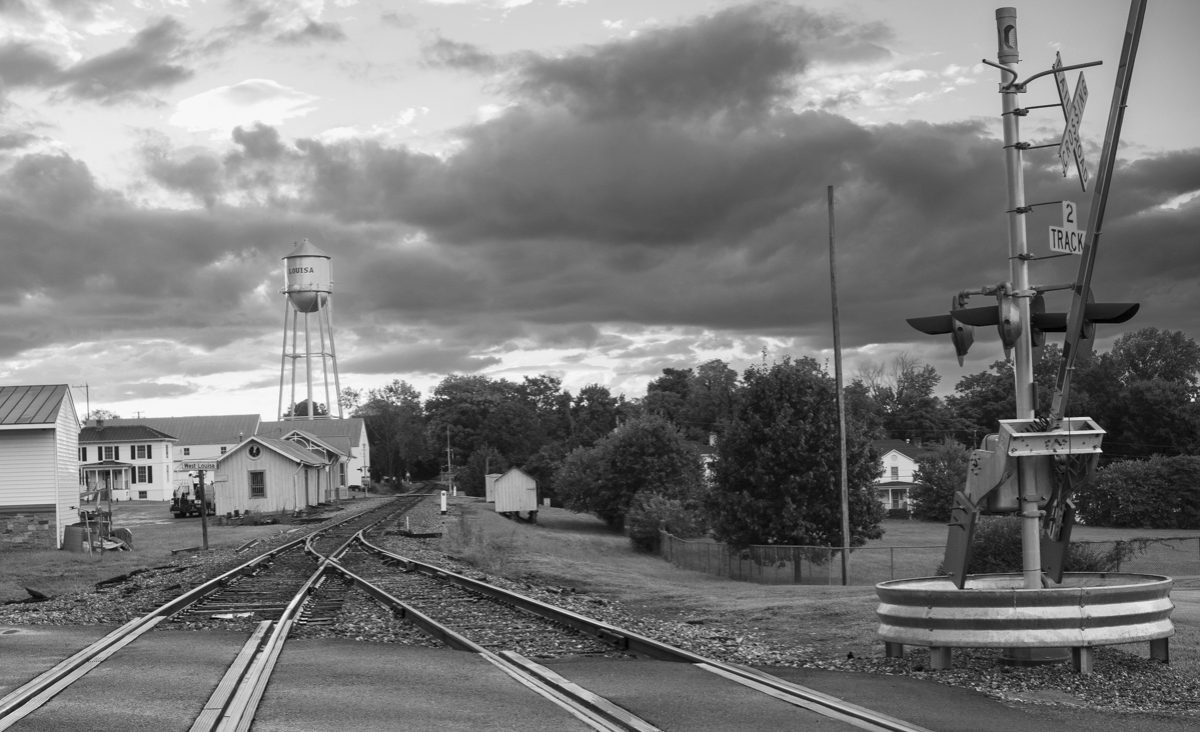
Corrupt is a word much used nowadays to describe Trump and his administration. I even heard it in Louisa in an establishment that I would say is part of MAGA country. A few weeks ago, when my wife and I were in a store in the Louisa and Mineral area, the owner standing behind the counter, went on a tirade about Trump and his corruption.  Stating that Trump and his family pocketed over $1.4 billion.  

I have been to this store several times and there has been, on occasion, anti-liberal, anti-progressive, anti-democratic party bantering and comments made by folks in the store and behind the counter.  For instance, if something was free, it was a “democratic discount.”  I stopped going to the store, but sometimes they were the only game in town.

That said, when I heard the owner dis Trump recently, I got a grin on my face as wide as the Grand Canyon, said nothing, paid for my stuff, and left.  “Damn,” I said to my wife in the truck, adding, “holy shit that was interesting.”  

Whether that anger translates at the polls to a dem vote, is to be seen.  It may turn into low republican turnout, which will benefit the democrats.  But who knows.  Who knows whether a corrupt White House will try and cancel the November election by declaring a national emergency, or, if there is an election, whether Trump will nullify democratic wins by claiming fraud and seize ballots.  That is the $1.4 billion dollar question.

Corrupt, however, is more expansive than simple bribery, self-dealing, insider trading, and all unethical things Trump is doing to enrich himself, his family, and those loyal to him.  It has a much richer and broader meaning.  Corruption is plush in adjectives and verbs dating back to the 14th century.

Like many words in English, it has a Latin origin.  It’s root meaning corrumpere, simply means to destroy to spoil.  In the English language starting in the 1300s it took on the modern sense of how we understand corruption, both physically and spiritually. Most folks nowadays think just bribery, but it has many meanings.   Sadly, I think you can put a check mark by each of the words below and say, “yep, that’s Trump.”

Debased in character, unhealthy, uncouth, bribe, to break, decrepit, putrid, putrefy, spoiled, depraved morally, pervert, contaminate, impair the purity of, seduce or violate (woman or child), render impure, and finally, influence by bribe or other motive.

Not only is Trump using the office of the Presidency to corruptly enrich himself and his family, but the list of his other corrupt acts is deep, and America decays and putrefies every day he remains in power:

he demolishes the rule of law in America every opportunity he has. 

he routinely perverts the course of justice;

he broke America’s social contract;

he debases America and its allies daily with wildly crazy midnight social media posts;

he orders extrajudicial killings on the high seas and starts unjust wars without cause and without the people’s consent.

he violated a woman in a department store dressing room, a civil jury found;

 he was accused by a woman of raping her when she was 13, per FBI documents;

he was a longtime friend with child sex trafficker Jeffrey Epstein;

he posts images of himself as Jesus.

And finally, he is personally uncouth, not worthy of the highest office in our great land.

So, what to do.  The first order is to vote in November, make pleas to friends and family to get out and vote.  That’s the easy party.  If Trump cancels the election or nullifies the election or tells congress not to seat the new congress, what then?  What’s the response? I think, and I believe this, it will be the beginning of the end of the union.  I don’t think disenfranchised states will wait for the courts.  

Civil War?  I hope not, and most Americans do not want this.  It would be fratricidal. Problem is Trump is an insane, corrupt nihilist who likes to play the madman, when he is in effect really a madman, surrounded by sycophantic child like nihilists like Vance, Miller, and Hegseth.  The question is, what will a depraved Trump do when massive demonstrations erupt across the country and in Washington DC should he cancel or nullify the elections?

A Supreme Mess: Roberts and His Den of Constitutional Thieves

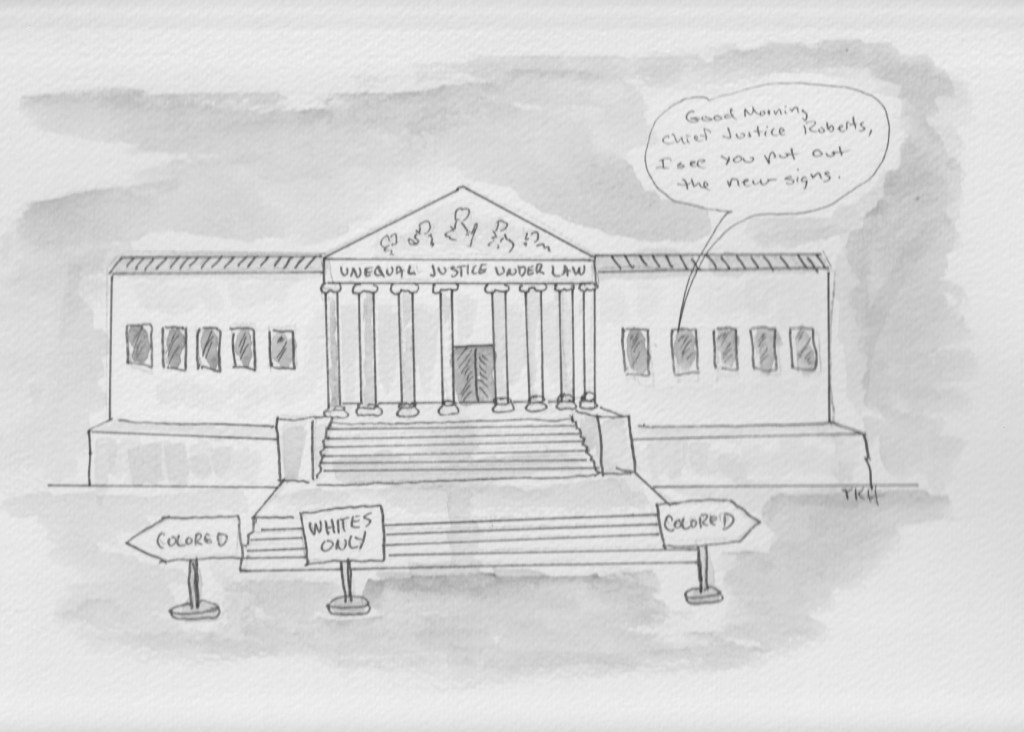
“Good Morning Chief Justice Roberts, I see you put out the new signs”

We are, I think, in a supreme mess. A vindictive Chief Justice Roberts just settled a vendetta. As a Reagan Administration lawyer, Roberts opposed strengthening the Voting Rights Act. He penned memos arguing that letting someone sue a state for a ‘discriminatory effect’ was federal overreach, and interfered in states’ rights.

Despite his opposition to the amendment to the voting rights act, Congress in 1982 passed the bill in a bipartisan vote. Forty four years later he and five other conservative justices strike down that amendment as part of ten-year set of rulings undermining the law and Congresses’ intent. In effect stealing not only the Voting Rights Act, but the 15th Amendment, from the American people.

Congress clearly and resoundingly spoke on this major question in 1982. Now, the chief proponent of the Major Questions doctrine, says not good enough. If anything, the Voting Rights Act of 1965 was, and is, an example of Congress clearly stating its will, the will of the people, on a major constitutional question. That is enforcing the 15th Amendment.

This ruling highlights why we are in trouble as a nation. To the conservative super majority, It’s not about the Constitution, it’s about settling personal and political vendettas. Dangerously, the Robert’s Court is a corrupt right wing political machine, rewriting the Constitution at will. The increasing use and misuse of the shadow docket, anonymous rulings, labored arguments that collapse under their own weight, the outright fabrication of history and data, all point to a debased and crooked Court. A Court where profiteering and acceptance of bribes by some justices is brazenly open.

I think the court will overturn birthright citizenship in part. It just opened the flood gate for gerrymandering districts to favor whites (sorry, I meant I Republicans) months before the mid-terms. I also believe when Trump seizes ballots this November the Court will permit it to do so. When Trump announces his intent to run for a third unconstitutional term the Court will invent a new doctrine to permit Trump to run again. Hopefully the gentleman with the scythe will come calling first.

This corrupt court and a dysfunctional Congress are all that stand before a tyrannical Trump and one party authoritarian rule. We are, therefore, in a heap of trouble, up a constitutional creek without a paddle. Now is the time to look to the future and decide how we, as a people, will respond.

A Very, Very Short History of Voting Rights in America: 1776 to 2026

Let’s begin with a very short quiz.  True or false: Up to 1926 non-citizens in many States could vote in local, state, and national elections.  

If you answered True, you are ………correct.

If you carefully read the original ratified constitution, you will note that it did not explicitly define who could vote.  Or, for that matter even define citizen or citizenship.  In fact, and practice, voting rights in the several states at our founding tended to be based on the big three:  acquired wealth, gender, and race.  These three qualifications defined who could and, consequently, who could not vote.  While property qualifications pretty much disappeared in the early 19th century, gender and race defined who could vote, not citizenship, for many, many decades.

Some state constitutions merely asserted “white males” could vote with no mention of citizenship.  As the country expanded westward voting by aliens was encouraged, for instance in the Northwest Ordinance of 1789 “freehold aliens” could vote.  Some states required aliens to take an oath that they were upstanding inhabitants and intended to become citizens.  Becoming a naturalized citizenship was linked to race, however, in our early Republic.

The Naturalization Act of 1790 stated that only “free white person of good character’ could become citizens after two years of residence, however, several following Acts raised the residency requirements first to five years, and then in 1798 the Alien and Sedition Act raised the residency requirement to 14 years.  This last requirement did not last long and was in response to fears of dastardly French influences.

The Constitution of 1789, while never linking voting to citizenship, clearly stated, however, that the President, Representatives, and Senators must be citizens, and added an additional modifier for President, they must be a ‘natural born citizen.’  The absence of any express statement in the constitution linking citizenship to voting suggests that voting by non-citizens was such common practice that it was deemed a common law right, at least in the American colonies which, before the revolution, were generally governed by written charters.  

Americans, it seems, before they were technically American, were better off than their fellow Englishmen in Great Britian in terms of suffrage.  In Great Britian, voting in the 18th century was extremely restricted and it was not until a series of reforms in the 19th century did Great Britian enlarge the voting franchise.  

For about 150 years then, many states permitted aliens, that is non-citizens, to vote.  I think Scalia, were he alive, and other constitutional originalists would vomit at that thought.  

Voting by non-citizens did ebb and flow over time, however. Wars resulted in contractions of voting rights by non-citizens, for instance the War of 1812 and the First World War saw pushback.  The rise of nativist movements as waves of immigrants arrived provoked some pushback as well on non-citizen voting rights in the mid 19th century.  This accelerated when immigrants from eastern or southern Europe — such as Greece or Italy — began arriving in huge numbers in the late 19th and early 20th centuries.[i]  

Basically, folks from an earlier list of shithole countries or representing threatening religions, you know, the ever-dangerous Catholic or Jew.   Claims of intellectual, genetic, and moral inferiority abounded.  They couldn’t assimilate many claimed.  Does that not sound familiar?

As we have seen, voting rights in America has a peculiar history and was (and is it seems) very much tied with gender and race, not citizenship. Citizenship was a variable state by state.  Women gained the right to vote 105 years ago.  African American men in 1870.  Asian immigrants could not become U.S. citizens until 1952, and therefore ineligible to vote.  

The Voting Rights Act of 1965 did much to enforce and federalize and nationalize the right to vote.  It did much to ensure all citizens, regardless of race or origin, were given equal opportunity to vote.  That is no longer the case.  While the reversals of the Voting Rights Act of 1965 have been articulated in terms of impacts on black and brown voters, the demise of the Act will have broader impacts on other communities: Asian, South Asian, Middle Eastern, Pacific Islander, and other diaspora communities.  

Trump’s new immigration policy is designed to impact the make-up of the next generation of voters.  Afrikaners over Africans, whites over others.  And, with the help of the Robert’s court, making it harder for everyday Americans of color to vote in states with long histories of denying black and brown people the right to vote.  The attack on the Voting Rights Act is just one part of a broader, systemic attack on who is an American, who can become an American, and therefore, who has a voice in America’s present and future.

This November we are voting for more than just neutering Trump politically, we are fighting for whose America this is, and who will inherit America from us once we are gone.  This is a generational vote, a vote for our kids, our grandkids, and our generations of unborn Americans. 

Post Script:  The Supreme Court recently invalidated Louisiana’s congressional district voting map because districts were gerrymandered by race.  A normal grace period of a month was set aside by the Court to allow immediate action by Louisiana.  Voting was already underway.  The Louisiana governor is currently refusing to count over 30k mail-in votes already received.    


[i] Texas permitted non-citizens to vote until 1921.  Indiana as well. Kansas 1918. Oregon 1914.  Virginia 1818.  Pennsylvania 1838.  See Ron Hayduk, Democracy for All: Restoring Immigrant Voting Rights in the United States, 2006.

Supreme Mistake: Et Tu Roberts?

The Supreme Court last week gave a final, mortal blow to the Voting Rights Act of 1965.  Et tu Roberts. The Court’s majority opinion, penned by Justice Alito, argued that America has changed since the 1960s, that the racial animus predicating the denial of black and brown people from voting or having the chance to be represented in Congress, had magically evaporated.  

The Louisiana congressional district map, which was at the heart of this recent case, was therefore unconstitutional, according to six of the justices. Voting districts, per the Court could be gerrymandered to reflect political favoritism toward a political party but not race. To add insult to injury, the Court then granted Louisiana the immediate ability to change the map.  Normally, there is a month’s long grace period giving the losing side an opportunity to prepare arguments in lower courts before the ruling comes into effect. 

The central premise that America has changed is facile and flawed and misguided.  Yes, America has become a more pluralistic society, black and brown representation did increase since the late 1960s.  However, in many deep south states with large black and brown populations, white’s continue to be overrepresented in state houses and the House of Representatives.  It ignores repeated and continual attempts to disenfranchise black and brown voters through ostensibly race neutral laws.

On another level, the racial animus towards black and brown folks is as strong as ever.  Take Trump’s words that immigrants from ‘shit hole’ countries are polluting American blood, or that Haitians eat folks’ pets, or that Somalis are low IQ, or that non-white immigrants are destroying western civilization.  I don’t think these thoughts are outliers in MAGA world, or for that matter in the minds of some of the Supreme Court justices.  

A week before the riots in Charlottesville in August 2017, in which Heather Heyer was murdered and dozens more were injured when a white supremacist drove his car into peaceful protestors, I posted this essay. An essay about my community here in Louisa.  Given the Court’s decision last week, I believe the essay deserves a repost. I repost it in its entirety below followed by a brief postscript: 

Four ladies were sitting in a pie and coffee joint. In walk a priest, a rabbi, and an Imam. Naw, in walk my wife and I. What follows, disappointingly, is a true, but sad story. As we walk in the four women were playing bridge and conversationally engaged. As I ordered coffee and tea, a slice of rhubarb pie, and a muffin, at the counter my wife selected a table cattycorner from this bridge quartet, well within earshot, especially as they spoke in upturned voices.  

Given the closeness of the tables, it was impossible not to be encompassed in the conversation, even as detached, unwilling silent witnesses. Eavesdropping into the conversation mid-way found us somewhere in a conversation about church business followed quickly by a lamentation that a friend, who apparently was pictured in a Ku Klux Klan photograph, was being unfairly associated with the racism. “Guilt by association” chuckled one woman slightly. It was like walking into a Kafka soliloquy.  This tête-à-tête then veered onto the hot local subject of the removal of a confederate statue from a nearby university town. All expressed bitterness, with one speaking out loud for their little group, that it was a disgrace, that you “can’t change history.”   

She’s right, but apparently, she can’t fathom or acknowledge that the South’s history is more than about white heritage. Then, in a deeply submerged psychological association, the statue controversy was instantaneously linked to the public schools — think 1954 and Brown v. Board of Education declaring racial segregation unconstitutional – when one exclaimed in the next breath to mutual concord, that “We provide them with a free education” and if ‘they don’t take advantage of that, it isn’t our problem.’  Oh, that set me off. We and them. WE and THEM! That basically sums it up. At that point my wife shot me that ‘not now’ look with a little Mona Lisa smirk, part threat, part calm down. I mumbled aloud about walking into a ‘daughters of the confederacy’ meeting. 

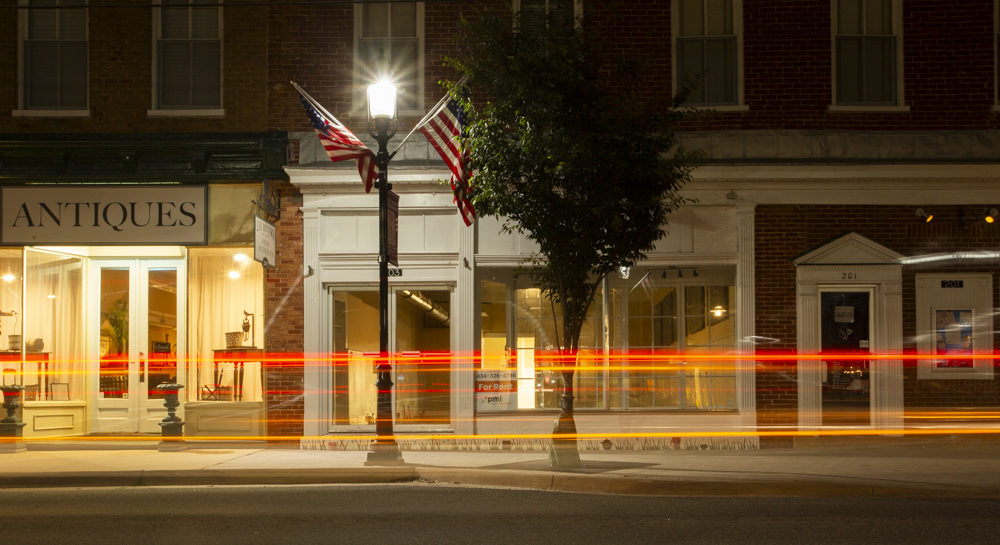
My back was to this bridge playing klavern and I was facing out the pie shop’s picture window taking in the Mayberry-like main street, named of course Main Street. Across the street was the antebellum circuit courthouse, a little red brick jail stood off to the left of the courthouse. A statue of a confederate soldier stands a silent vigil; his gaze forever fixed towards the northeast watching over the town square and all who approach. Sheriff Andy Taylor or Atticus Finch may walk by if you close your eyes for a second.  This American circuit courthouse was a facilitator of slavery and racial oppression. No doubt, slaves seized from indebted planters were most likely sold just yards away. Wills that directed the selling off or gifting of slaves, breaking up families, were filed in that courthouse. I wondered too about the little jail and imagined whether slave traders, with their coffles of slaves heading down from Alexandria to Richmond, and then on to New Orleans, would bed down their walking inventory in the local jail overnight for a small fee.  

I am not sure the irony of their conversation juxtaposed so close to slavery’s ghosts was apparent to these card players. Nonetheless, the carefree and unguarded manner the conversation played out in a public space underscored, I think, the impulsive racist bigotry that pervades many American towns. It is as natural as breathing it seems. The fact that they spoke in raised voices like it was 1859 or 1955 leads me to believe these women intuitively assumed, that because my wife and I are white, we automatically subscribe to their philosophy. 

Shamefully, I sat mute, halfway between cowardice and rage, sipping tepid tea, but felt my anger and words would not change what has been etched in these women’s minds since before their mothers’ mothers were even born.  Their banter was wide ranging and not all about race. At some point one commented about CNN “yapping on” about the “Russia thing,” “brain washing of liberals,” and what to do about North Korea. On North Korea, at least, there was disagreement. While it isn’t fair to put all the white folks in this corner of the South into a box and label it “toxic bigots, handle with care” racism’s complexities remains deep in this part of the woods and the women playing bridge no doubt have already infested their children and grandchildren with their septic views of race, supremacy, and obligation.  At least the muffin was good, but the conversation left a bitter, sad after taste. 

On reflection, “WE and THEM” is at the heart of America’s political divide. It always has been. At its core is the fundamental question about “whose America is this?” America belongs to the descendants of African captives forced into generational slavery, the new African citizen, the fifth generation Mexican American, the Coptic Christian immigrant from Egypt, the Shia Muslim from Syria, the offspring of Puritan New Englanders, the Chinese Americans whose ancestors helped build America’s western railroads, native Americans. And yes, even the fearful daughters of the confederacy who indifferently sip the tepid tears of those lost to slavery while playing bridge, should have equal access to a piece of the American pie.

Post Script:  The Supreme Court made another decision antithetical to American democracy and misjudges the residual racial animus and antipathy still much alive in this country.  This decision highlights the need for every vote this November.  A democratic majority in the House and Senate will put a dead stop to Trump’s rule by decree.  The Senate will ensure no more supreme court justices appointed by Trump are confirmed should any retire or die during the last two years of Trump’s term. 

Oral Arguments and Severed Horse Heads: The Supreme Court and Birthright Citizenship

Yesterday the Supreme Court heard arguments in Trump v. Barbara whether Trump’s Executive Order stripping birthright citizenship from children of non-citizens was constitutional.  Every lower court hearing cases regarding the Order ruled that it was unquestionably unconstitutional. The arguments before the justices of our country’s highest court should have taken on the patina of well worn rituals and procedures. However, it was far from normal.

Last year, at an initial hearing before the Court, a majority of justices kept an injunction on the order in place, staying the implementation of Trump’s Order indefinitely.  The vote was 6-3.  Not shocking, given a radical core of conservative justices seem hell bent on overturning everything that smacks of small “l” liberal governance.  The Court could have left the appeals court in ruling in place, basically saying that the lower court’s ruling was sound.  They did not.  Instead, a least four justices voted to hear the case.

Yesterday, in an unprecedented move, Trump attended the oral arguments. His attendance, for all intents and purposes, was a direct attack on the separation of powers enshrined in our Constitution.   Trump did not stay for all of the arguments, leaving after the first hour.  His message sent, I think.  

Most of the justices, it seemed, were skeptical of the government’s argument that birthright citizenship should be limited.  The government’s argument hinged on the words “subject to the jurisdiction thereof” and the word “domicile” in the seminal 1898 Supreme Court ruling United States v. Wong Kim Ark.  Their arguments rehashes of earlier losing arguments.  This should be a slam dunk case, but it isn’t.

In a previous post, I predicted with despair that Trump and the government would prevail.  I thought perhaps I was wrong, and was heartened when the justices in a 6-3 vote kept the injunction in place.  That signaled the government would most likely not prevail in court.  Yet, I worried that at least four justices wanted to hear the case.  

This case should not be a nail biter.  It has been settled law for 128 years.  But with today’s Court consisting of a super majority of conservatives with a hard-core troika of ultra radical conservative justices, anything is possible.  

Enter Trump.  No sitting president has ever attended oral arguments at the Supreme Court. It is unseemly, and I think, an assault on the doctrine of the separation of powers.  His presence was like a dog pissing on a tree, marking its territory.  Trump was marking his Order and signaling to everyone, ‘do not rule against me and my Order.’ It was designed, I argue, to intimidate the justices that are on the fence, so to speak.  That is Barrett and Gorsuch.  Like the Godfather movie, Trump was the decapitated horse’s head laying at the foot of the bed.  A warning of bloody consequences. 

I would not be surprised that folks acting on Trump’s orders engage in a campaign of intimidation, influence, and ever terror against Barrett and Gorsuch in the coming weeks. He will use similar tactics that he has already used on his other perceived enemies.  His no holds barred attack on the Chair of the Federal Reserve is just one very recent example.  DOJ investigations, insinuations of wrongdoing, grand juries, threats of impeachment against other federal judges.  This will get nasty.

Even though many of the justices seemed skeptical in whole or in part of the government’s arguments; to include the Chief Justice Roberts, the majority opinion is far from settled.  The final vote is in doubt in my mind.  Congress abdicated to Trump.   Will the Supreme Court do so as well?   Surrendering the Judicial Branch to Trump, so that he can hang its stuffed head next to all the gold and gild bling in the Oval Office.   That is to be seen.

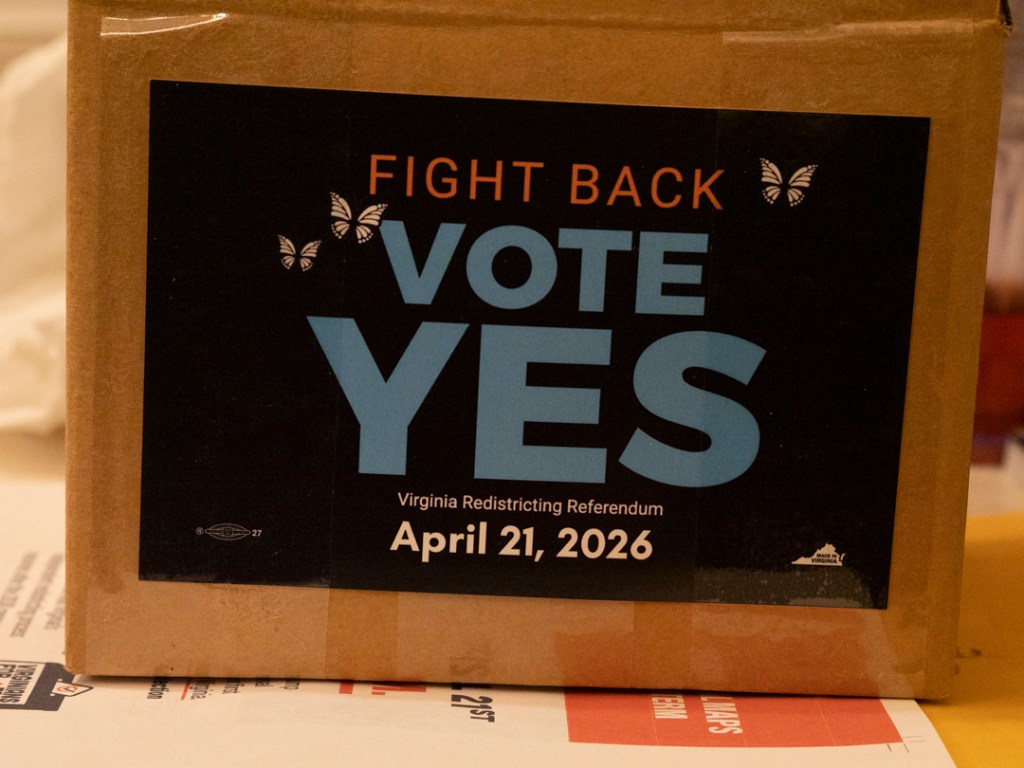
Break Glass in Emergency: Vote Yes by April 21 in Virginia’s Redistricting Referendum

If things were normal, which they are not, I would oppose returning the drawing of Virginia’s congressional district maps back to the state’s legislature, even temporarily.  America is in deep trouble, however. Democracy is in retreat; the country is ruled by decree out of the White House. Congress sits mute.  A President ruling from his gold encrusted throne threatens to “nationalize” the elections and seems indifferent to his paramilitary police brutalizing communities and shooting and killing citizens.

The Constitution – our written social contract as to how the government is organized and how power is shared – is shredded day-by-day by Trump.  Our representative in the 5th District, John McGuire just voted for the Save Act to make it harder for Americans to vote and agrees with Trump’s call for Republicans to nationalize the vote, or at the least, has not repudiated Trump’s demand.  He thinks he works for Trump and not we the people of his district.  It is time to fight back, it is time to b break the glass because there is a constitutional emergency.

The fastest and best way to check Trump’s unchecked power is by electing Democrats to the House of Representatives – the people’s house – and the senate.  Sensing a coming defeat this November and a loss of a Republican majority in the House of Representatives, Trump demanded that red states redraw their congressional districts, immediately.  If you can’t win fair and square, cheat, lie, and steal is this administration’s mantra.

Texas obliged instantly, without consulting their people.  Another example of rule by dictate far too common in red states.  At least the people of California had a choice whether to redistrict (they voted ‘yes’ this past November).  We the people of Virginia will have our chance to give voice to whether we redistrict.  That vote is April 21.  Early voting starts March 3.   

Democrats did not ask for this redistricting fight, but Trump threw down the gauntlet.  We the people of Virginia must take drastic steps to reclaim sovereignty or lose our democracy to one-party rule and dictatorship. 

Vote YES to temporarily redistrict Virginia’s congressional seats.  

For those constitutional law geeks like me, below are some Frequently Asked Question:

How many other states are redistricting (or counter redistricting) based on Trump’s outrageous demand?

According to the National Conference of State Legislatures, five states have already redistricted (Missouri, North Carolina, Ohio, Texas, California); A number of states have introduced legislation to redistrict (Maryland, South Carolina, Washington, and Virginia):  Florida is in the process of adopting legislation with additional states contemplating redistricting, but awaiting state court decisions (Alabama, Louisiana, North Dakota, and Wisconsin).  Other states have already moved forward and many plan to do so.  Indiana rejected Trump’s redistricting demand.

Why does Virginia need a vote on whether to redistrict its congressional districts?

In November 2020, Virginians voted overwhelming (66 percent) to amend the state’s constitution to appoint a 16-member bipartisan commission to draw Virginia’s congressional districts.  Virginia is one of about a dozen states that have independent commissions to draw congressional maps.  A majority (29) still permit their state legislatures to draw congressional districts.  The referendum vote in April is the only constitutionally sanctioned method to temporarily amend our state constitution so that the Generally Assembly can redraw Virginia’s congressional districts.  

Why hasn’t the Supreme Court ruled that partisan redistricting is unconstitutional?

They did rule, by not ruling.  They took the easy way out and said it was out of their hands, that there were no ‘judicially discoverable’ or ‘manageable standards’ to adjudicate claims of unconstitutionally drawn districts, with one exception, drawing districts to favor white voters (e.g., diluting concentrations of black or brown voices into majority white districts).

A brief recent history:  In 1986, the Supreme Court ruled that the federal courts could hear challenges to how congressional districts were drawn, however, the court offered no standards.  Some years later in 2004, the Supreme Court ruled there were no “judicially discoverable or manageable standards.”  The conservative court inches it way toward legalizing partisan gerrymandering.

In 2019, in Rucho v. Common Cause, the Supreme court ruled that federal courts could not hear claims of partisan gerrymandering because they – the court — could not articulate any standard by which to judge partisan gerrymandering.  Out of very thin air, they could invent the legal fiction that President Trump is immune from crimes committed for official acts, but these Harvard and Yale legal brains are damned clueless as to how to fix the scourge of gerrymandering.  This legal punt basically legalizes partisan gerrymandering no matter how egregious, at least at the federal court level.  State courts can still hear cases, nonetheless.

To make matters worse, the Rucho decision gave states a “partisan” get-out-of- constitutional jail card for race-based gerrymandering.  In 2024, South Carolina drew racially gerrymandered congressional districts.  The South Carolina NAACP sued.  South Carolian argued it was not racial gerrymandering, but ‘partisan’ gerrymandering.  In a 6 to 3 decision, the Supreme Court agreed with South Carolina and let the racially drawn maps stand.

After Texas redrew its congressional districts after Trump requested it do so, The League of United Latin American Citizens sued.  A federal district court, after 9 days of testimony and review of thousands of documents, concluded that Texas illegally redrew the congressional districts based on race.  In a shadow docket ruling, however, the Supreme Court, overturned the district court and said Texas could use the newly drawn maps.  

The reasons given by the Supreme Court’s were: 1) The District Court failed to “honor the presumption of legislative good faith;” 2) The District Court did not produce a viable alternative map; 3) It was too close to the election to redraw the redrawn congressional maps.   My only response:  What the fuck!  I did not know there was a ‘legislative good faith’ exemption to unconstitutional laws.

So, there you have it.  Go out and vote. And vote Yes.  

“Guards of this Kind:” A Brief History of the Original Intent of Madison’s Second Amendment.

New York Times Reporter: “Do you see any checks on your power….”

Donald Trump:  “Yeah, there is one thing.  My own morality.  My own mind.  It’s the only thing that can stop me.”

No Mr. President, we the people can stop you.

What is happening in America is not normal.   When a president sitting in the White House, stewing in his own grievances and thirst for vengeance and proclivity to spectacle, says he is only bound by his “morality,” we as a nation are in deep trouble.  As is the world.

I know this essay’s title may make some folks uncomfortable, but please bear with me (yes, a pun). I am self-aware enough to understand that invoking the Second Amendment can be provocative. I struggled while writing this essay on a number of levels. First, is that it even had to be written. Given the words and actions of Trump, I feel it is necessary. On another level, I don’t want to be interpreted as calling for armed revolt. I do not want that. That would be insane.

My whole adult life was living, working, or traveling to conflict and war zones, failed and failing states, police states. I know that option to be unacceptable. On a third level, I feel too many Americans are indifferent or distracted or worn. down and just don’t give a shit, that only some people are impacted and they will never by touched. Inevitably, in a dictatorship, even it you agree with the dictator now, you will be touched and your soul will be crushed eventually as you tire of being told what to watch, what to read, and what to think. Because you are reading this, you know I hit the publish button.

I want to lay out my thoughts on the limits of power of the central government and what States can do once Trump and federal government blows past those limits.  The origin and intent of the Second Amendment figures prominently in any discourse about how to create “guards” to a tyrannical central government.

Blue states continue to get pounded by the Trump administration.  It routinely withholds funds from blue states as punishment for resisting his policies.  Incongruously, it is the blue states that provide most tax raised monies to the federal government, with red states getting more federal tax dollars in terms of spending than they actually put in. In essence, Trump is super charging the transfer of wealth from blue to red states.  Oh, the irony.

Trump targets blue states and cities with mass deployments of militarized immigration agents as punishment for deigning to treat migrants as human beings.  As the result of protests against these deployments, Trump federalized and deployed national guard units without traditional requests from state governors, and in all instances in blue states, against the wishes of the governor and the majority of the state’s peoples, to quell, he alleges, widespread violence, but we know it is to smother the people’s voices.  

Now he is deploying hundreds of additional Homeland Security agents to investigate alleged fraud in Minnesota’s social safety net programs, according to DHS’s secretary.  A calculated and chilling response to the protests over the killing of a woman by an ICE agent and the states demand to be included in the investigation of the homicide of Renee Good.  Incongruously, Trump condemns the death of protestors in Iran, but claims an American protestor shot and killed by an ICE agent was a domestic terrorist, and, intoned, deserved to die.  

Hey, Ayatollah in Iran.  News Flash:  Just rebrand Iranian protestors as deranged left wing domestic terrorists.  Then you are good to go.

This is what despots do.  They flood the streets with thugs and faceless paramilitaries and then sanction investigations to cover up murders. Nazis Germany’s Brown Shirts of the past are being reborn as combat fatigue wearing ICE agents.

This is what he will do to Virginia now that we will have a democratic governor and a state legislature controlled by democrats.  Expect payback with canceled programs, stopped federal grants, and deployments of Homeland Security agents to intimidate citizens.

The ability of a state to resist a tyrannical central government is how the Second Amendment was born.

What became the Second Amendment was not intended as an individual right to bear arms but a collective right of a state to bear arms to maintain its’ citizens inalienable rights.  Lord Dunmore, the English Governor of Virginia’s, attempt to seize the militias’ arms in Williamsburg, Virginia, at the outset of America’s first civil war was still fresh in the mind of the founding generation.  

It never crossed the minds of folks back then that the constitution needed to enumerate the right to own firearms for defense or hunting at the federal level.  Gun ownership – mostly muskets — was so ubiquitous and a traditional right in the colonies that enumerating the right would be ridiculous.  States had the right to regulate firearms and did so, most notably restricting possession primarily to whites.  

The Second Amendment was intended as a state’s right to maintain armed militias for their defense against a tyrannical central government.  It was a meant as bulwark of self defense against a large standing Army used by the central government to impose its will on a state or states. If you follow how the language of the amendment changed and unfolded, I think one can get a sense of what the intent was and how the amendment was seen and understood within a broader conception of constitutionalism, tradition, common law, and gun possession in the early republic.

On June 8, 1789, James Madison introduced nine propositions or resolutions for amending the Constitution. From these propositions the House of Representatives would derive 17 amendments, of which, ten would eventually become the Bill of Rights. Way down the list, buried in proposition four, after statements about religious freedom, freedom of speech and press, the right to peaceable assembly and petitioning for redressing of grievances, Madison, proposed what would become the second amendment.

The Annals of Congress contains the record of the running debates surrounding the amendments to the Constitution and reflect contemporaneous conceptions of the meanings of these amendments, and how they changed over the debates. Madison, borrowing from the other state constitutions and even the 1689 English Bill of Rights, proposed the following language regarding the right to bear arms (House Records, pp. 451-452):

“The right of the people to keep and bear arms shall not be infringed; a well armed and well regulated militia being the best security of a free country: but no person religiously scrupulous of bearing arms shall be compelled to render military service in person.”

Madison’s propositions did not gain much traction in Congress. Members of Congress were more concerned with the mechanics of setting up a functioning government. The debates preceding and surrounding the discussions on the proposed amendments centered on funding mechanisms and structure of the various executive departments being contemplated. Madison nonetheless persisted, and on July 21 requested further consideration of the amendments. After “desultory” conversation on the amendments, they were referred to a committee of eleven, which included Madison.

Just short of a month later, the committee of eleven finished their work on the proposed amendments and presented them to the House of Representatives on August 17. Madison’s language on bearing arms was revised and read:

“A well regulated militia, composed of the body of the people, being the best security of a free state, the right of the people to keep and bear arms shall not be infringed; but no person religiously scrupulous shall be compelled to bear arms (House Records, p.778)

Eldridge Gerry of Massachusetts, a veteran of the constitutional convention in Philadelphia in 1787, and who was one of three delegates who refused to sign the Constitution at the end of the convention, led the debate regarding the amendment to bear arms. His remarks are crucial, I think to understanding, the intent of this amendment. He states:

“This declaration of rights, I take it, is intended to secure the people against the mal-administration of the Government; if we could suppose that, in all cases, the rights of the people would be attended to, the occasion for guards of this kind would be removed (p. 778).”

Not one person during the debate contradicted or challenged Gerry’s assertion, which seems to state that the ability to keep and bear arms referred to the people’s ability to form militias as a collective defense against a tyrannical central government. The remainder of the debate that day on this amendment surrounded primarily the question of religious scruples and service in the militia.

After more “desultory” (I love that word) conversation, 17 proposed amendments to the Constitution were sent to the Senate on August 24. The bearing arms amendment was number 5 and read after some minor tweaking (Senate record, pp. 63-64):

“A well regulated militia, composed of the body of the people, being the best security of a free state, the right of the people to keep and bear arms, shall not be infringed, but no one religiously scrupulous of bearing arms shall be compelled to render military service in person.

On September 4, the senate, whose records of debate are not as detailed as the House’s records of debate, showed that senators objected to a number of the amendments, but without comment as to why. “On the motion to adopt the fifth article of the amendments proposed by the House of Representatives, amended to read as followeth: ‘a well regulated militia, being the best security of a free state, the right of the people to keep and bear arms, shall not be infringed:’ It passed in the affirmative” (Senate Record, p. 71).

So, there you have it, a brief but spectacular history of the origin of the Second Amendment.

Trump’s advisor Stephen Miller’s call to abandon America’s social contract and resort to a ‘state of nature’ where brute force is the first and only response should scare the shit out Americans.  This new dogma of ‘power, strength, and violence’ will fundamentally rewrite the world order but also crush America’s social contract between the people and the government:  the annihilation of the separation of powers, the demise of a democratic central government, and the eradication of shared sovereignty between the states and the central government.  That, good reader, is why we have “guards of this kind,” the Second Amendment. 

Let me be clear, I am not calling for armed revolt or violence against our central government or secession, I still believe in the vote and the power of the American people to reign in Trump.  But as Congress and the Supreme Court not only fail to curtail Trump’s excesses, and in fact enable him, what are the people to do?  

States are the peoples last bulwark against Trump and a despotic central government.  A new pposition is rising, however.   Not from spineless democratic leaders like Schumer, but from Republicans.  Republican Senators that voted to restrain Trump’s war powers received threatening profanity laced phone calls by Trump.  A sign he is losing control and trying to bully folks back into line.

What I ask is that our new, incoming governor, think long and hard about how to deal with an increasingly authoritarian and despotic central government that continues to ratchet up the level of violence against the people in targeted states and cities – maladministration as Eldridge Gerry put it.  The governor needs to develop contingency plans on when and how to resist, to include using the National Guard to defend our natural and inalienable rights as a free people of Virginia.  

It seems to me America cannot long remain a nation if Trump puts his boot on the neck of blue states while red states happily bend the knee to the tyrant in the White House. Time to mobilize once again, stay engaged, and get family and friends to vote this November.

Yes, Virginia, There is a Trump Clause

I am damned angry.  The democrats once again appear prepared to snatch defeat out of the jaws of victory on promises of talks later. Coming off great results in Virginia and New Jersey and California in last week’s elections with national consequences, it did not take long for the Democrats to deflate like a pricked ballon once again at the national level.

My first thoughts on hearing a number of Democrats defecting on the shutdown showdown:  Mother Fuckers!  (not really, it was longer and more expressive) Why, after 40 days of standing up to, and resisting Trump and his autocratic agenda, did Democrats cave on their supposed principles?  Why?  Senator Kaine, what were you thinking?

You claimed to stand fast with American workers who were going to get slammed with extreme health insurance premium increases because subsidies were cut by Trump’s big, beautiful bill.  You lobbed the health insurance ball firmly into the Republicans court — who control the House, the Senate, the White House, and the Supreme Court — in order to extend the subsidies, hoping to provoke a compromise.  They held fast.  

In this standoff, the only power left to the Democrats was solidarity and the senate filibuster to force negotiations.  But no, you give up that last bastion of protecting minority rights in Congress to force negotiations and compromise.  So, after 40 days you have nothing to show if you cave in.

You gave up the two hallmarks of democracy with a half assed fight. Can you be trusted to fight Trump’s trespasses when he invokes the insurrection act or martial law or challenges the results of the 2026 mid-terms; to fight for the working and middle classes?  I think you will be halfway to the hills with your tail between your legs, that’s what I think, leaving state and local democrats holding the proverbial bag of shit.

No wonder Democrats in national polls  aren’t trusted to do the right thing at the national level.  The public, given the asymmetric power relationship in Congress, blamed the Republicans for the shutdown and associated pain. I think virtually overnight that blame will shift to you. 

I supported the principled stand on health care subsidies, but I also thought it was about resisting Trump’s autocratic gains, protecting the rule of law, and our constitutional system of checks and balances.  Apparently not.   You now own the shutdown. For taking a stand, you were essentially unwilling and incapable of following through on.  

Come on man, get some balls, some chutzpa, some spine.  Why all the pain and suffering and angst endured by millions when you collapse like a mud hut in a rainstorm?  All for promises of future talks in December, exchanging your principles for a bag of magical beans.  The Republicans have chutzpa at least. They lie to the Supreme Court that they don’t have the cash to pay out full SNAP benefits yet a day or two later, after the Court agrees with Trump, Trump announces taxpayers will get $2000 each from a so called tariff divided. What don’t you get about them? Did you not read the fine print under the Trump Clause?

Trump Clause:  Any and all agreements made with Donald Trump are conditional, subject to change, lies, misrepresentations, and omissions.  You take his word at your own peril and risk.

I don’t know whether this round of spending bills will pass the hurdles before it, but I do predict that should the spending bills pass to reopen the government, that promise to have December talks to extend the ACA subsidies will vanish like a cheese burger on Trump’s lips.  The House and Senate will adjourn without passing the subsidy bill, and you know it.  The Republicans have stolen Christmas from millions of Americans and you are his accessory after the fact if you give in.