
Supreme Mistake: Et Tu Roberts?

The Supreme Court last week gave a final, mortal blow to the Voting Rights Act of 1965.  Et tu Roberts. The Court’s majority opinion, penned by Justice Alito, argued that America has changed since the 1960s, that the racial animus predicating the denial of black and brown people from voting or having the chance to be represented in Congress, had magically evaporated.  

The Louisiana congressional district map, which was at the heart of this recent case, was therefore unconstitutional, according to six of the justices. Voting districts, per the Court could be gerrymandered to reflect political favoritism toward a political party but not race. To add insult to injury, the Court then granted Louisiana the immediate ability to change the map.  Normally, there is a month’s long grace period giving the losing side an opportunity to prepare arguments in lower courts before the ruling comes into effect. 

The central premise that America has changed is facile and flawed and misguided.  Yes, America has become a more pluralistic society, black and brown representation did increase since the late 1960s.  However, in many deep south states with large black and brown populations, white’s continue to be overrepresented in state houses and the House of Representatives.  It ignores repeated and continual attempts to disenfranchise black and brown voters through ostensibly race neutral laws.

On another level, the racial animus towards black and brown folks is as strong as ever.  Take Trump’s words that immigrants from ‘shit hole’ countries are polluting American blood, or that Haitians eat folks’ pets, or that Somalis are low IQ, or that non-white immigrants are destroying western civilization.  I don’t think these thoughts are outliers in MAGA world, or for that matter in the minds of some of the Supreme Court justices.  

A week before the riots in Charlottesville in August 2017, in which Heather Heyer was murdered and dozens more were injured when a white supremacist drove his car into peaceful protestors, I posted this essay. An essay about my community here in Louisa.  Given the Court’s decision last week, I believe the essay deserves a repost. I repost it in its entirety below followed by a brief postscript: 

Four ladies were sitting in a pie and coffee joint. In walk a priest, a rabbi, and an Imam. Naw, in walk my wife and I. What follows, disappointingly, is a true, but sad story. As we walk in the four women were playing bridge and conversationally engaged. As I ordered coffee and tea, a slice of rhubarb pie, and a muffin, at the counter my wife selected a table cattycorner from this bridge quartet, well within earshot, especially as they spoke in upturned voices.  

Given the closeness of the tables, it was impossible not to be encompassed in the conversation, even as detached, unwilling silent witnesses. Eavesdropping into the conversation mid-way found us somewhere in a conversation about church business followed quickly by a lamentation that a friend, who apparently was pictured in a Ku Klux Klan photograph, was being unfairly associated with the racism. “Guilt by association” chuckled one woman slightly. It was like walking into a Kafka soliloquy.  This tête-à-tête then veered onto the hot local subject of the removal of a confederate statue from a nearby university town. All expressed bitterness, with one speaking out loud for their little group, that it was a disgrace, that you “can’t change history.”   

She’s right, but apparently, she can’t fathom or acknowledge that the South’s history is more than about white heritage. Then, in a deeply submerged psychological association, the statue controversy was instantaneously linked to the public schools — think 1954 and Brown v. Board of Education declaring racial segregation unconstitutional – when one exclaimed in the next breath to mutual concord, that “We provide them with a free education” and if ‘they don’t take advantage of that, it isn’t our problem.’  Oh, that set me off. We and them. WE and THEM! That basically sums it up. At that point my wife shot me that ‘not now’ look with a little Mona Lisa smirk, part threat, part calm down. I mumbled aloud about walking into a ‘daughters of the confederacy’ meeting. 

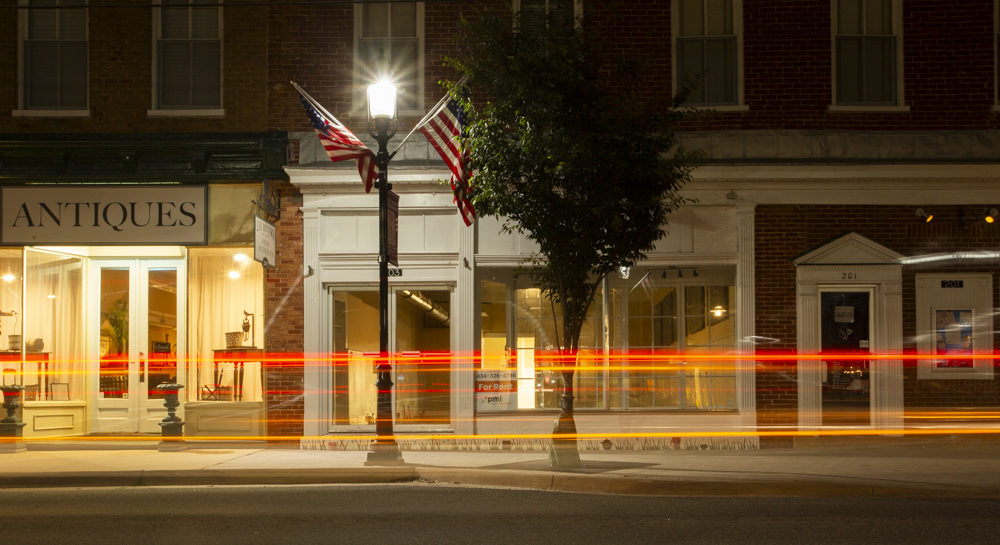
My back was to this bridge playing klavern and I was facing out the pie shop’s picture window taking in the Mayberry-like main street, named of course Main Street. Across the street was the antebellum circuit courthouse, a little red brick jail stood off to the left of the courthouse. A statue of a confederate soldier stands a silent vigil; his gaze forever fixed towards the northeast watching over the town square and all who approach. Sheriff Andy Taylor or Atticus Finch may walk by if you close your eyes for a second.  This American circuit courthouse was a facilitator of slavery and racial oppression. No doubt, slaves seized from indebted planters were most likely sold just yards away. Wills that directed the selling off or gifting of slaves, breaking up families, were filed in that courthouse. I wondered too about the little jail and imagined whether slave traders, with their coffles of slaves heading down from Alexandria to Richmond, and then on to New Orleans, would bed down their walking inventory in the local jail overnight for a small fee.  

I am not sure the irony of their conversation juxtaposed so close to slavery’s ghosts was apparent to these card players. Nonetheless, the carefree and unguarded manner the conversation played out in a public space underscored, I think, the impulsive racist bigotry that pervades many American towns. It is as natural as breathing it seems. The fact that they spoke in raised voices like it was 1859 or 1955 leads me to believe these women intuitively assumed, that because my wife and I are white, we automatically subscribe to their philosophy. 

Shamefully, I sat mute, halfway between cowardice and rage, sipping tepid tea, but felt my anger and words would not change what has been etched in these women’s minds since before their mothers’ mothers were even born.  Their banter was wide ranging and not all about race. At some point one commented about CNN “yapping on” about the “Russia thing,” “brain washing of liberals,” and what to do about North Korea. On North Korea, at least, there was disagreement. While it isn’t fair to put all the white folks in this corner of the South into a box and label it “toxic bigots, handle with care” racism’s complexities remains deep in this part of the woods and the women playing bridge no doubt have already infested their children and grandchildren with their septic views of race, supremacy, and obligation.  At least the muffin was good, but the conversation left a bitter, sad after taste. 

On reflection, “WE and THEM” is at the heart of America’s political divide. It always has been. At its core is the fundamental question about “whose America is this?” America belongs to the descendants of African captives forced into generational slavery, the new African citizen, the fifth generation Mexican American, the Coptic Christian immigrant from Egypt, the Shia Muslim from Syria, the offspring of Puritan New Englanders, the Chinese Americans whose ancestors helped build America’s western railroads, native Americans. And yes, even the fearful daughters of the confederacy who indifferently sip the tepid tears of those lost to slavery while playing bridge, should have equal access to a piece of the American pie.

Post Script:  The Supreme Court made another decision antithetical to American democracy and misjudges the residual racial animus and antipathy still much alive in this country.  This decision highlights the need for every vote this November.  A democratic majority in the House and Senate will put a dead stop to Trump’s rule by decree.  The Senate will ensure no more supreme court justices appointed by Trump are confirmed should any retire or die during the last two years of Trump’s term. 

The Good, the Bad and the Ugly

For three plus years my wife and I were volunteer repair program managers for Charlottesville’s Habitat for Humanity program in Louisa.  The repair program primarily focused on ensuring folks could safely get in and out of their homes.  This included repairing or replacing decks or stoops and stairs, replacing or repairing exterior doors, installing ramps.  We also replaced or fixed window, siding, soffits, gutters, and the occasional roof.  The work was all done by volunteers.  One year I put 2500 miles on my truck supporting Habitat projects, which reflects the demand for housing aid in Louisa County.

Whether or not a project went forward after the initial survey and scope of work was completed, depended on the client’s income.  They had to make at or less than 50 percent of the average marginal income for the county.   Our typical client was female, over 65, widowed, earning between $8 to $24K per year.  The bulk of that from Social Security.  To say the least, they struggled to keep maintain their homes.  Most had worked their entire adult lives yet have economically drifted downwards into poverty once they can work no longer.  

No defined pensions, marginal savings if any.  The only wealth they have was tied up in their home and land, but without being able to maintain the home or land, its value shrinks.  Given the absence of affordable housing in the county, the elderly who want to maintain their independence and local connections have two basic choices:  Sell and move out of the county or stay in a decaying home.  The Fluvanna-Louisa Housing Foundation is working solutions for this conundrum of Louisa’s elderly, pulling an indifferent Board of Supervisors along with it.

The reasons for the statistic regarding our primary clients are myriad, but three primary causes stand out. Women tend to get paid less than their male counterparts, even if they worked the same job. This continues to this day.  Additionally, women of the generation we tended to work with were limited to careers they could work in, which in many instances, were lower paid.  Finally, during childbearing years, women usually had to quit work or take long periods of unpaid leave.  A triple whammy. Social Security benefits are tied to one’s annual income and lifelong earnings.  So, after decades of work and sacrifices, women tend to have accumulated less Social Security benefits and retirement savings.  Their reward?  Poverty.

The ‘big, beautiful bill’ will add misery to the county, especially to our elderly on fixed limited incomes.  For instance, our elderly clients typically pay Medicare premiums out of their Social Security benefits.  For those that cannot afford Medicare premiums, which I imagine were most of them, there used to be financial assistance through the Medicare Savings Program (MSP).  The beautiful bill cuts or eliminates assistance.  The MSP cuts could force enrollees who earn less than $24K a year to pay an additional $3000 out of pocket for Medicare premiums, potentially $8k if a couple.  Our average client will be devastated economically, to say nothing about the impacts to their health care should they lose Medicare insurance, such as access to prescriptions.  

Speaking of health care, cuts to Medicaid will indirectly impact access to health care for the elderly in rural areas such as Louisa.  Rural hospitals and clinics rely on Medicaid payments to stay in business. Less income will result in closures.  About 17 percent of Louisa residents rely on Medicaid.  Louisa is already a medical care desert as it is, and it will get worse after this bill.  No hospital, no public health clinics (except for Central Virginia Health Services, a non-profit group), and no private urgent care type facilities (not profitable enough for them to come to Louisa).  I imagine that the number of doctor offices we do have will shrink.

Shifting money to the wealthy.  The bill does provide for a senior tax deduction.  If you earn more in income benefits, you can claim a larger tax deduction.  For instance, if you are 65 or older, earn up to $75K, these folks can claim a $6500 tax deduction.  Our typical client would not benefit from this tax deduction at all.  

This senior tax deduction is another way of transferring wealth to older, wealthier folks, and short shifting the young.  Contrast the $6500 senior tax deduction with the $200 dollar increase in childcare tax deduction from $2000 to $2200 per year.  I thought we loved our children.  In Virginia, the average infant childcare cost is $14k per year, about $11K for a four-year-old.  Overall, these types of tax breaks will accelerate the depletion of the Social Security Trust Fund.  Basically, now 2033.  

The bill is big, but it is not beautiful, it is damn ugly, like the spaghetti western, the good, the bad and the ugly.  Mostly the latter two.  It attacks the poor, marginalizes working class women, and transfers immense wealth to the upper classes, leaving many to struggle mightily for safe housing, food security, and access to health care.  About 60 percent of the bill’s financial benefits will go to 20 percent of the population.  12 million folks will lose access to health care insurance.  Millions of working-class folks will lose access to food aid because of “paperwork barriers” designed to reduce the number of enrollees.  Yet, with these “savings” we are going to build a police state through $150 billion in increased funding for DHS agents and a trillion-dollar defense budget.  

Our 5th Congressional District representative John McGuire voted for the bill and issued an ingratiating, bootlicking, suck-up press release fit for North Korea, not America, on the cusp of 250 years of independence from Kings. Like a sucker fish on a shark, McGuire is attached to Trump’s big, beautiful orange ass.

A New “Remedy:” America’s Social Contract Under Siege

America floundered after the Revolution ended.  A confederation of sovereign states jealously guarding their individual prerogatives, bickering constantly, the central government virtually powerless.  The Articles of Confederation was a disaster.  

In 1786 commissioners from five states met in Annapolis, ostensibly to discuss trade between the states and international trade relationships.  Among the 12 in attendance were James Madison and Alexander Hamilton.  They apparently did not accomplish much, but they did agree to meet the following year in Philadelphia, this time inviting commissioners from all the states.  The stated purpose of the convention was not to develop a new form of government, however, that was precisely what James Madison, among several others, intended.  The convention was to create a new social contract between the people and the states and save the union.

The Philadelphia Convention gathered on May 14, 1787. After waiting for more delegates to arrive they got down to business, debating and agreeing on the rules of Convention.  On May 29th Edmund Randolph of Virginia “opened the main business” of the Convention.  Speaking to the “crisis,” that is the failure of the Articles of Confederation, and “prophecies of the American downfall,” he proposed four objectives “to revise the federal system.  We ought to “inquire 1. into the properties, which such a government ought to possess.  2. The defects of the confederation. 3. the danger of our situation& 4. The remedy.”

That ‘remedy’ has withstood the test of change since the Constitution was adopted by the States in 1789. Two hundred and thirty-six years.  The Constitution was and is not perfect, in fact it was not designed to be infallible, like a religious text proclaiming the word of God.  It was made by humans for humans, and they had the wisdom to recognize that things, well, change.   A Bill of Rights was added early, critical amendments were enacted over the decades.  Slavery was finally abolished (although after 96 years of relentless brutality), African Americans and women won the right to vote, birthright citizenship.   It is the social contract that endures and keeps us bound to one another. It’s what makes us American.

That remedy, that social contract, our Constitution is at risk.  Day after day the current administration attacks America’s social contract.  Executive orders rain down like hail stones, crushing the tender plants in our garden of democracy. If anything, they are messages to his base, a veneer of action, but they are also projecting the America he wants and the social contract he envisions. It isn’t a pretty one.

What happens when his attempts at changing the Constitution through fiat fails.  The Supreme Court says, “no.”  What then?  I doubt he will retreat; he will fight.  One way to fight is to organize a new constitutional convention, a new remedy, a new social contract. Can you imagine Georgia’s delegate being Marjorie Taylor Greene? 

Will our most cherished rights disappear into the ether?  Replaced by an authoritarian social contract?  Emojis of flags and flames and fists. If the convention meets and writes a new constitution, I suspect It will fundamentally alter our relationship to the government, and not in a good way.   

If Trump’s executive orders are a guide, a new social contract will eschew separation of powers, in its place a powerful executive, with unlimited terms.  King like.  Gone will be an independent judiciary, replaced by a Supreme Court appointed by the President, serving at his will. Gone will be the House of Representatives and a Senate, replaced by a unicameral body elected by state representatives, a rubber stamp affair.  A state religion declared.  A Christian religious test to hold office.  Separate but equal codified.

Don’t forget about The Bill of Rights and all amendments that will be nullified. Do you see them offering robust press freedoms?  Protecting you from unreasonable searches and seizures.? What about jury trial, or right to counsel.  Do you see that being in the new social contract?  I see the curtailment of rights, women’s right in particular.   Same sex marriage banned, access to contraception gone (Recall Justice Thomas’ call for cases), homosexuality criminalized.  The list of rights rescinded would go on and on.  It wouldn’t be a positivist social contact it would be negativist one, restricting rights not establishing rights.  It won’t be a mixed government of the one, the few, the many.  It will be the one. Is that an America you can live in?

That’s the social contract I see down the road if people stay at home, keep their heads down, and give in to Trumpian chaos and mayhem. Yes, reform is needed to get money out of the campaigns, stopping politicians from enriching themselves, keep the oligarchs from buying elections like Musk is now trying to buy the Wisconsin Supreme Court race, but a new federal system that gives up on democracy – the many — is not the ‘remedy.’  This new Trumpian social contract would be the opposite of reform, it would turn America not back to 1954 or 1859, or to 1789. It would transform America into an autocracy of one man rule..

This weekend, May 5th, there will be a rally at the Louisa Courthouse from noon to two.  Come have your voices heard.  Celebrate the 238th anniversary of the start of the Constitutional Convention in Philadelphia.