Birth of A Monarch

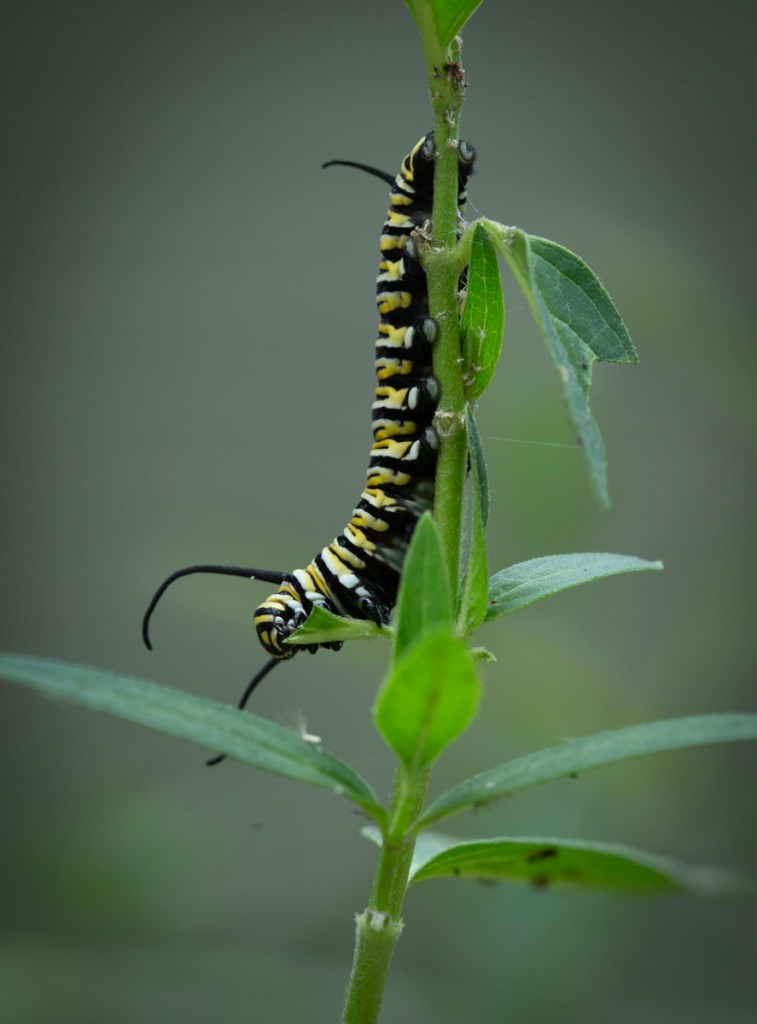
A couple years ago, my wife and I created a rain garden.  We selected plants that liked their feet wet, to include a swamp milkweed. To our surprise, last August the milkweed was chock full of monarch caterpillars voraciously consuming it.  They ate, and ate, and ate, until all that was left were the stalks.  Not a leaf in sight.  Then, as fast as they had appeared, they disappeared.  Where did they go?  A week later, we noted several green chrysalises in the garden.  About ten of them.  The caterpillars had alighted from the milkweed and found shelter in nearby ornamental grasses.  
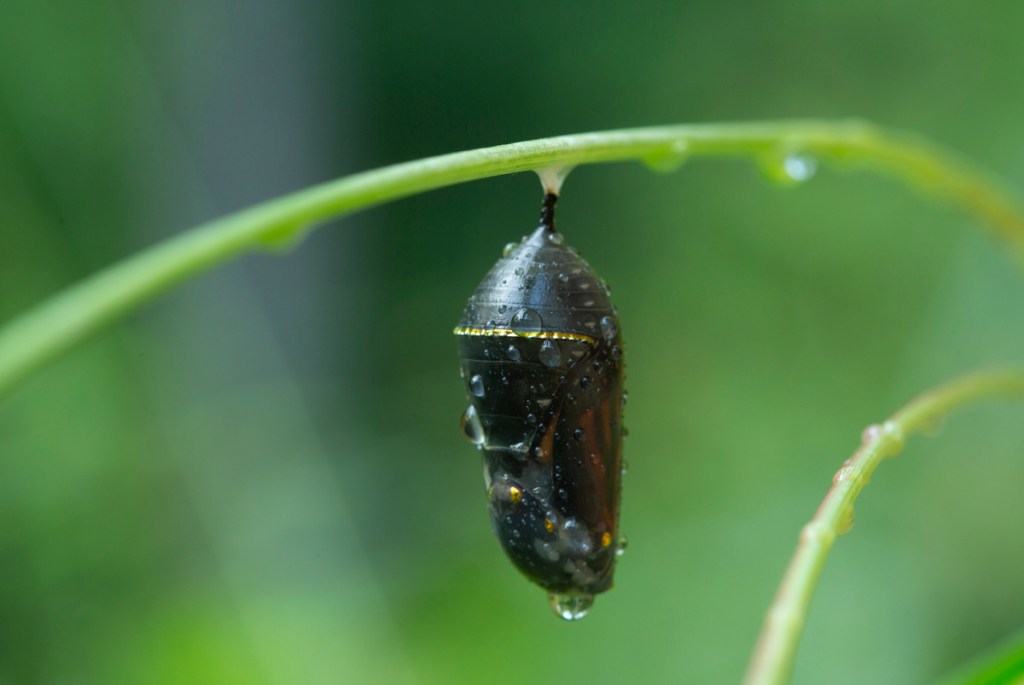
The chrysalises were beautiful, a deep green with a golden beaded band near the top.  The green transformed after a week, it seemed overnight, to black, but in reality, the chrysalises were turning translucent.  The black was the emergent butterfly, patches of fiery orange could also be seen through the translucent chrysalis. Any day or moment they would emerge, I thought. 
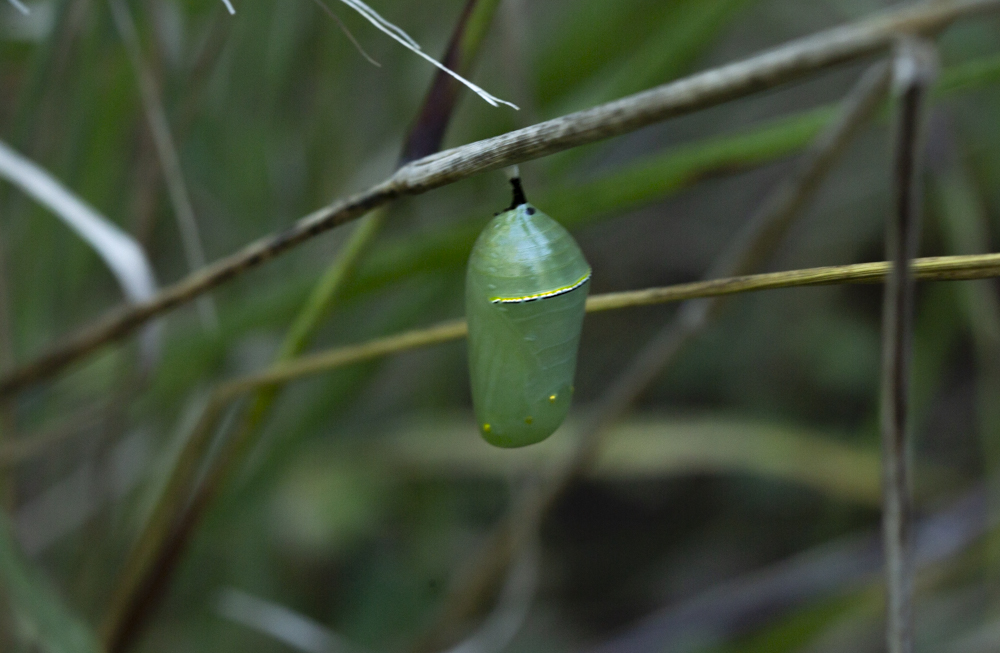
By then I felt like an expectant father.  Protective, pacing the gardens edge, counting the chrysalises, trying to divine when they would emerge. You see, there were no contractions to count, no water breaking, no nurses to explain.  

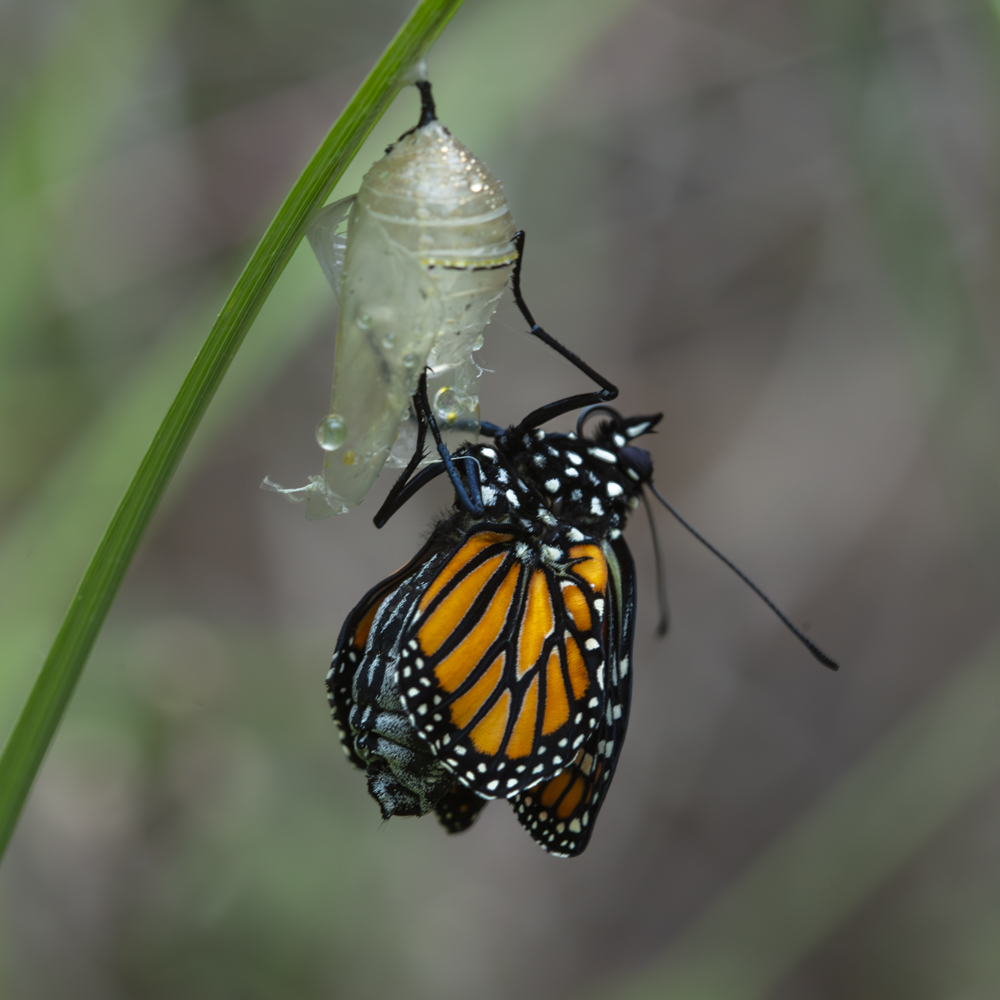
Hourly I checked on them.  I mostly missed the emergence of the monarchs over the next day and a half, stepping out to see new monarchs unfolding their wings, flapping them at times, but mostly, it seemed they rested, gaining strength and taking in the world and preparing for their journey.  This was the generation that would return to Mexico this fall.

The next day, exactly at dawn, I came out of the house to check on the remaining chrysalises.  I spied an emerging monarch.  “No, no,” I thought, as I ran back into the house and got my camera, sporting a macro lens for this moment.  No time for a tripod.  Back out in a flash, I crouched in the garden, focusing the best I could in the low light.  The slight breeze did not help as the monarch swayed.  
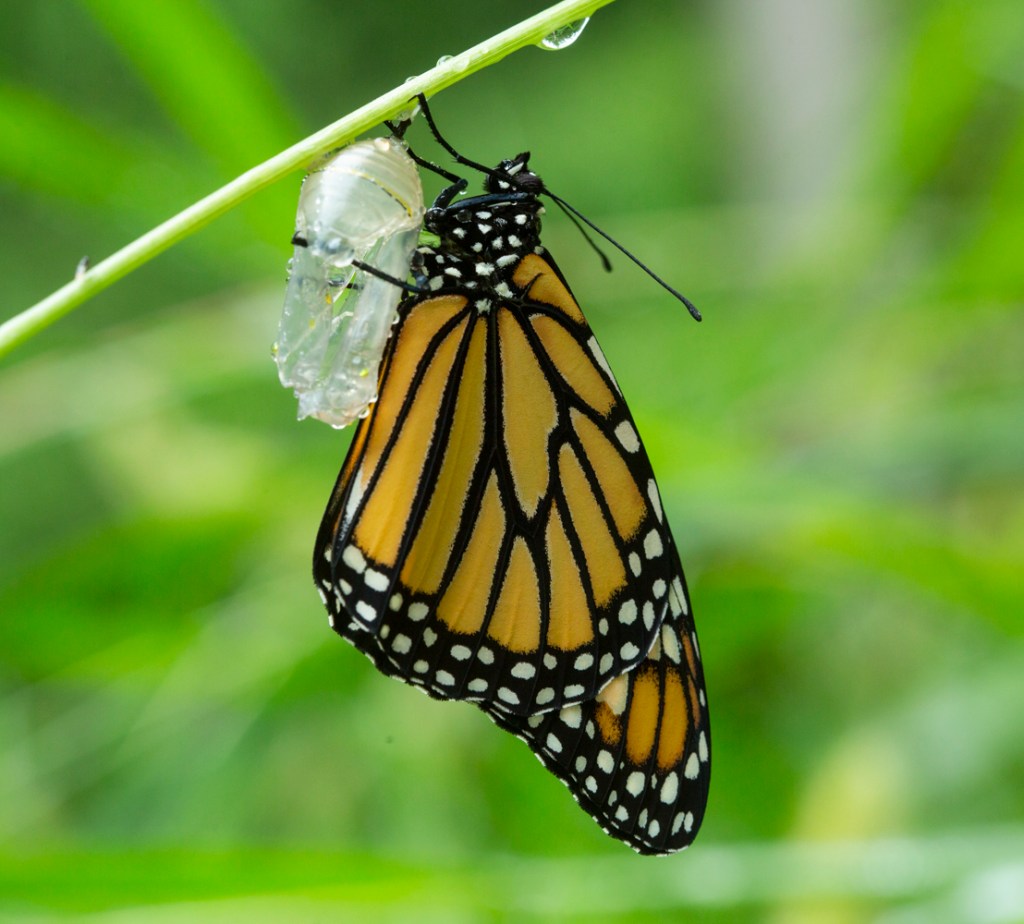
The monarch was already outside the chrysalis and beginning to unfold its wings.  Wow, I thought, they pop out damn quick.  Given the low light and hand holding the camera I hoped the images were in focus.  Some were, some weren’t. Over the course of two days, we counted about a dozen monarchs that emerged from known and unknown chrysalises.

This spring we planted two more swamp milkweeds, hoping to entice more monarchs to lay eggs.  This August we counted abut 13 caterpillars, and like last year, after voraciously denuding the milkweeds, they disappeared.  We only found and counted 4 chrysalises, however.  Disappointed, we hoped we missed some, not finding them in the ornamental grasses.

Yesterday, two of the four chrysalises turned translucent.  Learning from last year, I pre-staged my camera and tripod beside the front door.  I was determined not to miss the emergence of this year’s batch of Monarchs. 

This morning, when I checked them early, the Monarchs had not yet emerged.  Them, around late morning, a summer shower ripped through.  Heavy rains, winds and gusts, one of several storms pummeling central Virginia over these past few weeks.  After lunch, I went back out to check and discovered both Monarchs had emerged.  
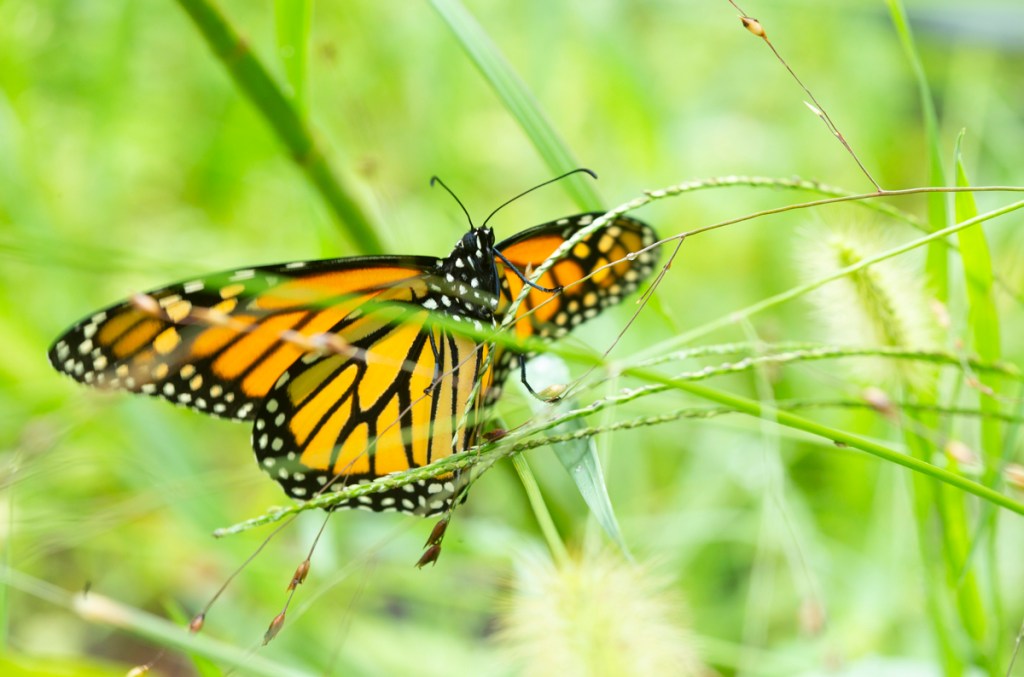
Damn, missed the emergence again.  

As I photographed and observed the two, to my surprise, four more Monarchs emerged from the grasses.  A total of six, with two known chrysalises remaining.  What a beautiful moment.  

In this dreary time, with an angry Monarch spreading his wings across America, one must take in and relish the beautiful moments in life.  I have written enough about these dark times and wanted to write about hope and the goodness that can still be found. I found it with these Monarchs.

Godspeed to these emerging Monarchs and wish them a safe journey back to Mexico where there they will produce a new generation of Monarchs to spread their wings and migrate north across this great continent.
Liberty’s Chrysalis

“The love of power is natural; it is insatiable; almost constantly whetted; and never cloy’d by possession.”

Henry Saint John, 1st Viscount of Bolingbroke

This spring my wife and I planted a small rain garden.  The plantings included several swamp milkweeds, the preferred plant for Monarchs to lay their eggs on.  It’s Latin name is Asclepias incarnata for the serious gardeners out there.  The other day, to our delight, we discovered a dozen monarch caterpillars denuding the milkweeds.  

It took several days for them to consume every leaf.  Fully fueled with toxic bitterness and relatively immune from predation, they slowly wandered off to other plants, leaving the bare stalks of the milkweed as testament to their presence.  One by one they moved on, rambling off into the garden seeking leaves or branches to safely transform into chrysalises.  

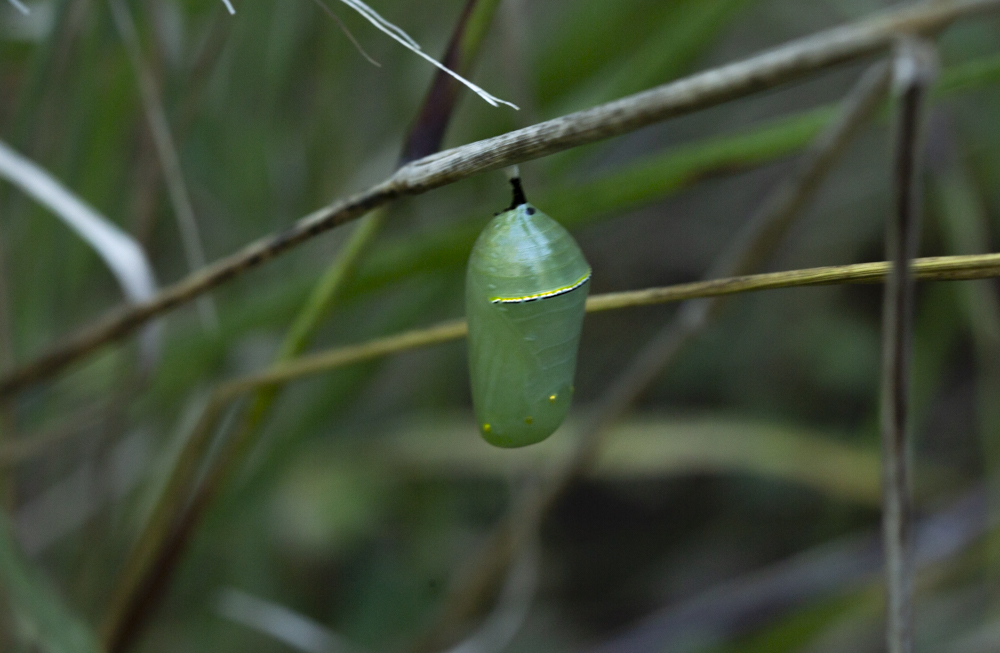
Within several days of the caterpillar migration, we spotted two bright green chrysalises hanging under leaves.  A third caterpillar wasn’t quite there yet. We hope that within 14 days, given the mild weather, the caterpillars will be reborn as butterflies.  A well-tended garden brings unexpected joys.

The discovery of the caterpillars reminded me of the words of Henry Saint John, that liberty is like a tender plant.  He penned these words close to 300 years ago and the metaphor could not be more relevant in our time: “liberty is a tender plant which will not flourish unless the genius of the soil be proper for it; nor will any soil continue to be so long, which is not cultivated with incessant care.”  

He wrote these words in the early 18th century, a time of upheaval in England: political factions vying for power in a deadly struggle.  He didn’t always choose wisely, backing the Stuart’s claim to the crown and the ensuing Jacobite Rebellion, ending up in exile in France for some time.  He is most famous, I think, for his essay “The Idea of a Patriot King,” arguing that a King should be above faction.

This idea of a King above faction is important in our own history. It informed how Washington, Adams, Jefferson, Madison, Monroe, and John Quincy Adams saw the presidency.  A president above faction.  They tried mightily to be above faction, not always successfully, however.  Andrew Jackson threw the notion of a patriot president out a White House window along with the contents of a chamber pot.   

Today, we are ruled by an unsound and troubled president hell bent on hyper factionalizing our country, resorting to violence and armed soldiers patrolling city streets.   He has taken the notion of faction to new extremes in America, not seen since the late 1850s.   This includes sending the military to occupy blue cities to show his political muscle;  flaunting the rule of law; criminally investigating critics; ruling solely by dictate; musing publicly about being a dictator; rewriting our history; engaging in extrajudicial killings on the high seas off Venezuela; and setting the stage to nullify next year’s mid-term election results unfavorable to him.

Our garden of democracy needs tending.  And damn quickly.  

We must steadfastly feed and nourish our democracy.  Stay informed in the face of daily trespassing against our liberty.  Although in today’s world where most Americans get their ‘news’ through social media, ‘informed’ is perhaps obsolete.  There still are reliable news sources out there.  Social media is not one of them.  Social media is an avalanche of computer driven feeds designed to elicit clicks, rage, and profit.  Curate your news sources. Go old fashioned and read books, lots of them.  The more you read, the more you realize how little you actually know about things you thought you knew a great deal about. That’s a good thing.

We must clear out the authoritarian weeds that plague our garden of democracy.  We must elect leaders that reflect our values and are in tune with today’s generation and willing to fight.  The continual reelection of octogenarians does the party no good.  

We must go to the polls this November and elect Abigail Spanberger governor and weed out the noxious plants occupying Virginia’s governor’s mansion.  We must not just elect her but elect her in a historical landslide. We don’t want to become an autocratic state like Texas or Florida. 

We must seed our garden of democracy with plants that are robust and acclimated to our current political reality:  An opposition party bent on one-party authoritarian rule.  We can do that by supporting new faces and ideas in the Democratic party at all levels.  Starting with David Rogers who is running for the Mineral seat in our local board of supervisors.

We must amend the soil of our garden.  Get friends and family to register to vote, get them to the polls on election days.  Attend rallies or local meetings.  Donate to candidates you support.  If you can, canvas for that candidate. Volunteer with the Louisa Democrats.

We must not only resist the orange piped piper of Mar-a-Lago but fight him at every junction.  Write or call your representatives, write the Supreme Court Justices, write our governor.  Tell them your story and how you are impacted by Trump’s dangerous and illegal actions.  That food, housing, and healthcare will be unaffordable and unattainable once the full impact of Trump’s tariffs, deportation of farm and food processing workers, and regressive taxes are felt.   

Plant a garden an act of subversion against Trump’s war on climate science.  Whether you have only a south facing front door stoop, a small balcony, or quarter acre, or ten acres, plant a garden in the dirt or in pots.  Every plant you grow feeds or houses an insect or animal and soaks up carbon.  Get radical and grow a victory garden.

Our garden of democracy is in big trouble, but with our incessant care and nourishment our democracy can flourish once again.  Together we must tend the garden of democracy and create the space and time to protect and nurture liberty’s chrysalis from Trump’s insatiable drive to possess absolute power.