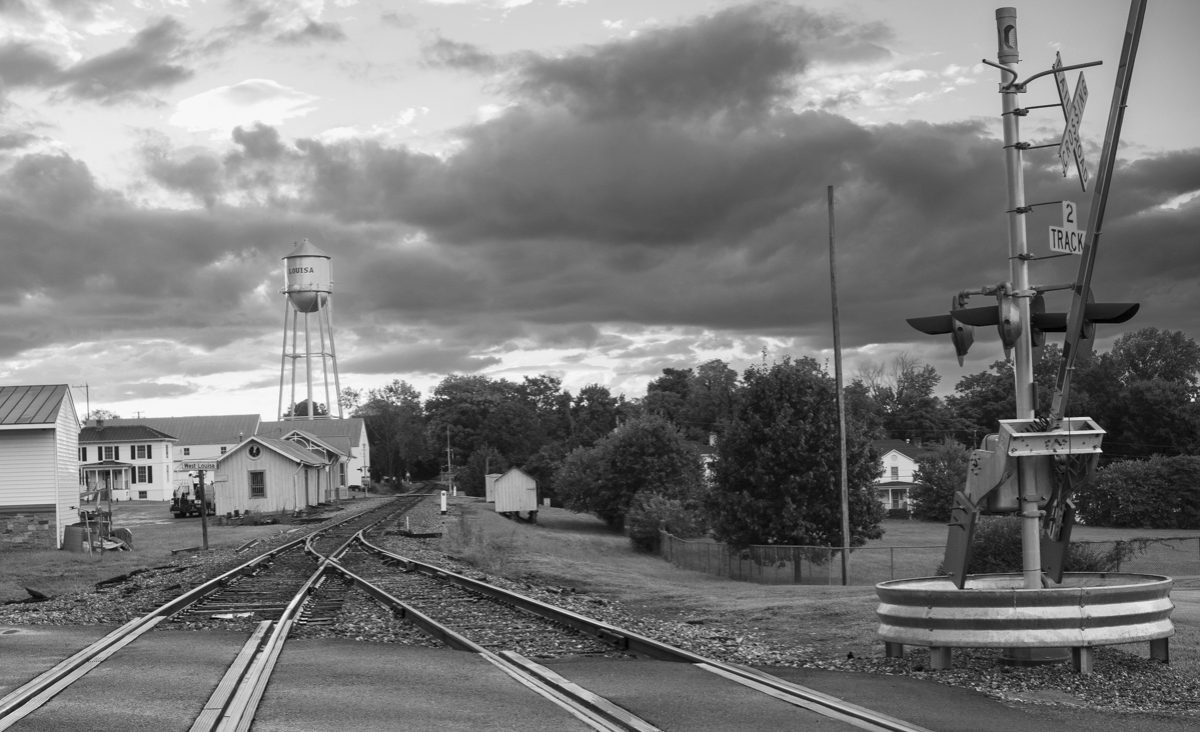
For three plus years my wife and I were volunteer repair program managers for Charlottesville’s Habitat for Humanity program in Louisa. The repair program primarily focused on ensuring folks could safely get in and out of their homes. This included repairing or replacing decks or stoops and stairs, replacing or repairing exterior doors, installing ramps. We also replaced or fixed window, siding, soffits, gutters, and the occasional roof. The work was all done by volunteers. One year I put 2500 miles on my truck supporting Habitat projects, which reflects the demand for housing aid in Louisa County.
Whether or not a project went forward after the initial survey and scope of work was completed, depended on the client’s income. They had to make at or less than 50 percent of the average marginal income for the county. Our typical client was female, over 65, widowed, earning between $8 to $24K per year. The bulk of that from Social Security. To say the least, they struggled to keep maintain their homes. Most had worked their entire adult lives yet have economically drifted downwards into poverty once they can work no longer.
No defined pensions, marginal savings if any. The only wealth they have was tied up in their home and land, but without being able to maintain the home or land, its value shrinks. Given the absence of affordable housing in the county, the elderly who want to maintain their independence and local connections have two basic choices: Sell and move out of the county or stay in a decaying home. The Fluvanna-Louisa Housing Foundation is working solutions for this conundrum of Louisa’s elderly, pulling an indifferent Board of Supervisors along with it.
The reasons for the statistic regarding our primary clients are myriad, but three primary causes stand out. Women tend to get paid less than their male counterparts, even if they worked the same job. This continues to this day. Additionally, women of the generation we tended to work with were limited to careers they could work in, which in many instances, were lower paid. Finally, during childbearing years, women usually had to quit work or take long periods of unpaid leave. A triple whammy. Social Security benefits are tied to one’s annual income and lifelong earnings. So, after decades of work and sacrifices, women tend to have accumulated less Social Security benefits and retirement savings. Their reward? Poverty.
The ‘big, beautiful bill’ will add misery to the county, especially to our elderly on fixed limited incomes. For instance, our elderly clients typically pay Medicare premiums out of their Social Security benefits. For those that cannot afford Medicare premiums, which I imagine were most of them, there used to be financial assistance through the Medicare Savings Program (MSP). The beautiful bill cuts or eliminates assistance. The MSP cuts could force enrollees who earn less than $24K a year to pay an additional $3000 out of pocket for Medicare premiums, potentially $8k if a couple. Our average client will be devastated economically, to say nothing about the impacts to their health care should they lose Medicare insurance, such as access to prescriptions.
Speaking of health care, cuts to Medicaid will indirectly impact access to health care for the elderly in rural areas such as Louisa. Rural hospitals and clinics rely on Medicaid payments to stay in business. Less income will result in closures. About 17 percent of Louisa residents rely on Medicaid. Louisa is already a medical care desert as it is, and it will get worse after this bill. No hospital, no public health clinics (except for Central Virginia Health Services, a non-profit group), and no private urgent care type facilities (not profitable enough for them to come to Louisa). I imagine that the number of doctor offices we do have will shrink.
Shifting money to the wealthy. The bill does provide for a senior tax deduction. If you earn more in income benefits, you can claim a larger tax deduction. For instance, if you are 65 or older, earn up to $75K, these folks can claim a $6500 tax deduction. Our typical client would not benefit from this tax deduction at all.
This senior tax deduction is another way of transferring wealth to older, wealthier folks, and short shifting the young. Contrast the $6500 senior tax deduction with the $200 dollar increase in childcare tax deduction from $2000 to $2200 per year. I thought we loved our children. In Virginia, the average infant childcare cost is $14k per year, about $11K for a four-year-old. Overall, these types of tax breaks will accelerate the depletion of the Social Security Trust Fund. Basically, now 2033.
The bill is big, but it is not beautiful, it is damn ugly, like the spaghetti western, the good, the bad and the ugly. Mostly the latter two. It attacks the poor, marginalizes working class women, and transfers immense wealth to the upper classes, leaving many to struggle mightily for safe housing, food security, and access to health care. About 60 percent of the bill’s financial benefits will go to 20 percent of the population. 12 million folks will lose access to health care insurance. Millions of working-class folks will lose access to food aid because of “paperwork barriers” designed to reduce the number of enrollees. Yet, with these “savings” we are going to build a police state through $150 billion in increased funding for DHS agents and a trillion-dollar defense budget.
Our 5th Congressional District representative John McGuire voted for the bill and issued an ingratiating, bootlicking, suck-up press release fit for North Korea, not America, on the cusp of 250 years of independence from Kings. Like a sucker fish on a shark, McGuire is attached to Trump’s big, beautiful orange ass.
Discover more from Bumpass Prose and Politics
Subscribe to get the latest posts sent to your email.
