Remote Area Medical, Pop-up Clinics, and the Canary in Virginia’s Healthcare Mine

What awaits rural Virginians now that the big, beautiful bill is now law?  Now comes the hard part for vulnerable rural Virginians with limited incomes as safety net programs such as Medicaid, SNAP, and Medicare benefits shrink or disappear.  This is compounded by cuts in programs that provide meals to school age children whose families can’t afford to pack school lunches much less pay for the ones provided at school.  Even the anti-immigrant sentiment will have long term impacts to America’s healthcare system.  There is a tsunami of despair that will sweep rural America, compounding existing systemic troubles accessing timely health care for millions of un- or under insured Americans.

During the COVID epidemic my source for this essay – my wife – volunteered with the Remote Area Medical Volunteer Corp, a non-profit that provides dental, medical, and vision care at pop-up clinics across the U.S. (RAMUSA.org).  RAM was founded in 1985 with the mission to provide mobile clinics at remote locations outside the U.S.   It later began organizing these pop-up clinics to fill a need for underserved Americans that live in healthcare deserts.

The mobile clinics that my wife volunteered at were in Southwest Virginia.  She provided logistical support to the medical teams, such as registering patients.  Her stories are both sad and harrowing, they’re about folks that serve their communities, and the fortitude of the communities they serve. 

 At a typical pop-up clinic, the patients arrive at mid-night when they arrive at the designated facility’s grounds, such as a county fairground.  They are given a numbered ticket and asked to stay in the designated parking area overnight.  It is first-come-first-served, and the tickets go fast.  The number of tickets is based on the number of volunteer doctors, dentists, nurses, other clinicians, and administrative folks.  The administrative task of registering patients begins first around 6 the next morning.

At the mobile clinics where she volunteered, the patients represented a wide spectrum of ages and life experiences, according to my wife, but mostly 50 and up, with young adults being the second largest group.  She recalled one young family — a woman and her three kids ages from 4 to 13.  They came for dental care but were quickly referred to the medical clinic.  The youngest shaking uncontrollably.  He hadn’t eaten breakfast and when he had his last meal was anyone’s guess.    At the medical conex, the crew scrambled to get breakfast for the kids and started to gather care kits:  toothbrushes, toothpaste, soap, combs, shampoo. Their home had no running water it was learned.

For many these mobile clinics are the only healthcare they get.  The services include eye exams, and if needed glasses donated by the Lions Club; hearing tests, and if necessary, hearing aids donated by a local audiologist; dental care is provided by dentists and student volunteers from dental colleges; prescriptions (one course) and follow up care scheduling; mammograms provided in a mobile RV provided by a non-profit hospital system.  

My wife noted that many of the medical students assisting the doctors were from South Asia and the Middle East.  That is international students attending American medical universities.  More on that later.

Most patients were on or had gone off the financial precipice:  Little to no health care insurance.  Per RAM, 50 percent of their patients have no health insurance.  It’s much worse for vision and dental insurance coverage.  There were elderly on Medicare seeking care.  They could pay their premiums but could not afford the co-pays for doctor visits.  Because the payment assistance program for Medicare premiums was severely cut in the big, beautiful bill, those that could not even afford co-pays will most likely loose complete access to Medicare health insurance.  

Another lifeline for these folks is Rural Health Clinics.  Medicare Part B and Medicaid payments subsidize these clinics, but billions in cuts will mean many of these rural health clinics, to include the one in Louisa, may close, worsening the crisis in rural health care. 

As context, the federal government’s first foray into healthcare came in 1946 with the Hospital Survey and Construction Act.  By 1981 there were 3000 new healthcare facilities and an additional 6600 beds.  60 percent of those beds were in communities of less than 25,000.  Medicaid and Medicare were created in 1965 followed by the Rural Health Clinic Services Act of 1977.  These were all bipartisan Acts; however, the zenith of rural healthcare seems to have passed long ago.  The partisan big, beautiful bill guts a neglected and crumbling rural healthcare infrastructure, eventually millions will be without timely adequate healthcare.  And for what, $40 billion in migrant concentration camps and a trillion-dollar defense bill, 10,000 more ICE agents, and $3.4 trillion in tax breaks to the top 10 percent?   

Profit driven hospital systems and insurers will not fill the gap.  No profit in it for them. Sad because of the top 20 hospital systems all but one reported net revenue gains.  The top company measured in total revenue – Kaiser Permanente — reported a whooping 15 percent increase in 2024.  Some smaller companies reported even greater increases.  Net revenue from patients also grew, according to Hospistalogy.com. Interestingly, the National Association of Insurance Commissioners, reported a 14 percent decline in net income for health insurers in the first half of 2024.  On a side bar, the NAIC statistics showed that claims per month per member for Medicaid and private insurance was about the same for Individual, Group, and Medicaid:  $408, $482, $481 respectively.  Medicare claims per member per month was $1146, almost triple.  But that is to be expected from an older age group.

Another threat to America’s healthcare system in general, and for rural America in particular, is the availability of healthcare providers.  According to the Association of American Medical Colleges, about 1 in 5 physicians are foreign born.  I have read other sources that indicate 25 to 26 percent of doctors in the U.S. are from abroad.  

Importantly, these foreign born and trained doctors are more likely to serve in areas with greater poverty, according to the American Immigration Council.  The Council further stated that areas with a 30 percent poverty rate, one-third of the doctors are foreign trained.  A University of California San Diego Website reported that while 20 percent of Americans live in rural areas, only 11 percent of US doctors work in these areas, and that foreign born and trained physicians fill the shortfalls.  It’s not just physicians.  About 15 percent of nurses in America are foreign born and trained.  

The current administration’s anti-immigrant fervor against migrants, whether legal, undocumented, or adjusting status, is sending chills across the globe I would think. Many are asking (I know I would), “do I want to come to America where I am unwanted, hated, potentially abused and imprisoned because of the color of my skin and accent?”   Travel bans, blanket visa denials and revocations, potential arrest and deportation for engaging in free speech on campus, all will drive away potential medical students and foreign-born healthcare providers. Imagine the impact if America lost 15 or 20 percent of its healthcare providers?  The MAGA Ebenezer Scrooges in Congress would respond, “What, are there no funeral homes and casket makers?”

While the number of international students at American medical schools is less than 2 percent, I imagine those numbers will drop significantly.  With a shortfall of 45 to 50K doctors, America is already in a healthcare crisis mode, further reducing the flow of healthcare professionals to the U.S. will only hurt the most vulnerable.

No money, no clinics, and no doctors is what awaits rural America.  Don’t buy the bit about Medicaid scofflaws or Medicare cheaters being the problem, this is about wealth and greed, income inequality and regressive Republican tax policies.  It may take a year or two for the tsunami to reach the shores of rural America, but it is coming.  If you don’t believe me, volunteer at RAMUSA.org.  They have clinics looking for volunteers.  
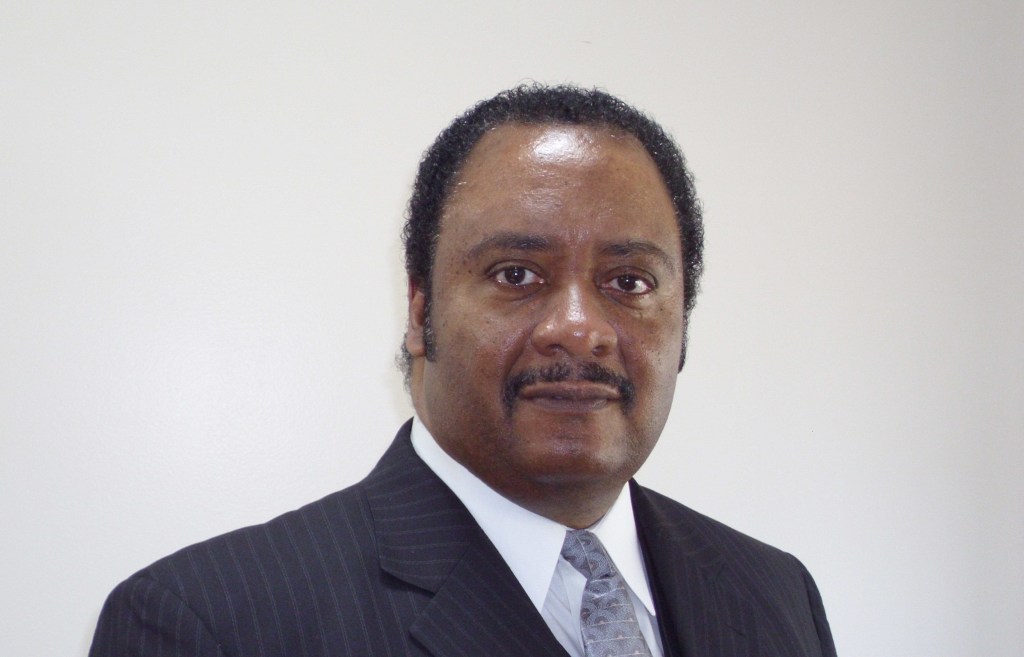
David H. Rogers in His Own Words: Candidate for Louisa County Board of Supervisor.

Democracy is the cornerstone of our Republic.  It is just as important to focus on local elections as it is national elections.  Sometimes, however, local elections get swept up and into national debates and they become sideshows, even though our local elected officials make decisions that impact our lives daily.  To promote local discourse, I intend to highlight persons running in local races, to let them, in their own words, make their case for your vote. 

I recently asked David Rogers if he would be willing to answer three questions about his run for the Mineral seat of the Louisa County Board of Supervisors.  He agreed.  I am pleased to present to you David’s responses to the questions below.

Mr. Rogers is running to replace Duane Adams, who is also the current Chairman of the Board of Supervisors.  Adams term expires December 31 of this year.   

David H. Rogers, Candidate for the Mineral Seat of the Louisa Board of Supervisors

What motivates you to run for the Mineral seat of the Louisa County Board of Supervisors?

First let me say what does not motivate me to run. I am not running because I need something else to do. I am not running because I need to get my name out so I can run for another office. I am not running because I am not happy with what I already do a s a Church Insurance Agent.

I am motivated to run because we have not had good representation with our current board member. We cannot keep doing the same thing and expect a different result. I believe that if people want change, then someone must stand up and fight for it. I would like to be that someone.

I am motivated to run because under the present board, projects have been voted upon that benefit developers and not the people. In negotiating contracts with businesses, we should have a give and take relationship with the Mineral/Louisa residents coming out on the positive end.

I am motivated to run because under the current board member, there is no transparency. The constituents find out about an issue after the fact. This must stop. When Board members move on to other aspirations, we will still be here struggling with the aftermath of bad decisions for many years if we don’t do something now.

What makes you the best candidate for the Mineral seat?

I am the best candidate for the Mineral seat because I realize, “it is not about me.” It is about the people. I have no ulterior motives for running except to help the people of Mineral and Louisa at large. Although I did not grow up in Louisa, I spent my summers here with my grandparents. My family has owned land here for about 130 years. I know that the decisions I make will affect many families including my own.

I CARE about the people in Mineral. I have gotten word that there are homeless people in our Louisa County. This may not be something we want to admit, but it is true. There are groups that are seeking to help these families. There was a ruling that says if churches opened their doors to those who found themselves homeless, the churches could be fined. It is unconscionable to even think about imposing a fine on churches for opening their doors in the freezing cold to those who have found themselves homeless. It is bad enough that our neighbors have had problems resulting in loss of shelter. To have them risk freezing to death is savage. When did we lose our humanity? Whoever even thought to write that down or even think that we could fine a church for doing what the church is called to do, needs a “humanity check”. We need to assist as much as possible.

I believe I must be transparent and keep the people informed. We found out, after the fact, that data centers would be coming to the Mineral/Louisa area. I also noticed that zones in the town of Mineral were changing from commercial to residential to commercial on a whim. Who did this benefit? The developers. The people may not have agreed with this.

A proposal was made for a truck stop to be developed in the Cuckoo district. If it had not been for the people of Cuckoo, coming out twice in full force in the rain after their private meetings, it may have passed. A truck stop would have brought more crime to our county, in the form of drug and human trafficking along with prostitution.

Most of all, I want to hear what the people need and want so I can include them in making the best decisions for all. Many of the issues I mentioned above were shot through before the people got a chance to digest them. It is my goal to always put the people first. That means having regular communication using the best means possible to keep the people informed. Communication with my neighbors will be of the utmost importance to me.

What challenges will Mineral in particular, and Louisa County in general, face in the next three to five years? How would you address them?

Problems with our roads

Many of our roads are receiving traffic they were not built to handle. I am speaking of the eighteen-wheeler tractor trailers. These heavy trucks travel on the curving roads and chew up the road shoulders. It is hard to see around the curves so crossing the road to get to a mailbox is unsafe for our citizens, especially the elderly. Trucks also present a safety issue while traveling on these single lane narrow roads. Some roads were made for this type of traffic but there are no signs to encourage trucks to use them. This will only get worse as our population increases. Maintenance is also an issue. Strict guidelines will need to be followed to keep large trucks on the appropriate roads when driving through our locality.

There is also a need to study traffic signals at the busy intersections to keep the traffic flowing, especially around the busy hours of the day.

 Problems with data centers

The present Board of Supervisors have already voted to have data centers come to our county. These centers take up a lot of resources like land, water and electrical power. This will result in brown outs and black outs because of the increased stress on our old power grids. There have been no plans to upgrade the electrical grids in the Louisa area. I am told that upgrades have not been done since the 1970’s when the power plant was built. Based on our population and current usage, the area would not be able to sustain added pull on our old system. We may have put the cart before the horse and need to take a side-step before moving forward with like projects. Truth be told, better planning could remedy this.

As mentioned, the roads will need to be upgraded to handle the heavy truck traffic during the construction of the data centers. The construction will take several years.

Keeping Louisa balanced between rural and metropolitan

I know many of the residents in Louisa have come here because they like the rural atmosphere. This is something I want to preserve and in my discussions with many of my neighbors, they feel the same way. Are we following the standards that would keep Mineral/Louisa rural? We need to revisit these standards before we become too metropolitan. Sustained growth is good, but we must do it in a way that we do not take away our rural lifestyle.

Having adequate housing to support our residents

We need to negotiate with developers to build housing that is affordable. The housing needs to be affordable for people we want to attract to our area like new teachers, just out of college, new emergency personnel, and other recent college graduates. We are already lacking in these areas.

Having businesses to support living in Mineral/Louisa

We need to attract businesses that will train and employ the people in Mineral/Louisa. Louisa County High School has many excellent programs that train our students. We need businesses to capitalize on their career training if so desired, they do not have to leave home.

Having adequate resources to keep Mineral/Louisa safe for all its residents

Louisa has a growing elderly population. We need an Urgent Care Center in the heart of Louisa (not close to the county borders) that all our county people, especially our elderly, can reach quickly. The center could have medical personnel to initiate treatment and to be able to stabilize a person in an emergency and to prepare them for transport. It could also provide preventive care and medical education. Having after-hours care would be of benefit because you know children don’t get sick until after dark.

These are just a few things. Please know that I am always open to discussion about any concerns of the people in Mineral/Louisa. I am David H. Rogers. I can be reached at rogersdh97@gmail.com.